





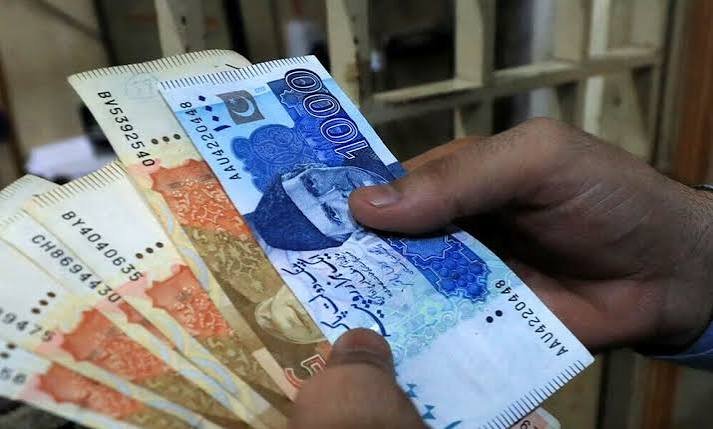
Personal finance was seldom a topic of discussion at the dinner table among Pakistanis growing up in the 1990s and early 2000s. It was generally assumed that young people should follow a simple path: work hard, obtain good grades, secure a steady job, and later start supporting their families. People usually regarded saving and investing as things to consider only later in life, after one had established a career and was earning a regular income.
Yet today a noticeable change is occurring.
In Pakistan, young people are showing a growing interest in budgeting, saving, investing, working as freelancers and creating various sources of income. Teenagers and university students are studying inflation, exchange rates and the importance of financial independence. The social media feeds that were once almost entirely dominated by entertainment now frequently include discussions of the stock market, entrepreneurship, freelancing, cryptocurrency, digital businesses, and financial planning.
What is the reason why young people in Pakistan are only now beginning to take personal finance seriously at such an early age?
The solution lies in the interplay of economic uncertainty, rising living expenses, greater access to technology, and a revised concept of financial security.
Growing Up in an Economy That Demands Awareness
One of the main reasons young Pakistanis are becoming financially conscious is that they have witnessed economic instability firsthand from an early age.
Inflation is no longer just a term that appears in economics textbooks; it has become part of everyday life for young people. The rising prices of items such as groceries, fuel, electricity, education, and other necessities have made financial talks unavoidable in many homes.
A student might overhear parents talking about their utility bills having increased. A university graduate might wonder if the first salary they earn will be sufficient to pay for transport and other basic expenses. A young person planning to study abroad might notice that tuition fees rise as the value of the Pakistani rupee fluctuates.
As a result of these experiences, a generation has come about which realises—an important truth sooner than any earlier generations—that while earning money is important, knowing how to manage it is just as important.
For many young people in Pakistan, financial literacy is not just about getting rich; it is increasingly linked to stability, independence, and the ability to prepare for uncertainty.
The idea that having one secure job ensures a comfortable future is also under review. Young people have seen businesses facing difficulties, industries undergoing change, and employment opportunities becoming increasingly competitive. Because of this, many are now considering going beyond just thinking about a monthly salary.
Such questions as those which previous generations might not have considered until later in life include: How can I save? Should I invest? What will happen if I lose my job? How can I create another source of income? And how can I prevent myself from becoming entirely dependent on a single financial opportunity?
The Rise of the Side Hustle Generation
Young people in Pakistan are also experiencing a major shift in how they earn a living.
The internet has provided opportunities which were not available to earlier generations. A student who has a laptop and access to the internet could, in principle, provide services to clients in various parts of the world. Nowadays, skills such as graphic design, writing, programming, video editing, social media management, and digital marketing have opened up new avenues for earning.
Freelancing has recently become very appealing to young people in Pakistan since it provides something which traditional employment often fails to do: flexibility and access to international markets.
Many young people are getting involved in small businesses and working as freelancers. It is now quite common to find Instagram stores, home-based bakeries, clothing brands, tutoring services, and online reselling businesses.
The notion of having to wait until one’s thirties or forties before becoming financially ambitious is gradually vanishing. Young people in Pakistan are now realising that income can be obtained from a variety of sources.
It is possible for a university student to be in classes during the day and work as a freelancer in the evening. In other cases, they might set up a small online business together with their studies. Indeed, teenagers are looking into ways of acquiring marketable skills before they enter the job market.
It does not follow that each young person is becoming an entrepreneur; rather, it indicates a more general shift in attitude. Now, financial security is viewed as something that must be actively built rather than merely expected.
Social Media Has Made Finance More Accessible
One of the main reasons for this change is the ease with which financial information can be obtained.
Ten years ago, people usually needed to consult books, seek professional advice, or go to financial institutions to learn about investing or budgeting. Nowadays, such information can be obtained in just a few seconds.
Young people in Pakistan have the opportunity to watch videos that explain how compound interest works, read articles on saving strategies, or follow financial educators who are active online. Talks about budgeting apps, emergency funds, and investment opportunities are now more prevalent on platforms such as YouTube, Instagram, and TikTok.
This accessibility has helped eliminate some of the mystery surrounding finance.
For many young people, things that once sounded intimidating in finance are now familiar. Online, there is now regular discussion of concepts such as assets, liabilities, savings, investments and passive income.
On the other hand, the increase in financial content also involves certain risks. Since social media is full of people making unrealistic promises about becoming rich quickly, young audiences can easily be drawn into schemes that seem profitable but are, in fact, very risky.
That is why financial literacy becomes so important.
We should not just aim to get young people to invest, but rather to help them understand risk, spot misinformation, and make well-informed decisions. Financial education ought to inculcate patience and a sense of responsibility rather than foster the false idea that wealth can be made overnight.
Financial Independence Has Become a Personal Goal
A cultural change is also occurring in the aspirations of young Pakistanis.
For many young adults, financial independence means more than just having money in a bank account; it means having freedom.
This entails the ability to make career choices even when financial pressure does not have complete control over you. It involves helping out the family when needed. It could involve paying for further education, travelling, launching a business, or simply having the capacity to cover one’s own personal expenses.
Young women are increasingly involved in discussions about financial independence, even though in many households financial decisions have long been the men’s responsibility.
At present, more young women are pursuing higher education, professional careers, and starting their own businesses. It has thus become an important element of personal empowerment to learn how to prepare a budget, save money and manage it.
The idea of financial independence does not entail giving up family support or traditional values; in Pakistan, such responsibilities within the family remain of great importance. Yet a great many young people nowadays would like to contribute to their families while also achieving their own financial security.
The desire for independence is leading people to think about money earlier than previous generations did.
Education Alone No Longer Feels Like a Complete Safety Net
Pakistan has long placed great importance on education, and parents frequently make considerable sacrifices so that their children may have the best possible academic opportunities.
Yet an increasing number of young people are realising that having a degree doesn’t necessarily ensure financial stability.
The competition for jobs is strong, and it is common for graduates to struggle to secure work that matches both their qualifications and expectations. Because of this situation, students have begun to pay attention to skills as well as their formal education.
A business student might also learn digital marketing. An engineering student might pick up programming skills. A literature student might start freelance writing.
This change shows a more practical way of preparing financially.
Young people in Pakistan are now realising that education should not merely lead to a job, but also enable them to acquire the skills needed to create opportunities.
In this situation, personal finance is closely linked with career planning. Simply learning how to earn is only one aspect of the issue; an equally important aspect now is knowing how to manage the money one earns.
Learning From Their Parents’ Experiences
One reason young people are becoming more financially aware is that they have seen their parents cope with economic difficulties.
Many Pakistani families have experienced times when their expenses rose, emergencies occurred, and there was a sense of financial instability. Young people who have experienced these difficulties tend to value saving and financial planning more.
They might come to realise the importance of having an emergency fund. They might come to understand how important it is to avoid unnecessary debt. They might also realise that financial difficulties can affect every aspect of family life, including education, career decisions, and peace of mind.
It does not follow that earlier generations were financially irresponsible; in fact, many Pakistani families have long placed a high value on saving and spending carefully. The financial situation, though, has changed.
Today’s young people have access to a wider variety of financial products, digital ways to earn money, and information about the global economy. They are merging the traditional values of saving with contemporary notions of investing and income generation.
This new generation is in many ways drawing on the strengths and facing the challenges of the generations that came before it.
The Need for Better Financial Education
Even though there is growing interest in personal finance, Pakistan still faces a significant gap in financial education.
Many students complete school without learning practical skills such as creating a budget, understanding bank accounts, managing debt, calculating interest or planning for long-term financial goals.
Although mathematics can teach students to calculate percentages, it doesn’t always show them how those percentages impact savings, loans, or inflation in real life.
It is here that schools, colleges and families can take on a more active role.
Financial literacy should not be considered something only for business students or adults; basic financial education can start at an early age. Pupils ought to know the difference between needs and wants, the importance of saving, and the risks connected with borrowing and investing.
When young people start university or begin earning money, they should already have a basic understanding of how to manage it responsibly.
Financial education ought to take into account Pakistan’s particular economic conditions. Guidance aimed at wealthier economies might not always be directly applicable to a young person in Karachi, Lahore, Peshawar, or a smaller city.
To address financial literacy in a meaningful way, it is necessary to consider local income levels, family responsibilities, and economic challenges.
Is the Next Generation Better Prepared?
It might be supposed that young people in Pakistan are merely growing increasingly obsessed with money. However, the growing interest in personal finance suggests a more complex picture.
This generation is reacting to the world it finds itself in.
They have grown up in an era characterised by rapid technological change, economic uncertainty and greater global connectivity. They realise that financial stability cannot always be assumed.
At the same time, they have access to greater amounts of information and a wider range of opportunities than earlier generations; a young person is able to acquire a skill via the internet, secure international clients, launch a small business and educate themselves in the area of financial planning—all using just a smartphone or a laptop.
The problem is that this enthusiasm should be based on accurate information and result in responsible decisions.
Young people ought to be encouraged to build up their financial knowledge bit by bit rather than seek quick wealth; it is often more worthwhile to save a small amount regularly, acquire useful skills, and understand financial risks than to follow every online trend.
Young people in Pakistan are often characterised by the challenges they face, including unemployment, inflation, limited opportunities, and economic instability. However, there is another aspect to this situation.
A great many young people from Pakistan are meeting these challenges with a spirit of curiosity and ambition.
They are raising questions. They are acquiring skills. They are looking into new ways to earn. Most importantly, they are realising that financial security requires both knowledge and income.
This might well be the most important change of all.
In earlier times, personal finance was a matter to think about only after one had secured a job, got married, or started a family. Nowadays, young people in Pakistan are beginning to think about it much earlier.
In a future economy full of uncertainty, early awareness could prove to be one of the most valuable investments they can make.