





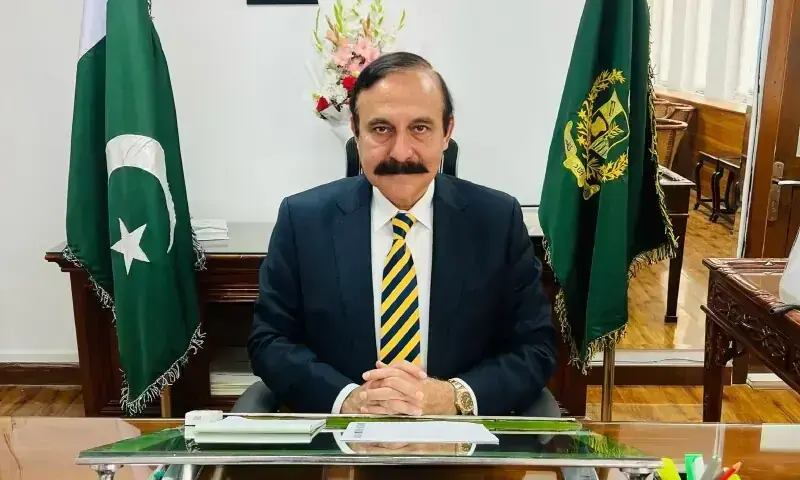
Federal Minister for Parliamentary Affairs Tariq Fazal Chaudhry has reiterated the government’s determination to hold a referendum on the proposed creation of new provinces, despite strong opposition from the Pakistan Peoples Party (PPP), a key partner in the ruling coalition.
Speaking on Geo News programme Naya Pakistan on Friday, the minister maintained that seeking public opinion on the issue was both constitutional and democratic, while emphasising the need to build political consensus before moving forward.
His remarks followed a strongly worded speech by PPP Chairman Bilawal Bhutto-Zardari on Tuesday, in which he rejected proposals to establish additional provinces and opposed the idea of holding a referendum to determine their creation.
Bilawal warned that any attempt to forcibly divide existing provinces, particularly Sindh, could provoke serious unrest and potentially lead to bloodshed.
Responding to the controversy, Chaudhry said the formation of new provinces was an issue of national importance requiring extensive dialogue among political parties, particularly those participating in the federal government.
He pointed out that the opposition Pakistan Tehreek-e-Insaf (PTI) also supported the idea of establishing new provinces, suggesting that the proposal had backing beyond the ruling Pakistan Muslim League-Nawaz (PML-N).
The minister argued that opposition from a single political party should not prevent the government from consulting the public on an issue affecting the country’s administrative and political future.
He firmly maintained that the proposed referendum would take place, while assuring that the PML-N would make every possible effort to address the PPP’s concerns and persuade its coalition partner to support the initiative.
Chaudhry rejected suggestions that a referendum would undermine democratic or constitutional principles, insisting that consulting citizens directly on matters of national significance was a legitimate means of determining public opinion.
The disagreement has brought differences between the PML-N and PPP into sharper focus, particularly over proposals that could alter existing provincial boundaries.
While the federal government continues to advocate public consultation and consensus-building, the PPP has expressed serious reservations about any initiative that could lead to the division of Sindh.
Under Article 239(4) of Pakistan’s Constitution, altering the boundaries of an existing province requires the approval of at least two-thirds of the total membership of the provincial assembly concerned. A referendum alone would therefore not be sufficient to establish a new province.
Chaudhry’s latest remarks indicate that the government intends to continue pursuing the referendum proposal while seeking to resolve differences with its coalition partners through political negotiations.