





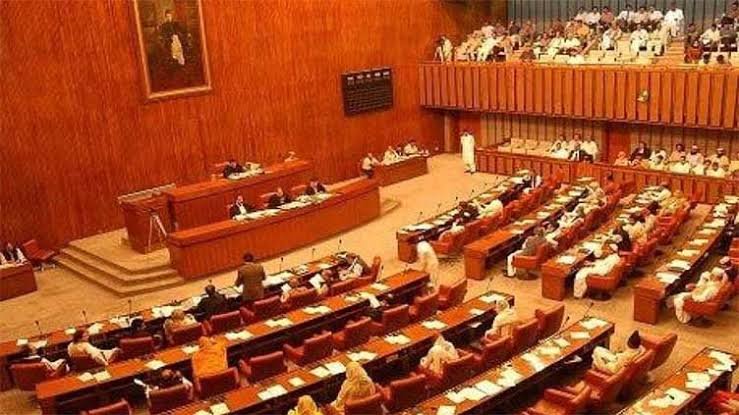
Existing as the upper house of Pakistan’s bicameral parliament, the Senate — officially designated as the House of the Federation — aims to guarantee equal provincial representation. It strives to alleviate fears of dominance by larger provinces by granting equal parliamentary seating to all federating units regardless of demographic size.
Established in August 1973 under Article 50 of the Constitution of Pakistan, the Senate operates as a democratic balancing mechanism. Unlike the National Assembly, where seats are allocated strictly according to provincial population metrics, the Senate provides an equal structural counterweight for smaller provinces.
To an outside observer, the Senate appears prestigious and orderly. Yet beneath this institutional veneer lies a persistent pattern of systemic challenges, including recurring allegations of vote trading, financial influence, and compromised provincial representation.
Electoral Mechanics and Constitutional Framework
Senate elections take place every three years to fill expiring staggered terms, operating under Article 59 of the Constitution of Pakistan. Historically, each province was allocated 23 seats within the upper house, structured across specific categories:
- General Seats: 14 members per province.
- Technocrats and Ulema: Four seats reserved for specialists and religious scholars.
- Women: Four seats reserved per province.
- Non-Muslim Minorities: One seat reserved per province.
Legislative Oversight and Constitutional Powers
The Senate’s primary mandate extends beyond standard legislative drafting. The upper house is responsible for reviewing and revising legislation passed by the National Assembly, ensuring fair provincial representation, and exercising oversight through parliamentary inquiry committees.
Following the passage of the 18th Constitutional Amendment, the powers of the Senate were expanded. Article 89 stipulates that no presidential ordinance can be promulgated while the Senate remains in session. Furthermore, constitutional provisions require the Senate to conduct formal examinations of national budget allocations and public expenditure twice annually.
Systemic Challenges: Indirect Voting and Horse-Trading
A central vulnerability within the upper house is the phenomenon commonly termed “horse-trading” — the illicit trading of vote commitments among political representatives. During virtually every Senate election cycle, allegations emerge regarding financial influence altering legislative outcomes, directly contradicting democratic principles.
Because citizens do not vote for senators directly — electing instead the Members of the National Assembly (MNAs) and Provincial Assemblies (MPAs) who act as the electoral college — a disconnect exists between the public and their upper house representatives. Consequently, senators frequently remain isolated from daily electorate concerns, deepening public skepticism regarding the chamber’s institutional responsiveness.
References
- Senate of Pakistan. (2024). Constitutional Role and Composition. Official Web Portal of the Senate of Pakistan.
- Institute of Legislative Development and Transparency. (2024). Empowering the Senate: Enhancing Executive Oversight and Accountability in Pakistan. Research Publication.
- Dawn Media. (2018). Allegations of Horse-Trading Cloud Senate Elections. Dawn News Archives.