





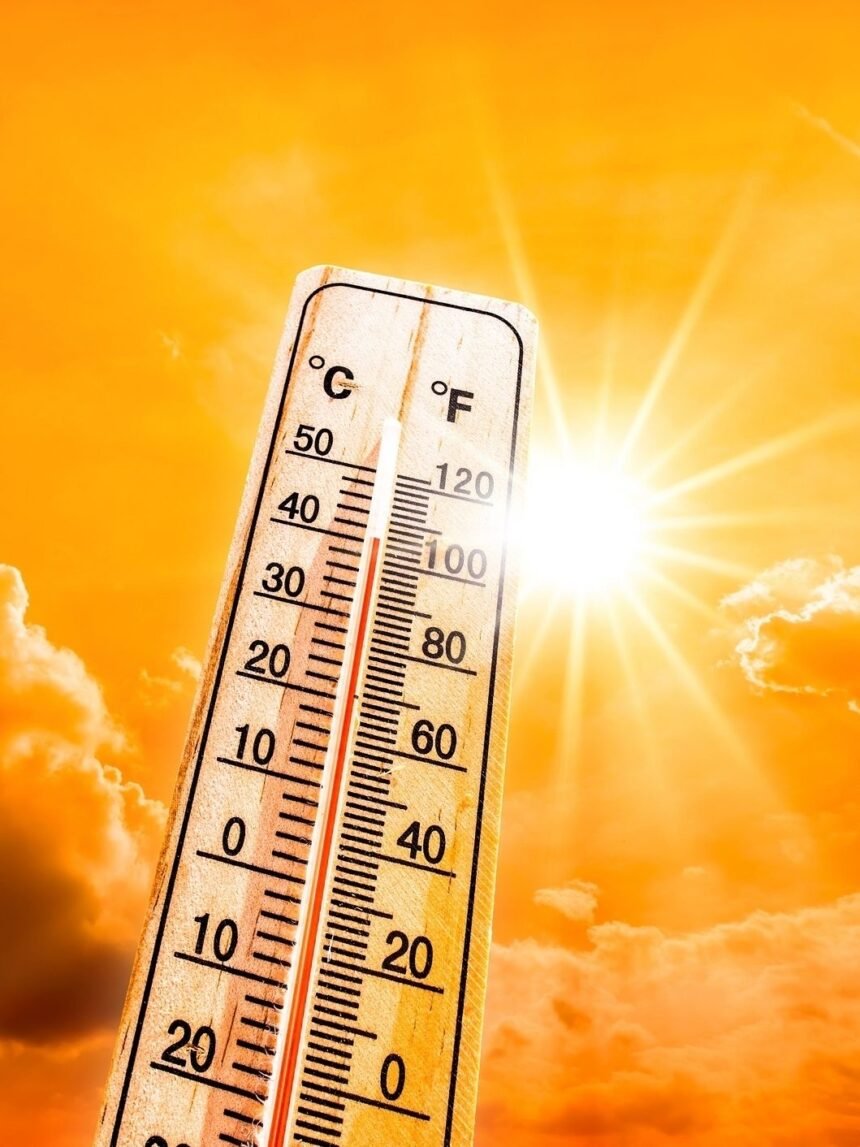
In 2025, parts of Gilgit-Baltistan recorded temperatures reaching up to 48.5°C — an extraordinary figure for a mountainous region situated 1,200 metres above sea level. The steady surge in extreme heat has become a critical global problem, with developing nations bearing the highest vulnerability to climate breakdown. Every summer, metropolitan centres like Karachi endure severe heatwaves. Global warming is affecting Pakistan at its worst, driven by a combination of natural phenomena and human activity.
While forest fires and volcanic eruptions contribute to rising baseline temperatures, human-induced factors are significantly more destructive due to their frequency. Chief among these is rapid deforestation, driven by commercial logging, paper production, urban expansion, and agricultural clearing. Trees are essential to maintaining climatic balance, absorbing particulate pollution and ambient heat while oxygenating urban air.
According to data from the Ministry of Climate Change and Environmental Control, less than five per cent of Pakistan’s land area remains under forest cover, with an estimated 1.5 per cent of these remaining forests lost annually. This presents an alarming ecological deficit, given that international environmental standards recommend a minimum forest coverage of 10 to 25 per cent. Furthermore, a report by the Senate Standing Committee on Climate Change classified Pakistan among 56 global “Low Forest Cover Countries” with total forest cover under 10 per cent.
Fossil Fuels, Urban Heat Islands, and Institutional Apathy
Another primary driver of extreme heat is the burning of fossil fuels, which releases greenhouse gases such as carbon dioxide and carbon monoxide into the atmosphere. Transitioning from coal and gas toward renewable energy sources must become an immediate priority.
Urban areas suffer the most acute temperature spikes due to the lack of green canopy and high population density. The widespread reliance on personal vehicles rather than public transit exacerbates emissions and urban heat. Many developed nations maintain efficient public transportation networks that reduce private vehicle dependence, conserve fuel, and support both economic efficiency and environmental health.
Why has Pakistan lagged behind? The fundamental issue is that climate change is rarely treated with appropriate urgency, remaining absent from key policy priority lists across successive administrations. Even when environmental policies are formulated, implementation remains weak.
Speaking at the Dawn Media conference, “The Air We Breathe”, former Supreme Court Justice Syed Mansoor Ali Shah observed:
“I don’t think the government is interested in changing the life of an ordinary person. It is all elitist, to satisfy or protect an industry or a pressure group, but an ordinary person is not in the picture.”
However, negligence is not limited to state institutions; civic responsibility is equally lacking. Agricultural crop residue burning remains widespread across rural areas despite official bans. Coping with climate challenges requires collective responsibility across both government and civil society.
Economic Costs and Strategies for Resilience
Heatwaves exert a severe toll on the national economy. Rising temperatures accelerate glacial melt across northern mountain ranges, elevating river levels, triggering flash floods, destroying infrastructure, and claiming lives.
To safeguard future generations, citizens must adopt responsible environmental practices, refrain from activities that exacerbate thermal pollution, and participate in reforesting efforts. At the policy level, wind, solar, and hydroelectric power must replace non-renewable energy sources. Furthermore, urban planning standards must mandate heat-resistant building materials and cool-roof technologies to adapt to hotter urban climates. Time is running out: failing to take decisive action today will yield catastrophic consequences for the future.