





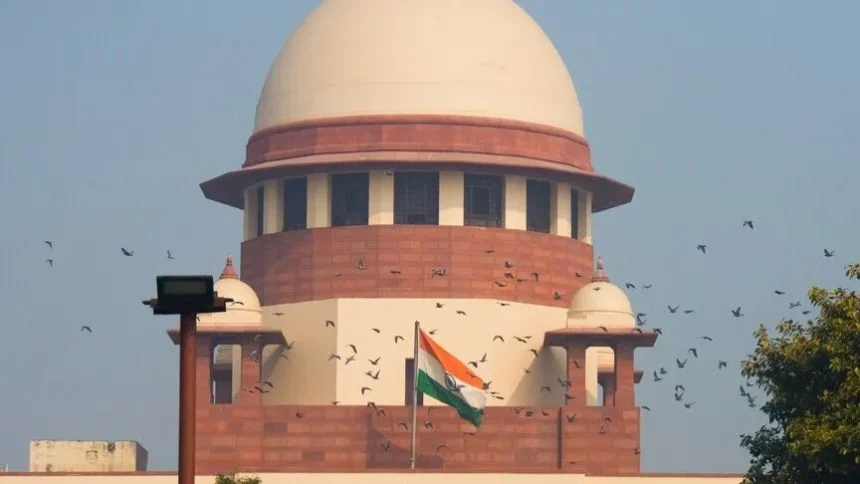
India’s Supreme Court has ruled that children, regardless of their age, possess a fundamental right to access and use the internet, emphasising that online safety measures must not come at the expense of their constitutional freedoms.
A two-judge bench comprising Justices Jamshed Burjor Pardiwala and Vinod K. Chandran held that internet access falls within the protections guaranteed under Articles 21 and 19(1)(a) of the Indian Constitution.
“We have no hesitation in saying that the right to access and use the internet is a fundamental right of every individual under Article 21 read with Article 19(1)(a) of the constitution,” the court stated.
The judges emphasised that constitutional rights apply equally to minors, rejecting the idea that children could be denied internet access simply because of their age.
The court observed that “children, irrespective of their age, enjoy the same rights,” adding that to “deny the same altogether would be as absurd as saying children below a certain age do not have a conscience worth protecting or a freedom of speech worth expressing.”
Addressing concerns about children’s exposure to harmful online material, the bench stressed that protecting minors and respecting their freedoms were not mutually exclusive.
“The safety of our children and their freedom are not at odds with each other. Our children are entitled to both,” the order said.
The ruling emerged from a petition filed by a non-governmental organisation alleging “serious lapses” by online intermediaries in preventing the circulation of child sexual exploitation and abuse material (CSEAM).
The Supreme Court directed the federal government to provide information about the technological safeguards used by digital platforms to identify and remove such content.
Among its directions, the court instructed authorities to establish a “national hash and URL list” database dedicated exclusively to detecting and removing child sexual exploitation material.
The proposed system would help identify known abusive content through digital fingerprints and website addresses.
The judges also called for greater emphasis on education as a means of protecting children online.
“Digital safety and age-appropriate sex education must form a part of the core curriculum,” the court stated.
The decision comes as several countries have introduced or considered restrictions on children’s use of social media platforms.
Earlier this year, India’s chief economic adviser proposed age-based regulations for digital platforms, arguing that “younger users are more vulnerable to compulsive use and harmful content.”
India has experienced rapid growth in internet connectivity and social media participation.
According to Statista, the country had more than 403 million Facebook users as of October last year, making it the platform’s largest national audience worldwide. India also had the world’s largest YouTube audience.
The Supreme Court’s ruling establishes that efforts to protect children from online exploitation must be pursued alongside recognition of their fundamental rights, rather than through the complete denial of internet access.