





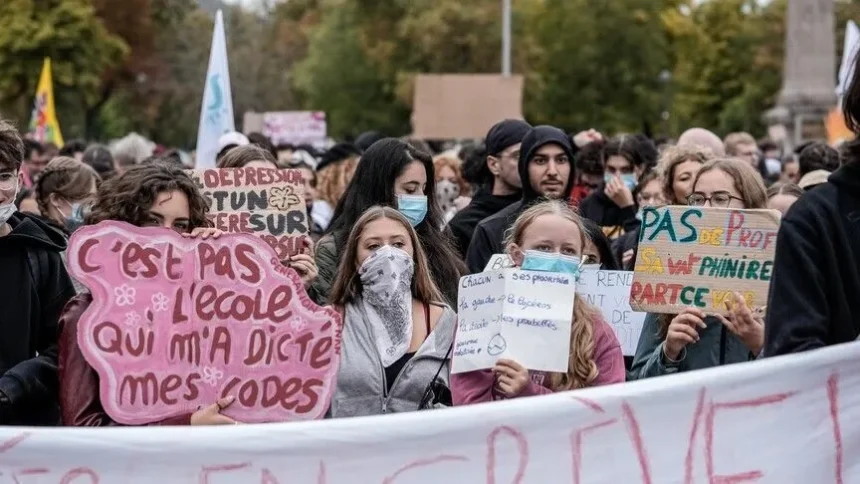
Belgian police deployed water cannons and tear gas against demonstrators in Brussels on Saturday as students, teachers and trade union supporters protested education reforms, austerity policies and alleged police repression.
The demonstrations took place in Brussels and Liège, with participants expressing concerns over education funding, rising living expenses and the financial pressures facing young people.
According to Belgian public broadcaster RTBF, confrontations intensified at approximately 12:30pm local time near Brussels-Midi railway station.
Protesters reportedly erected a barricade using construction fencing and threw objects towards police officers.
Security forces responded by deploying water cannons and tear gas before advancing towards the demonstrators.
Earlier in the morning, approximately 100 students and adult supporters, including teachers and trade union activists, had assembled near Brussels Central Station.
Although the gathering initially lacked official authorisation, demonstrators were subsequently permitted to march towards Brussels-Midi.
Police maintained a substantial presence along the route and conducted searches of several individuals.
Protesters raised slogans criticising the federal government’s policies and what they described as excessive police repression.
Saturday’s mobilisation followed confrontations between police and students during a trade union demonstration on October 9, which had heightened tensions between protesters and law enforcement authorities.
Peaceful Student March Held in Liège
Meanwhile, a separate demonstration took place in Liège, where approximately 250 people, predominantly young protesters, gathered outside Liège-Guillemins railway station.
According to Belga news agency, participants marched peacefully towards the city centre, joined by workers, parents and other supporters.
The demonstrators highlighted concerns about tuition fees, reductions in education funding, public transport expenses, working conditions and growing social inequality.
Several students described the difficulties of managing educational expenses while meeting everyday living costs.
They said financial pressures were forcing many young people to work alongside their studies, sometimes making it difficult to continue their education.
Some protesters also expressed solidarity with demonstrations taking place in neighbouring France on Saturday, where participants were mobilising against rising living costs.
While the Brussels protest resulted in clashes with police, the demonstration in Liège proceeded peacefully, reflecting broader student concerns about education affordability and government spending policies.