





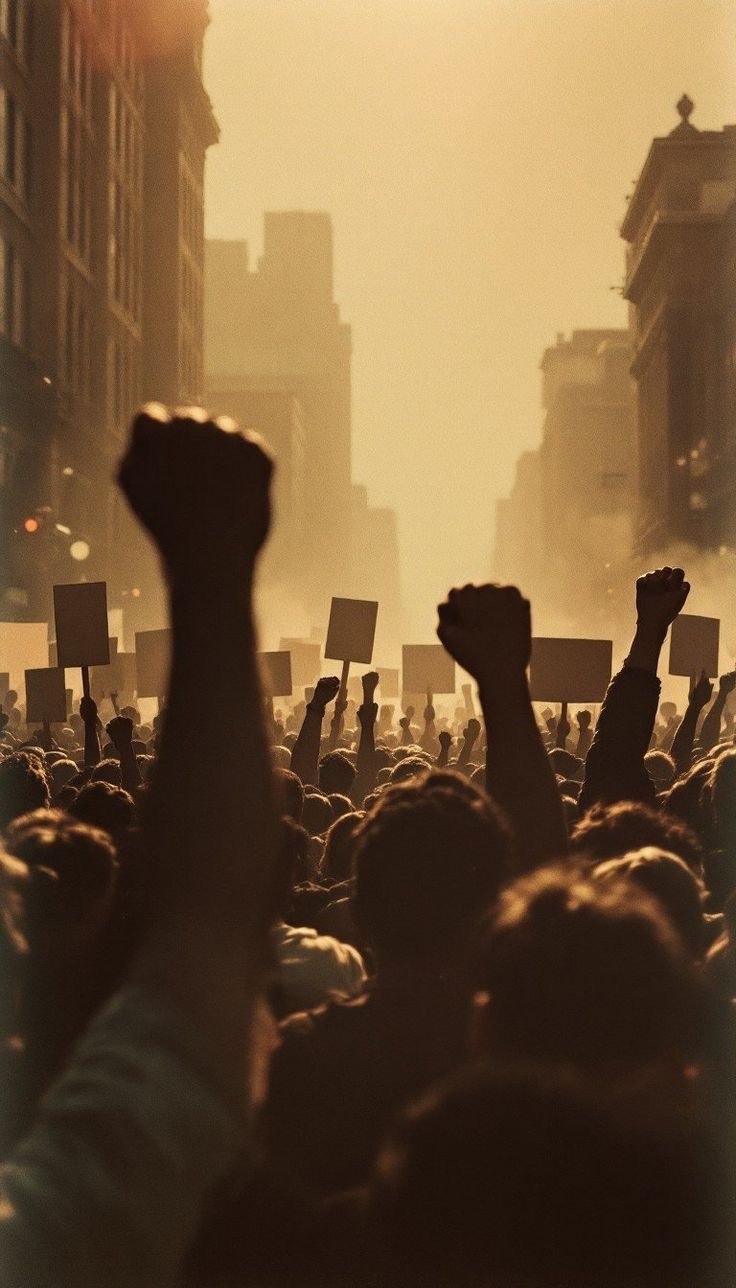
Nowadays, whenever we hear the word “protest”, we automatically associate it with “chaos”. The word has lost its original meaning of “hearing grievances” and now seems to be associated with causing trouble, as if asking for basic rights is too much. But let’s look at the other side first. Sometimes, they are right to use this word because it is difficult to describe the night of smashed vehicles, blocked roads, public disorder, and dozens of police officers charging at protesters with another word. The real trouble is how rarely the word is saved for such nights — getting stamped on at a random Saturday-night peaceful march or sit-in. Rather than telling us what happened, it has diverted us to what we should think.
Media scholars have been studying this for decades now. Todd Gitlin, an American political activist, wrote that reporters often looked for drama and conflict instead of amplifying the concerns of American students protesting in the 1960s. This was later termed the “protest paradigm” by researchers, whereby a demonstration is initially perceived as a public disorder problem and only later as a political argument.
What Organisers Have Said
Rather than relying solely on what scholars have written, this pattern will give a voice to the protesters themselves. In December 2023, women from the Balochistan Yakjehti Committee (BYC) marched to the capital, Islamabad, demanding an end to enforced disappearances and extrajudicial killings in their community, says Dr Mahrang Baloch, one of the organisers and a prominent BYC voice. The demands were specific and clearly articulated. However, many Pakistanis remained unaware of the situation due to a media blackout surrounding the march.
A related problem was also described by the Aurat March in 2024, when the organisers held a press conference in Islamabad and put forward 60 demands. Similarly, the police blocked roads ahead of a press conference organised by the Aurat March at the Karachi Press Club regarding the alleged abduction of two Baloch girls and the detention of one of the activists on the spot. Organiser Moneeza Ahmed expressed concern that even the families were not informed of where their daughters were being held.
The Word Is Not Applied Evenly
Think about it: the same roads that get blocked because of a parade on national days or a traffic jam outside the stadium for hours after a win do not get the same critique. The streets are just as jammed and the noise is just as loud, yet “chaos” rarely makes the headlines because such disruptions don’t emerge from political arguments; people simply accept the reasons behind them because it’s more convenient for them.
The real point is that the level of disorderliness varies depending on the situation. A protest demanding basic rights may be irritating to those who are privileged enough not to be affected if they are not granted, and may become “unruly”. However, if the cause is already respected, people will become “festive”.
Keeping Violence Honest
However, none of this should be used as a defence for violence. Some protests do turn violent, and readers deserve a straightforward explanation of when and how this happens. But precision is a double-edged sword. One broken window should not be the reason why a peaceful protest that happens the next day should be labelled the same. Interestingly, a study by Erica Chenoweth and Maria Stephan, who analysed hundreds of campaigns over the past century, found that non-violent movements were more likely to achieve their goals than violent ones.
The solution lies mainly in how we represent something through words. It is a simple disciplinary matter to choose statements concerning who organised the protest and what they demanded, by naming the people or authorities with the power to respond, and then conveying the true account of the disruption. Readers could learn more from the phrase “hundreds of protesters marched for hours and blocked the streets” than from “downtown chaos”. Instead of labelling, name the things themselves: it could be a scuffle, an arrest, an accident, or a broken door or window. Specific nouns would help to verify and argue.
Reducing every protest to noise and chaos would make it difficult to judge any of them credibly. It is only natural that some demands may turn out to be wise, while others do not. However, we can distinguish between them if we actually know what they are. One can disagree with a protest without describing it unfairly, which is not a favour to the protesters, but the minimum that readers expect.