





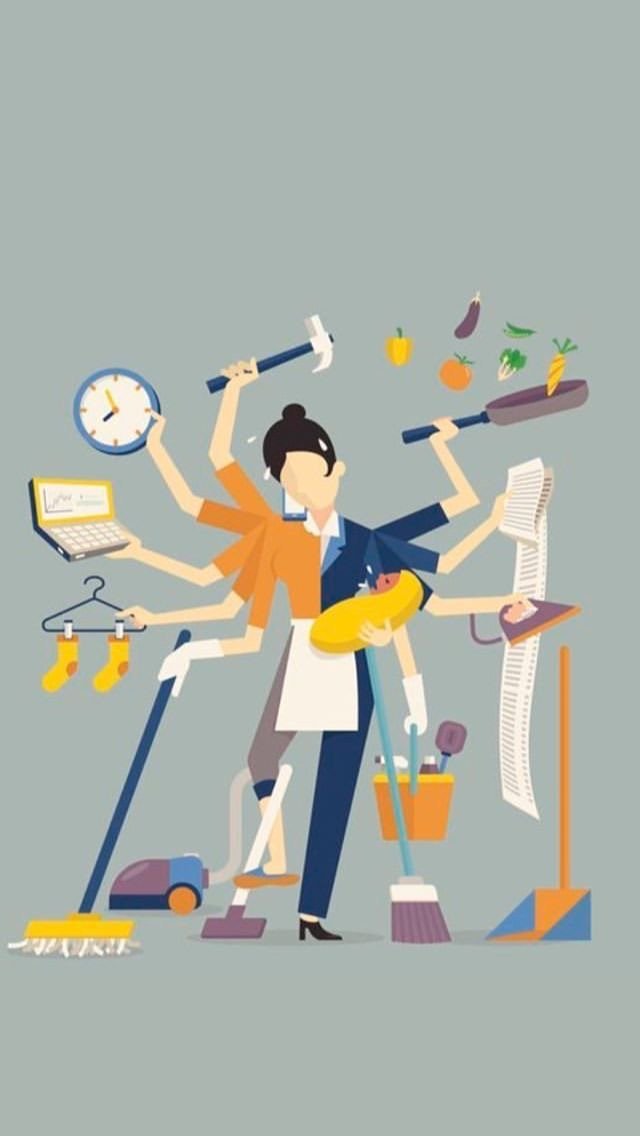
A common phrase in many homes is “He does so much to help around the house”. Typically uttered as a compliment, it is most often said with a nice implication. But there is an unspoken assumption in the sentence that leaves little room for question. No one volunteers to “help” with the cooking or the laundry; “helps” doesn’t apply to a woman. For her, it is just one of her jobs. The variation in language is incidental, but it conveys the extent to which families, and society at large, determine who is responsible for domestic work.
The Meaning That Is Concealed in One Word
To help someone is to assist with a task that is primarily their responsibility. The student assists the teacher with books, and the neighbour carries groceries. In every case there is somebody assigned to do the task, and the helper is a good person who does a favour for others. Help is the term used for a man’s housework, and the house is subtly divided into two groups. One person is the owner of the work; the other person is a generous assistant who comes in when he so pleases.
That’s why, even when the word is used as a compliment, it is still a problem. If a woman cooks every day and cleans every Sunday, she is performing her duty, and no one says “thank you”. A man who washes dishes twice a week is noticed, appreciated, and sometimes boasted about to the family. All this, and the credit is disproportionate.
Where Does This Idea Come From?
This way of thinking dates back a good deal earlier. Men had to work outside the house; women had to work at the house and care for the family. Domestic work was counted as real work when women did it, but it was unpaid. Domestic activities — cooking, cleaning, and caring for children — were assumed to be a reflection of a woman’s character and were not taught.
Although much women’s education and employment outside the home has occurred, the old assumption hasn’t gone away at the same rate. Research conducted in numerous countries has revealed that women still spend many hours on unpaid care and domestic work even when they work full-time. This additional workload is referred to as the “second shift” — the load awaiting them at home after the workday ends. The expectation didn’t change, and many women work two jobs because their husbands are “so supportive”.
The Invisible Part of the Work
The other issue is that housework is not just a task; a large part of it is mental. There always has to be someone who remembers that the milk is gone, the child needs a new school uniform, the guests are coming on Sunday, and the electricity bill is due. This planning and remembering can be referred to as the mental load, and it is typically carried by women.
A man’s “help” tends to come at the right time, but only when he’s told. The woman is still mentally holding the list and giving out the tasks, which means she’s still the head of the family, and he’s a worker who’s receiving direction. Real shared responsibility would be him realising what needs doing before being asked and completing the task from start to finish.
Why It Affects Everyone
This may seem like semantics to some, but the question is: are the jobs being completed? However, language influences expectations. One day, kids grow up and understand who to blame — their father for “helping” and their mother for “doing”. Boys might be led to believe that chores are something that is not required or expected, and can be rewarding if accomplished. Girls might find out it is their lifelong responsibility, no matter what they do or don’t do.
The impact is not contained within the household. Women who spend long hours on unpaid domestic work have less time to study, rest, pursue their careers, and attend to other interests. Meanwhile, employers sometimes believe they can’t count on women’s availability or commitment due to family responsibilities. In this way, a sentence at the dinner table links to broader disparities in education and employment.
Men are affected too. They are treated as guests in their own homes and forfeit the intimacy of caring for their children and their own home. They also are trapped by the notion of a “good man” as a man who does “just a little bit more”, rather than one who does “his share”.
Changing the Words and the Habit
Making this change doesn’t necessitate anything dramatic. It starts with subtle changes in attitude and speech. People should not say a man is helping, but simply say that he is cooking, cleaning, or taking care of the children; it is his home and his family as well. The tasks can be shared between households as well, as can the planning, so that one person doesn’t have to keep hold of the plan.
It also prevents giving special applause for routine efforts. A father is not a babysitter if he cares for his own children. It is not a favour when a husband washes his own plate. The removal of praise has to be shared with the work becoming visible.
The phrase “helping with the housework” is innocuous enough, and a common one, but it implies that the home is women’s, and that men are guests who occasionally drop in. This idea isn’t solely of the making of language; it’s continually restated, sentence by sentence. Notice of the words that are used and the assumptions behind them will be necessary if domestic work is to be shared fairly. Where there’s a family, there’s a role to play, and no one has to be thanked for playing it.