





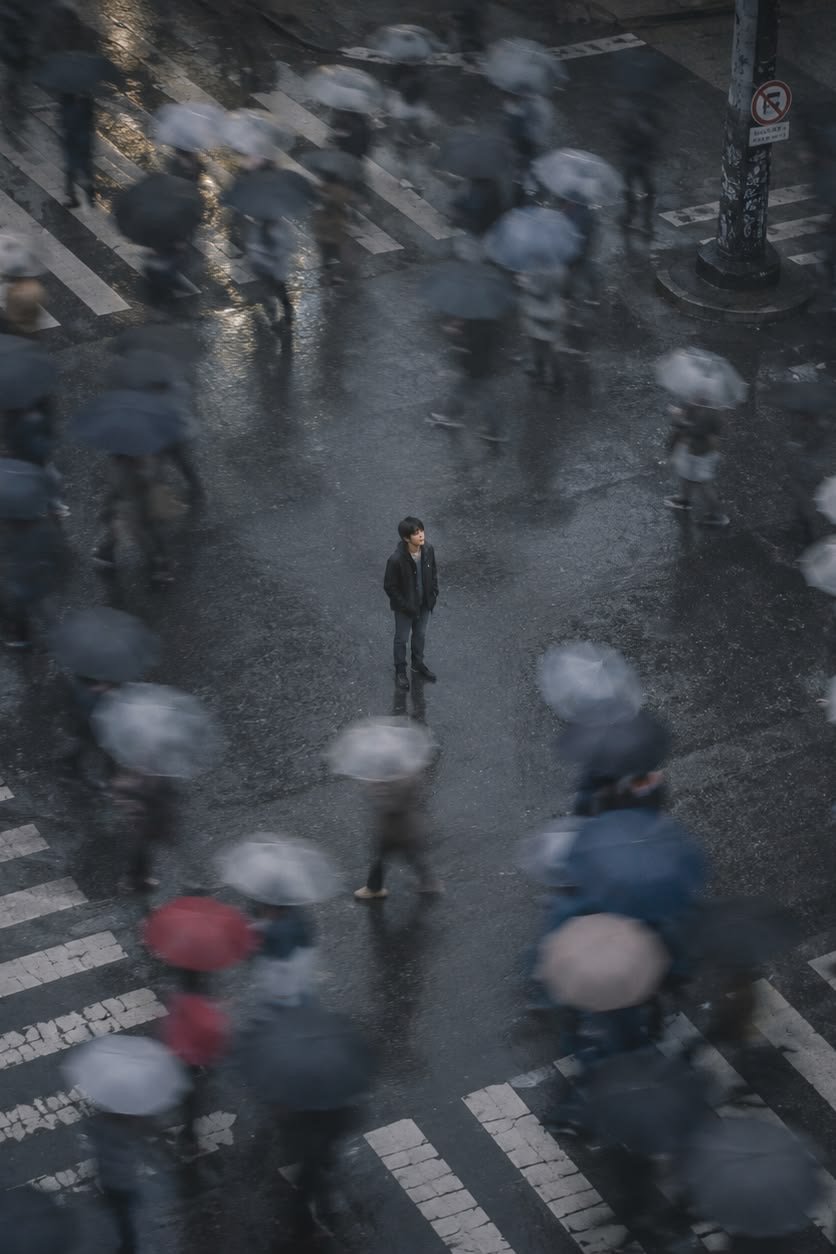
How much of your life is your own? Is it a product for public display that must partake in every new trend for the looks of it?
This piece predominantly bombards you with a series of questions — questions that ask: what happened to doing life your own way? Are we witnessing the return of slavery in a newer, much evolved form? Since every breath we take is meant to be a certain way, is living life the goal, or is it to perfectly exhibit it to our online audiences?
Choosing to live an all-time Instagrammable life has to be a tiring job. Seeking online validation or documenting life in a way that confirms to the world that you are an active member of the trend cult cannot always be worth the resulting loss of originality. Isn’t it the rawness of every new experience which makes life worth living, which produces the tales and stories worth going over and over again, which turns you into a human of your own? What joy is the processed and artificial offering us today that we stand ready to give up on that which speaks us?
The Curation of Physical Space
It is indeed a rewarding feeling to find oneself seated in a photographable restaurant, constructed such that the aesthetics do not disappoint, furnished with fancy material that is most spoken about. But an overload of uniform, almost identical structures around a city has to be tiresome — really makes you think if the space is designed primarily for comfort or for a lens. People come by and advertise the aesthetics for free, pay for both the food and ambiance in turn, and leave so more people may follow.
It should not be too challenging to occasionally return to arrangements more breathable, those that remind us of ourselves — places that do not have us worried about not having taken enough photos, but those that we leave with something to take back home with us, those that do not demand more than our presence alone.
Museumification begins with physical space — the space that inhabits staged happenings, while we actively catalyse the process. Since certain visual tropes perform distinctively better on algorithmic feeds, we witness the homogenisation of commercial and public spaces across the globe. Within these spaces, ordinary objects almost characterise museum pieces — even food is served as an installation. If all your money is for the visuals, and the environment dictates behaviour, what exactly are you paying for?
Performers in Our Own Lives
To think of it, we might not be left with any ordinary human experience today, since the concept seems to have shrunk to a regular production of polished artefacts in the name of “experience.” Once we set foot on perfectly documenting life, how much are we actually present in it? How much are we connecting with the people that share it with us? How fair is it to be more concerned about serving your Instagram followers with the perfect content to watch through a post than to treat yourself with the little moments that can be life-changing, to the carefree laughter you occasionally share with your friends, to getting to know someone with your undivided attention?
When we constantly view our immediate surroundings through our camera lens, we develop a split consciousness. We are no longer completely present in our bodies; instead, we are performers — both acting and directing behind a screen. This conscious curation extends beyond “eventful” experiences to the most mundane aspects of our existence. What does that leave you and I with? A strictly imposed aesthetic discipline.
Human life is inherently messy, sometimes dull and unresolved, sometimes almost too complete to be real. Tying a rope to its throat in hopes of controlling it in a calculated manner, we deny ourselves exposure to the fuller subscription to life that we naturally have. Not every day is born to be poetically framed; not every friendship heartbreak or business loss is supposed to be a lesson package for personal growth.
Reclaiming the Unrecorded Moment
A meaningful conversation in the middle of nowhere, a perfect sunset view from a mountain top on a hike, a colourful dining table full of delicious food — how hard is it to sometimes donate the goodness of it all to the moment? I am sure we have all at least once in life missed out on how surreal a moment could feel just because we were too busy capturing it through our phones. The goal is to save ourselves the good memories, to ensure they remain as fresh and vivid as they are when born, but what we compromise in the process is the goodness of the unrecorded memories — feeling the vividness of it in real time. This is what brings us to the troubling reality: we are fast becoming tourists in our own lives.