





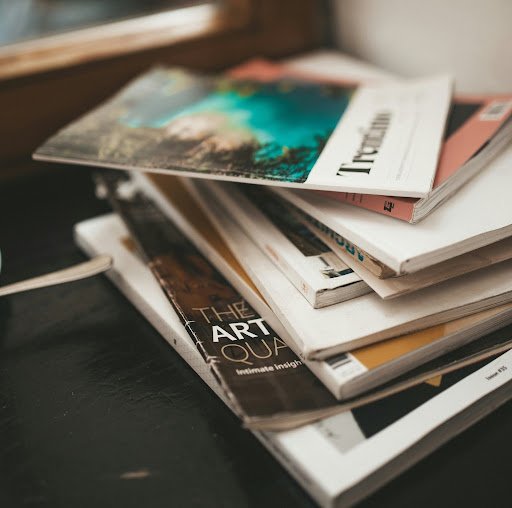
There is a particular smell of an old literary magazine, the smell of dust and glue, the smell of waiting to get hands on the issue, and the smell of nostalgia. You do not get that from a Substack or any digital publication where notifications land in the inbox every month and get ignored. Literary Journals have always been a part of society, where poets and writers used to wait months and months to receive their copies. This is a kind of nostalgia: people watching disappear and knowing exactly when it happened.
The Weight of Waiting
Small literary magazines used to do a strange and important job: they slowed things down on purpose. A poem accepted by a printed journal might not appear for months, unlike today’s magazines where everything is just a click away. An issue might take a year to sell out completely. Nothing about this was efficient; rather, it was a form of slowness, a form of attention, and a form of waiting where people waited endlessly to read stories, poems, and skim through the pages.
And in my opinion, that kind of waiting is gone. It didn’t happen because writers stopped wanting it; I still crave that kind of peace and relaxation, but because the spaces built to hold it, such as bookstalls, print runs, and libraries, have been quietly replaced by feeds and digital clicks that reward speed over patience. I remember that during university research, my friends and I always reached for digital PDFs rather than flipping through physical indexes. It’s faster, but something about that convenience still unsettles me when I think about what is replaced.
The Shift
I know this shift from the inside, not just in the abstract. Back in 2018-19, I used to read Urdu monthly digests, which were readily available at bookstalls, thick with enough material, such as short stories, poems, and interviews, to last a month. By today, nearly all of them have moved to digital editions. The print runs that used to sit in newsstands have thinned out or disappeared, replaced by PDFs and app subscriptions. It happened gradually enough that it didn’t register as a loss, and I am still trying to remember the last time I actually held the printed issue. What is lost when that infrastructure thins out isn’t just print; it’s the editorial issue number.
A journal with limited pages has to choose, argue, and reject submissions. But the algorithm doesn’t reject anything. The discipline of curation — an editor staking and stamping their name on a stack of 80 to 100 pages — is a different kind of culture many of us witnessed that was prioritised over feeds and optimisations. But the discipline hasn’t disappeared so much; it just became digital, which is its own kind of story. A generation of magazines, both in Urdu and English, is still figuring out how to survive online, even as they can afford to return to print.
The Rebuilding, In Stages
Some of the editors watching older magazines fold are also the ones building things back up, deliberately, in stages. Northwest Review, a literary magazine at the University of Oregon, shut down when the funding dried up in 2011. Later, a small independent team revived it in Portland in 2020, but it folded too in 2023. After its relaunch, it went digital and was incorporated into a university publishing class, where students read submissions alongside professional-level genres. The editor-in-chief claims that this relaunch was a scrappier and more sustainable model than the old one. But it didn’t stop the ambition.
Trapp says that their eventual plan is also a yearly print anthology, so readers can have “the pleasure of a beautiful, printed artefact”. Eventually, the plan doesn’t treat print and digital as enemies, because both survive month to month. But editors still reach back to paper because scrolling isn’t enough.
I put the same question to my own university’s magazine— a biannual with spring and fall issues built around rereading submissions and back-and-forth with contributors to get each piece right. Would print issues add to that load? One of the editors I spoke to didn’t think so because curating and editing already takes that effort. She further claims that “the bigger considerations would be funding and reader behaviour.” Most readers today find it more convenient and economical to browse the magazine online, which is one of the main reasons they haven’t moved toward print.
Things That Deserve Our Patience
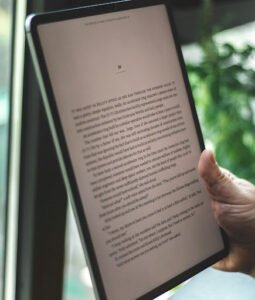
While a newsletter asks you for 30 seconds, a magazine asks you to sit quietly in a place and hold something heavy. The side effects of this decline are quieter than they should be. When print space disappears, emerging writers disappear. Online, everything is technically available, but availability isn’t the same as being found, and being found isn’t the same as being read closely. We have traded scarcity for noise, and noise buries new voices as effectively as silence once did. It feels like abundance when it’s happening, which makes the loss harder to name. For those who think the story ends here: No, it doesn’t. Revival isn’t nostalgia dressed up as a comeback.
Revival takes time, and rebuilding itself is unglamorous. Independent editors treating a magazine as infrastructure worth rebuilding slowly, one sustainable issue at a time, instead of resurrecting the old model and watching it collapse again, could look closer to home. Like many university magazines choosing to put a stack of thoughtful pages in the reader’s hands even if it starts small. A single annual print issue, chosen carefully rather than produced constantly, could do more for a young writer’s confidence than a hundred quiet online publications ever will. A name in a printed artefact feels less like content and more like a proof.