





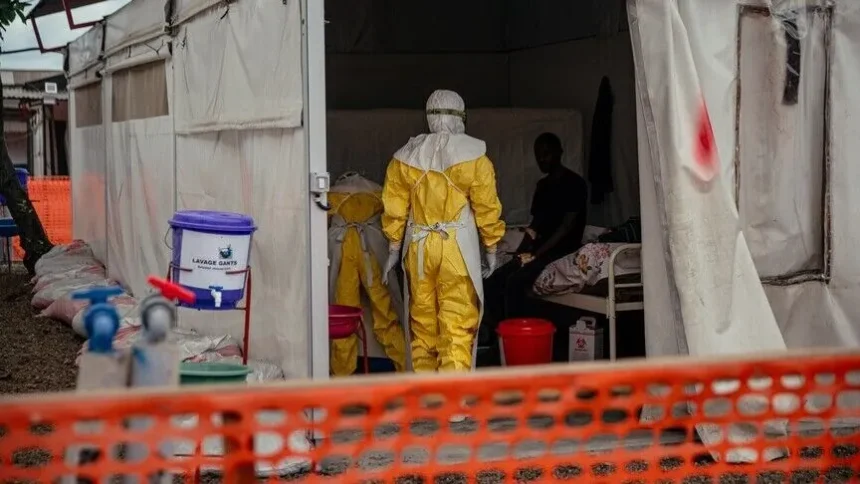
The Ebola outbreak in the Democratic Republic of the Congo has expanded sharply, with 5,794 confirmed cases and 2,786 deaths, according to the World Health Organization (WHO).
In its latest update, released late Friday, the UN health agency said the outbreak had spread from 54 to 60 health zones since its previous assessment on August 14.
The figures for DR Congo represent a case fatality ratio of 48.1%, while WHO described the increase in infections and geographic spread over the past three months as a “substantial increase” in the scale of the outbreak.
The agency said the outbreak remains a public health emergency of international concern, warning that delays in detecting infections could accelerate transmission within households and communities as well as in healthcare facilities.
Cases have also been detected outside DR Congo. WHO said 5,815 confirmed infections had been recorded across all affected countries, including 20 in Uganda and one in France.
The overall death toll stands at 2,788, including two deaths in Uganda, while at least 1,314 patients have recovered.
WHO warned that cross-border transmission remains a significant concern. Although screening and surveillance measures are operating at airports, ports and official land crossings, movement through informal border routes could allow infections to spread undetected.
The outbreak is caused by Bundibugyo virus disease, a severe form of Ebola. Infection can spread through direct contact with the blood or other bodily fluids of infected people and through materials or surfaces contaminated with those fluids.
Transmission risks can increase in healthcare facilities when infection-control procedures are inadequate and during unsafe burial practices involving direct contact with the bodies of people who have died from the disease.