





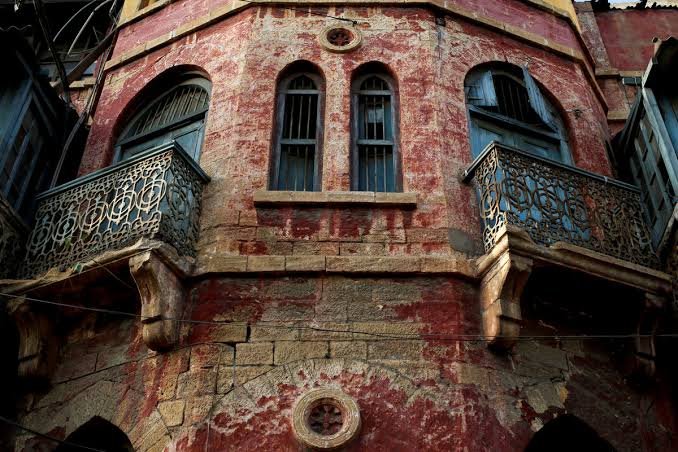
Conversations surrounding the demolition of a colonial building, the restoration of a historic neighbourhood, and the construction of a new monument often warrant a disproportionately indifferent public reaction. And why wouldn’t that be the case when buildings are reduced to only physical structures? However, architecture has repeatedly occupied a far more significant place within cultural criticism than mere brick, stone, and concrete structures. The reason for this is simple; buildings carry memory as well as shape memory and the dominant cultural perspective and identity. Take Pakistan, for example: the gradual disappearance, neglect, or repurposing of temples, fire temples, gurdwaras, and other minority heritage sites sets the stage for which histories have visibility in public life. The discourse, then, is never merely about buildings, but something far more nuanced.
The concept of lieux de mémoire (i.e sites of memory), presented by the French historian Pierre Nora, is useful for understanding this phenomenon. His argument hinges on the idea that living memory is fragile and constantly receding; hence, modern societies increasingly rely on physical objects and places for the preservation of memory. Memory is externalised in the form of monuments, museums, archives, and buildings as generations pass and traditions weaken. In this sense, architecture functions as a cultural archive. It seeks to preserve narratives that would otherwise disappear. That is why, despite having exhausted their functions, certain structures continue to command public attention. The symbolic value of a centuries-old mosque, an abandoned railway station, or a colonial courthouse often exceeds its utility.
The endurance of such buildings is owed to their embodiment of narratives. Moreover, they serve as a link between present generations and historical experiences, fostering a sense of continuity over time. Architecture, as it shapes and preserves collective memory, therefore, becomes political. This poses an important question: “Insofar as architecture holds and preserves memory, why is there major disagreement within societies about what should be remembered?” This can be understood by recognising that memory is never neutral. Not everything is remembered by society. Memory is selected; some are commemorated while others are forgotten. Architecture becomes entangled with power through decisions about which buildings are restored while others are left to decay. Hence, the preservation of a structure is a declaration that a particular history deserves public visibility.
The concept of Hauntology, by Jacques Derrida, further substantiates Nora’s understanding of memory. According to Derrida, the past never fully disappears; it is a lingering and haunting presence within the present. Architecture serves as an acute example of this. Buildings serve as the remnants of the political systems, social values, and cultural worlds that produced them. Traces of empire remain embedded within a colonial building despite its
new postcolonial identity. A historic haveli doesn’t just function as a heritage site; it serves a commemorative purpose, keeping alive ways of life that no longer exist. Moreover, ruins hold political significance because they reveal the absence of the structure and narrative associated with them. Hence, according to Derrida’s theory, architecture that survives holds within itself the ghosts of what was. According to Derrida, architecture is political because a monument hailed by one group may symbolise conflict for another. Architecture can hold multiple memories simultaneously, and these memories do not always coexist comfortably; often, the structures that unsettle the majority are even erased.
While Nora and Derrida both associate the political nature of architecture with memory, Kamil Khan Mumtaz (Pakistani architect and thinker) offers a different perspective. According to him, architecture is an expression of a civilisation’s worldview. Traditional architecture serves as a repository of cultural values and ethical principles, and is a means of understanding humanity’s relationship with community, nature, and the inviolable. Buildings seek to materialise identity. Mumtaz asks a deep question: “What happens when buildings are preserved, but societies abandon the cultural traditions that gave them meaning?” Carefully restored and celebrated as heritage, a Mughal monument may remain standing; however, if it is reduced to a tourist attraction, then preservation alone cannot guarantee continuity. A society often loses the worldview that produced the architecture but inherits the structure. Architecture, then, is political because of what it reveals about contemporary identity.
A comparison of the above-mentioned thinkers brings us to the threshold of a central paradox. Buildings have meanings that are constantly changing; architecture serves as preservation of memory, which is itself unstable; all traces of the past are continually
reinterpreted by new generations. They’re embodiments of a cultural identity that is never fixed. At the intersection of continuity and transformation, we find architecture.
Recognising architecture in this manner is significant for adding nuance to the discourse surrounding contemporary efforts in preservation and development. The discourse mainly hinges on conflicts between progress and tradition, or modernisation and conservation; despite this being important, it fails to discuss and address what is at stake.
To conclude, the concern is beyond memory; it is which histories remain visible and glorified, which identities are granted legitimacy, which cultural narratives prevail and hone public life, and which ones are erased. Hence, understanding architecture as a form of cultural criticism, rather than merely a technical or aesthetic discipline, is significant. Buildings form societies’ imagination of themselves. History is encountered far more through the places we inhabit than through the historical archives.