





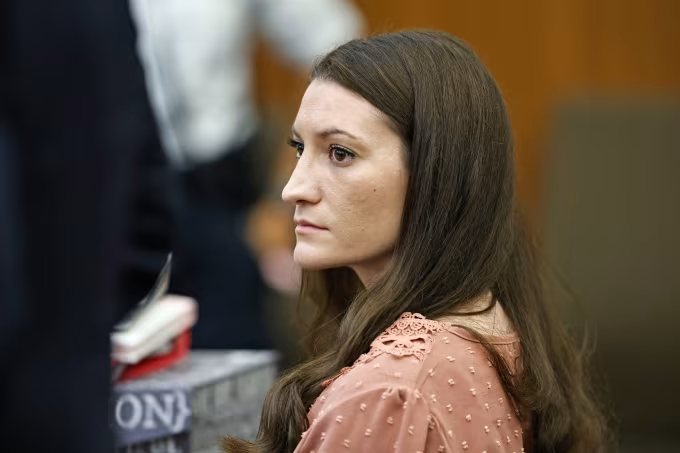
Today, a friend of mine and my aunt shared their views with me and asked for my opinion about the Lindsay Clancy trial. I did not know much about the case other than that this woman had killed her three children. After learning more about the case, I am feeling all over the place emotionally. I am struggling with what to say from the perspective of a regular person while also considering how I should objectively approach the case from a clinical perspective.
Three main questions come to mind. First, when someone is seeking mental health treatment, how thoroughly should a doctor or other provider assess the individual, particularly when there are significant or rapidly changing psychiatric symptoms? A diagnosis or a single assessment captures only one point in time. When symptoms are changing, how often should risk, functioning, medication effects, sleep, thought processes, and changes observed by family members be reassessed?
Second, should mental health treatment involve more of a team-based approach, especially when multiple providers are involved or medications are frequently being changed? When someone is undergoing multiple medication changes or experiencing worsening psychiatric symptoms, how do providers balance the person’s autonomy with concerns about safety and the possible need for a higher level of care? At what point should communication among psychiatrists, therapists, hospitals, primary care providers, and family members become part of a more coordinated treatment approach? There are laws and procedures that allow intervention under certain circumstances when an individual presents a serious risk of harm, but there are also important legal and ethical protections surrounding a person’s autonomy and right to make treatment decisions. Where should that line be drawn?
Finally, I find myself thinking about accountability. If someone kills their children but is ultimately found not criminally responsible because severe mental illness prevented them from appreciating or controlling their actions as required by law, what should happen next? A finding of lack of criminal responsibility does not necessarily mean that an individual simply returns to the community. Psychiatric hospitalization and continued evaluation may become part of the legal process. This raises another difficult question for me: What level and duration of psychiatric treatment and supervision are appropriate to protect both the individual and the public?
I do not believe that acknowledging severe mental illness means that we have to minimize the deaths of three children. At the same time, acknowledging the horror of what happened does not mean that we should disregard the possibility that serious mental illness affected the person’s state of mind. Both realities deserve careful consideration.
For me, the Lindsay Clancy case raises questions that extend beyond one defendant or one verdict. It raises difficult questions about mental illness, personal responsibility, patient rights, clinical responsibility, continuity of care, and how our mental health system responds when someone’s condition is rapidly deteriorating. Perhaps one of the most important questions is not simply who should be held accountable after a tragedy occurs, but whether there are ways for our mental health system to recognize warning signs, coordinate care, and intervene more effectively before a tragedy occurs.