





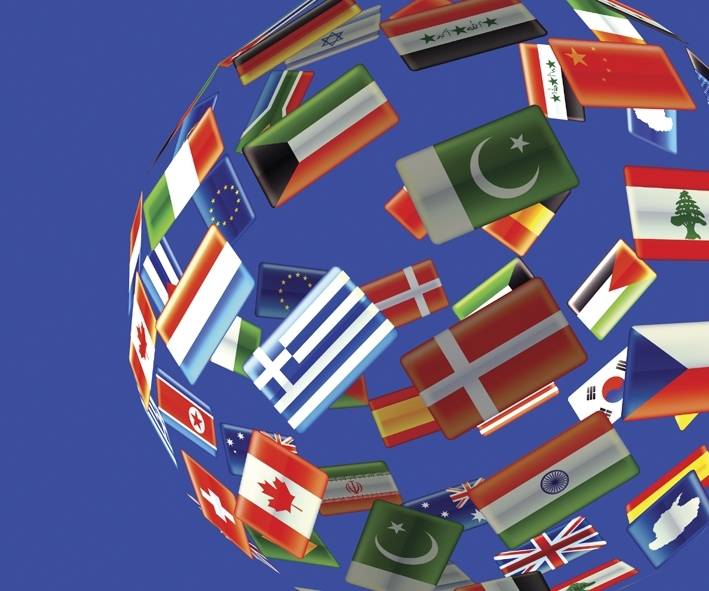
The world has experienced several phases in history, from patriarchal societies to empires to colonies and now to independent sovereign states. If we have a look at history, we will see that the dynamics of states have also varied. Before the Cold War era, the world saw the bipolar order with the victors of WW2 ruling the globe, i.e., the USA and USSR; then the post-Cold War era is marked by a unipolar order with the hegemonic power of the US. Now, in the modern era, the world has no longer remained unipolar; rather, it has become multipolar with various global powers, i.e., the development of China and the resurgence of Russia. Now the question arises here: what difference has multipolarity made to the fate of the Global South? Will the conditions remain the same, or will the multipolar era bring new opportunities for the Global South?
The Concept of multipolarity can have dual impacts on the growth and development of the Global South. The multipolar world can affect the Global South in two main ways: politically and economically; these aspects can be affected either positively or negatively. One of the major advantages that the Global South can get from the emergence of a new multipolar world order is less dependency on the West.
Developing states can get out of the debt trap imposed by Western economic hegemons such as the IMF and the World Bank. On the other hand, the Global South can become dependent on new global powers, which will just lead to the change of financiers. Moreover, multipolarity can reduce the centralisation of power, as coined by Lord Acton: “power tends to corrupt, and absolute power corrupts absolutely”. Through shared power, states have more opportunity to bargain for their interests because they have several options to pursue according to their national interest, while it might create a problem for the Global South to balance their policies between various global powers. This can affect state policymaking and can also lead to choosing a single bloc, creating Cold War scenarios.
Talking particularly about the regions of the Global South, for instance, South Asian countries like Pakistan can take advantage of China. South Asian countries can gain economic and technological advantages through China’s Belt and Road Initiative, which aims to develop the Global South with mutual benefits. While there are also concerns about India’s rising power, South Asian states have to maintain a balance between the two global and emerging powers of the multipolar world for their survival.
Furthermore, although the multipolar era would have economic impacts on the Middle East, the greatest benefit the Middle East can earn from the multipolar era is the solution of the Palestine issue, which is connected to almost all problems of the Middle East. Through the various global powers taking part, the Palestine issue can be seen through the lens of the US and its allies; a more neutral approach can be achieved through the participation of China and Russia in solving the matter. A multipolar world is the reality of the modern era; however, it raises questions about state sovereignty and survival. The question is raised: what would the world look like when each state has its own conditions and has equal power to fulfil them? Will it lead to global chaos or to the distributed power of states, each having its own priorities