





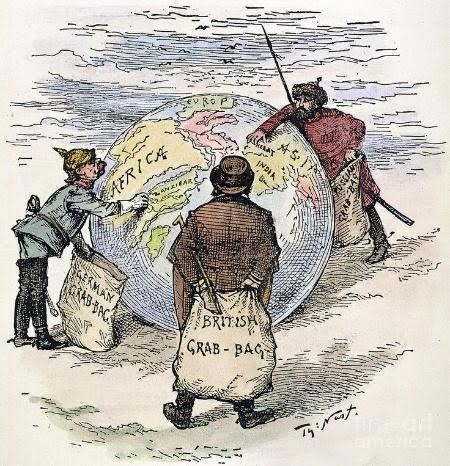
Africa, a continent of marvels, has always been the apple of the eye of every global power. The topic has been around since the nineteenth century; however, geopolitical strategies have changed, but the scramble continues. A country with abundant natural resources that can be either a curse or a blessing, depending on the African government’s approach.
Independence on paper, exploitation in practice
Looking back through history, one can see that Africa was geopolitically significant even in the fifteenth century when it was discovered by Europe. Since the beginning of the trade, Europeans have had greedy eyes on it. However, the real scramble began in the nineteenth century when Europeans powers broke the large continent of Africa into small pieces and divided it among themselves.
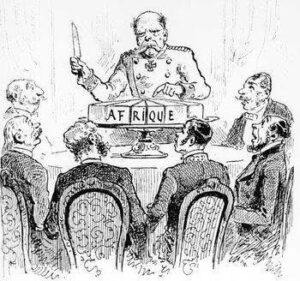
Now comes the important question: what was the scramble for Africa in the nineteenth century? Previously, Europeans competed in Africa for territory, cheap labour, and control over resources, and why shouldn’t they? African territory served as a vital conduit for trade with Asia. Additionally, there was a trend back then in which whoever owned the most land was ranked as the most powerful, like having the most nuclear weapons today. With land came gifts, such as cheap labour; for a low wage, these Africans would work in mines and factories, assisting Europe’s development. And how could we forget the natural resources, the precious copper, stones, and metals that fueled the Industrial Revolution?
Without a doubt, Africa gained independence after WWI and WWII, and it may have appeared that the African scramble was over, but that isn’t the whole picture. Africa has always suffered from political instability, as the world’s powers have attempted to undermine its sovereignty in recent years by trading investments for its resources.
The continent the World cannot afford to lose
Before we get into the major debate over whether Africa is a strategic player or simply a battlefield for powerful nations to demonstrate their influence. Let’s investigate why Africa is brought up so frequently. In what ways does it benefit the global community? Could we picture the world without it?
The simplest response is “no.” Because 30% of the world’s mineral reserves are found in Africa alone. This means that minerals like cobalt, platinum, lithium, magnesium, and chromium, which are all found in Africa, are used to make smartphones, fighter jets, armed weapons, and even electricity lines.
Another shocking revelation may shake you if I tell you that other races, such as Asians and Europeans, are shrinking in number. According to demographics, by 2025, one in every four humans will be African. Given that Europeans, Japanese, and Chinese are ageing more quickly, by then the economy of 2050 would automatically belong to whoever controls the greatest number of African labourers.
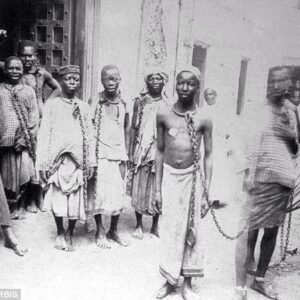
(Image 3: Enslaved Africans photographed in chains during the slave trade era.)
Thus, not only Africa, but also Africans, will change the world’s geopolitics in the coming years. Marking Africa as the most contested region of the world for its blessings. However, whether Africa has evolved over time to become a strategic player because of these blessings remains to be answered.
Minerals, Money and Machine guns
Africa, also known as the “Cradle of Humankind,” should now be referred to as the “Cradle of Scramble.” Africa and the world’s powers are linked by the theory of dependency. Africa, despite its mineral wealth, lacks advanced technology and relies on these global powers for survival, economic development, and technical advancement.
Cobalt colonialism
Africa is the ideal example of how vulnerability can be exploited against oneself. As previously stated, Africa contains more than half of the world’s minerals, which are essential for the smooth operation of the artificial intelligence industry and our cell phones. One major problem, though, is that they lack the capital and technology necessary to make it profitable.
China saw it as a wonderful chance to establish trust with Africa. It consumes more than 70–80% of the cobalt produced in the Democratic Republic of Congo. Why is it consuming so much? Because China Molybdenum Co., a Chinese company, is the world’s largest cobalt producer. Seeing China’s regional influence has made both the European Union and Americans anxious. Because they were busy expanding their influence in Middle Eastern countries, the Chinese took the initiative.
To counter the Chinese influence, both the Americans and the European Union established a Lobito Corridor, a railway linking Congolese mines with Angola’s Atlantic coast. Aside from that, many Gulf countries, including the United Arab Emirates, are increasingly investing in African mines to reduce their reliance on oil and increase their dependence on renewable energy. A prudent decision to preserve dominance, as oil may run short in the coming years.
Debt trap or lifeline? The price of China’s generosity
The mother continent faces many challenges due to a lack of capital, causing issues such as poor infrastructure and inadequate industrial capacity. This allows powerful countries to exploit them, as weak nations seldom get the chance to make autonomous judgments. The weak infrastructure and funding deficit prompted China to intervene to fill the infrastructure gap through the Belt and Road Initiative. It comprises two ports in Ethiopia and Djibouti, a railway line which connects Ethiopia with the port of Djibouti and power plants. Sounds generous, right?
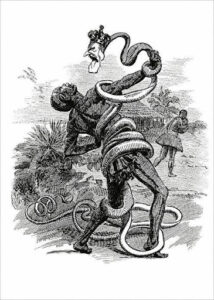
But here is the unforeseen. Although China may be well-liked by the UN, the Belt and Road Initiative (BRI) is actually a trap designed to exploit African resources rather than a gift. China’s state-backed lending institutions, such as the China Development Bank and China Exim Bank, provide funding for the project. However, all ports and railroads that China has sponsored will become its property if Africa does not repay the loan with interest on time.
China is not the only one vying for control; the Gulf and the European Union are also in the rivalry. In response to China’s campaign, the EU (European Union) launched the Global Gateway initiative, explicitly opposing China’s policies and asserting that, in contrast to China, it opposes labour exploitation. Gulf nations are also surreptitiously purchasing African farmland and ports in Sudan and Tanzania during this tug-of-war to create food and resource corridors for themselves.
Mercenaries, drones and the new scramble for bases
Africa’s lack of legitimacy is another weakness that the world’s superpowers are taking advantage of. Many of Africa’s nations, including the Sahel and the Gulf of Guinea, are experiencing insurgencies. Unfortunately, those African countries’ national armies are powerless to defend their own homelands against the uprisings.
Russia, as an observant key player in the international arena, stepped in to sponsor and support mercenaries in African states; these armed groups are known as the “Africa Corps, ” a similar version of which existed in the past under the name “Wagner.” Thus, it should come as no surprise that Russia receives concessions for gold mining in Mali, Sudan, and the Central African Republic in exchange.
In the competition for Africa, drone bases are maintained by the United States of America under the pretence of combating terrorism, but their true purpose is to counter China’s and Russia’s influence.
China is the most astute of all because it set up its first overseas military base in Djibouti. From a geopolitical perspective, this is a clever way to maintain regional influence in Africa, and the mapping shows that it is close to some of the most significant sea routes in the world. Near the Suez Canal, right at the Red Sea’s entrance.
Africa’s Quiet Rebellion
It is vital to note how China is geopolitically expanding its economic and regional influence; however, many researchers have noted several sensible attempts by Africa to become more autonomous and less contestable. Africa is no longer a victim in its own story; it entails playing smartly and tactically to become an active player rather than a passive one, as in the past.
The resource bargaining chip
The study made a critical comparison between Africa’s strategies then and now, and contends that while many African nations, such as the Democratic Republic of Congo, Zimbabwe, and Zambia, now demand the processing of minerals within their borders, in the past Africa was merely a passive player selling its minerals for survival.
Consider it using the world’s scarcity to one’s advantage: Africa now understands the game rules and is building industries and mines within its borders for infrastructure development, thereby loosening the dependency strings from global powers by creating more value and profit inside the country.
Here’s the best part of the story: Africa is forcing global countries to compete for access to resources rather than being dictated to. Recently, in February 2026, the United States hosted the Critical Mineral Meeting, bringing seven key African countries, along with fifty delegations from around the world, to gain access to Africa’s minerals.
54 nations, one fist
Knowing its past and how the large African continent was divided into 54 distinct nations, which left them weak. Africa has finally united to make decisions with the world’s superpowers, weakening those very superpowers because it is easy to coerce one state into doing favours.
However, this unification has been ensured through the establishment of the African Continental Free Trade Area (AFCFTA). Negotiations through this agreement are powerful because there is only one enormous market. The AFCFTA enables all African nations to act collectively. Encouraging international countries like the United States to engage in negotiations and persuade all 54 African delegates to carry out any project or plan
Playing everyone: Africa’s high stakes balancing act
“Is Africa truly becoming autonomous or is it falling into a debt cycle?” Anyone who learns about the financing of African projects has this question. Fortunately, despite its debt, Africa is maintaining its autonomy, thanks to the new political landscape. Historically, a single lender controlled the sovereignty of African states; however, due to the overly competitive nature of the international market, no single powerful state can completely seize Africa’s mines, nor can any single nation threaten them. Africa understands that if one country stops financing it, several other countries are waiting in line to invest.
As a result, Africa uses it to its advantage to strengthen its bargaining position. However, one must keep in mind that if all African states do not coordinate as a single body, they will collapse back into exploitation. Africa must therefore function as a single organ to become autonomous and actively engage in the global arena.
United we rise, divided we’re plundered
To wrap everything up, the race for Africa continues, but thanks to multipolarity and African unification, Africa is much more empowered; it now has a say in the international arena; it is an active player rather than a passive one; it has equal consent to projects and development; and the benefits flow in both directions. However, Africa’s power rests with its own people; a single flaw in the African body would eventually give developed nations more power.