





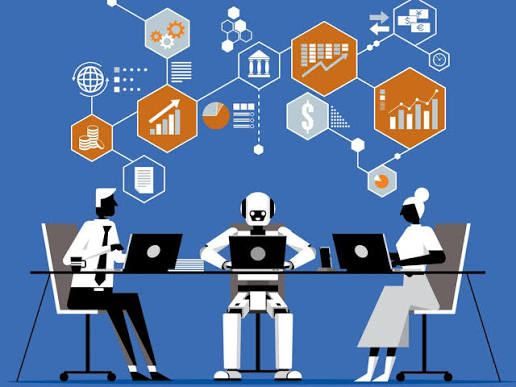
What if governance was as easy as pressing ‘enter’ on your keyboard? Imagine a world where humans were forced to follow policies rewired and generated by AI algorithms. Open your eyes: this reality is no longer a figment of your imagination. Around the world, some governments are relying on AI assistance to inform policy, while others are actively funding AI innovation. Yet, as we trade humanity for efficiency, blindfolded, we must ask what the consequences of welcoming AI to become our unelected leaders.
Those who feed the machines reap the most reward. Who builds and trains the AI platforms determines the political standing and direction of entire nations; that is immense power. And where there is power, there is undoubtedly exploitation. The UK’s new ‘Humphrey’ AI model, used to operate government processes, is built on models from OpenAI, Anthropic and Google. This external influence allows bias to quietly seep into how policy decisions are made and hands over the power to exploit the information fed into those systems. Those in favour of AI boast about its opportunity for impartiality, yet ironically, not only does it introduce bias to our policies it also evades accountability. Human oversight is not sufficient; those who are overseeing AI technology must also be invigilated. Privacy also becomes a concern here, as data travels through various channels that may be profited from or exploited in alternative ventures. These multilayered complications make the question of whether we should be relying on AI to command our systems increasingly imperative.
Governments that fund and support the innovation of AI technology may also risk state surveillance. Saudi Arabia’s government-funded HUMAIN AI, launched by Crown Prince Mohammed bin Salman, illustrates how control over AI infrastructure may be used to advance political authority. When a government controls the ingoings and outgoings of data pipelines, cloud systems, and the algorithms that interpret them, the boundary between digital innovation and societal control becomes questionably thin. China is also planning to invest $295.43 billion into AI infrastructure over the next five years. Additionally, Pakistan has recently announced plans to invest $1 billion by 2030. To add to these astonishing statistics, Reuters reports that “as of 2024, investors have put nearly $1.6 trillion into this technology boom since 2013”. This pursuit of AI leadership is beyond economic strategy or geopolitical competition; it’s a deliberate attempt to reform how power and governance are exercised.
Accuracy is the other big question mark. The same model ‘Humphrey’ being used in the UK encapsulates several tools: “Consult, which summarizes consultation responses quickly; Parlex, for searching and analyzing parliamentary debates; meeting transcription tool Minute; policy summarization and briefing preparation tool Redbox; and Lex, a system for researching and analyzing laws”
A single mistake in code or malfunction can distort information, and as we consume that, the cycle of misinformation continues, influencing how we determine our actions and decisions. This level of abrupt reliance can lead to major discrepancies in the way justice is delivered, policies are designed, and societal issues are debated and perceived. This form of damage is difficult to reverse, so we must stop and ask whether the benefits are worth the risks.
Instead of creating frameworks knit by the human heart, we would allow frameworks built on artificial, recycled emotion. Research conducted by the European Business Review concludes that positive emotions “serve as a true “compass” in the hands of a merciful political figure who, being an emotional being, too, can understand the needs and requirements of the public and, by displaying an emotionally sound demeanor, be a role model for them”. If we become overly reliant on AI for making political judgments, we lose the emotional intelligence that anchors ethical governance. Even if we attempt to teach machines how to approach governing processes from a human angle, it is impossible to prompt them to ‘feel’ authentic emotion because that feeling is shaped by lived experience, not data patterns. This is especially dangerous, as AI may be unable to assess the urgency of crises because it cannot prioritise human suffering over statistical optimisation when crafting emergency responses. If we allow such limitations to guide or even influence our political frameworks, governance risks becoming ethically hollow.
By allowing AI to overthrow our governments, we would be extracting the dēmos (people) out of democracy. And while efficiency is an integral factor in ideal governance, this is one benefit compared to a towering number of uncertainties and disadvantages. Also, yes, we should invite and encourage the evolution of our ideas and practices, but never when our humanity is named as the price.