





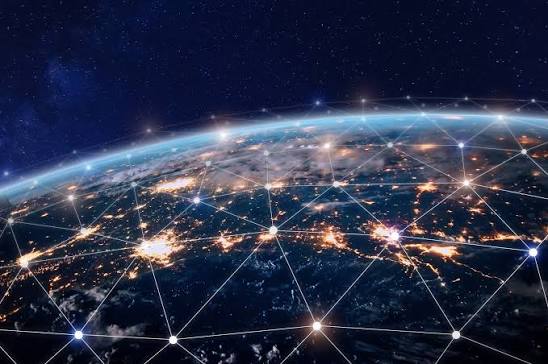
We’ve become inhabitants of an interconnected world. But as the deficiencies of globalisation start to emerge, interconnectedness is beginning to feel more like an entanglement. Nowhere is this entanglement more visible than world trade, where the threads that once stitched economies now threaten to come undone. The question is whether these shifts signal a complete unravelling of globalisation or merely its reconfiguration under new rules and new centres of power.
The growing wave of protectionist policies and escalating tariff barriers suggest a deliberate sway of governments to shield domestic industries from global competition. This can be seen most evidently by conflicting economic relations between the US and China. Their trade war illustrates perfectly the instability of globalisation when major powers collide. In July 2018, the US imposed 25% tariffs on $34 billion of Chinese goods, escalating to another $16 billion by August. China retailed immediately, matching the tariffs. The rapid fire continued as the scale became enormous within months, and by the end of 2019, the US had imposed tariffs of approximately $360 billion, and China had imposed tariffs of approximately $110 billion. The conflict seeped into technology, with the US blacklisting Huawei and China preparing export controls on rare earth minerals.
Although the Phase One deal in early 2020 briefly slowed the confrontation, overshadowed soon after by the COVID-19 pandemic, the underlying tensions never disappeared. The pause itself demonstrates the turbulent nature of world trade under the current system of globalisation. This became clear in 2024 after the presidential election and appointment of President Trump. By 2025, the US had imposed sweeping tariffs on multiple major trading partners, including China, with rates ranging from 10% to over 40%. And yet, just as rapidly, in 2026, it was announced the US must refund a towering total of $166 billion collected in tariffs after the Supreme Court ruled the tariffs were illegal under the International Emergency Economic Powers Act. This trade war has persisted for more than seven years, spanning three administrations, multiple sectors, and repeated rounds of retaliation, which highlights the intensity of these geopolitical ruptures. The speed of these decisions further suggests a worrying weaponisation and exploitation of interdependence.
This form of economic disengagement can be observed in other major conflicts. Since the beginning of Russia’s military aggression against Ukraine, Russia has severed access to $19 billion in high-tech components that were sourced from the EU (45%), the US (21%) and China (11%). This is a clear steer towards deglobalisation as Russia tries to cut itself out of the international technology network, attempting to operate in isolation.
Israel’s genocide has forced Palestine into economic isolation. In 2023, Palestine exported around USD 1.56 billion worth of goods, a decrease of 1.4%, while importing USD 7.7 billion, a decrease of 5.5%. This has generated a severe trade deficit of USD 6.18 billion. The fact that Israel accounted for 86% of Palestine’s exports and 57.3% of its imports highlights how Palestine’s trading network has been suffocated and is becoming increasingly constrained. This erosion of external trade routes reflects Israel’s attempt to isolate Palestine from the economic world order.
Thus, when protectionist measures surface across various regions, it suggests that these policy decisions are not isolated but part of an emerging global pattern, arguing that a shift towards deglobalisation is occurring.
Yet, the very fact that these shocks reverberate across borders reveals how deeply globalisation has become; even its fractures demonstrate the extent of our global economic interdependence.
The fact that the US complied with the refunding of tariff costs indicates economic vulnerability, which can only be cured by making amends. Similarly, Brexit’s 2021 petrol shortages in the UK, triggered by a shortage of EU lorry drivers due to new border rules, exposed how protectionism is not always sustainable, especially in a geopolitical web.
This became even more visible during the COVID-19 pandemic, as countries scrambled for medical supplies and other necessities. The steep 8.9% drop in global trade in 2020 revealed how deeply nations rely on foreign production and how impossible it is to retreat from globalisation without triggering new crises.
A similar pattern emerged when Iran used the Strait of Hormuz as a geopolitical pressure point in 2025. With roughly a fifth of the world’s oil and LNG flowing through this narrow trade route, Iran’s effective blockade sent fuel prices surging worldwide and forced the US into a ceasefire. After the deal, oil prices plunged by around 15%. This dramatic drop further illustrates how tightly global markets are bound together. Even a brief disruption can destabilise energy markets, shipping routes and national economies within hours, proving once again that globalisation’s reach is so embedded that even its shock confirms its permanence.
Moreover, conflict between major powers allows weaker nations a golden economic opportunity. Mexico exemplifies this perfectly, as it has overthrown China as the top US trading partner for three consecutive years, with bilateral trade surpassing $820 billion. This reveals how globalisation redistributes advantage rather than disappearing.
Therefore, while the flaws in the current model of globalisation are becoming increasingly visible, they do not signal its collapse. In a world defined by advanced technologies, instant communication, and deeply intertwined economic histories, globalisation is not something that can simply be reversed.
It is best said by Edward Fishman in his book, Chokepoints: “In a world in which the spectre of nuclear annihilation made a hot war between great powers almost unthinkable, globalisation gave states a more viable way to fight.” His perspective captures the deeper truth: as much as globalisation is a source of economic advantage, it is equally, if not more, an entrenched system of power, competition and interdependence that cannot simply be abandoned. Global trade has a firm imprint in human history, from the Silk Road to modern supply chains, which proves globalisation is in fact at the very heart of the human story. What looks like deglobalisation is in fact a reconfiguration and evolution of global trade under new rules and new competing centres of power.