





Whenever we talk about history, it is usually told through the actions of kings, wars and revolutions. But sometimes, the course of human civilisation is not shaped by people but by the earth itself. “A Year Without Summer” was such a moment that happened in 1816 as a geological event, but it majorly shaped human history. It was a year when nature reminded humans of its immense and majestic power.
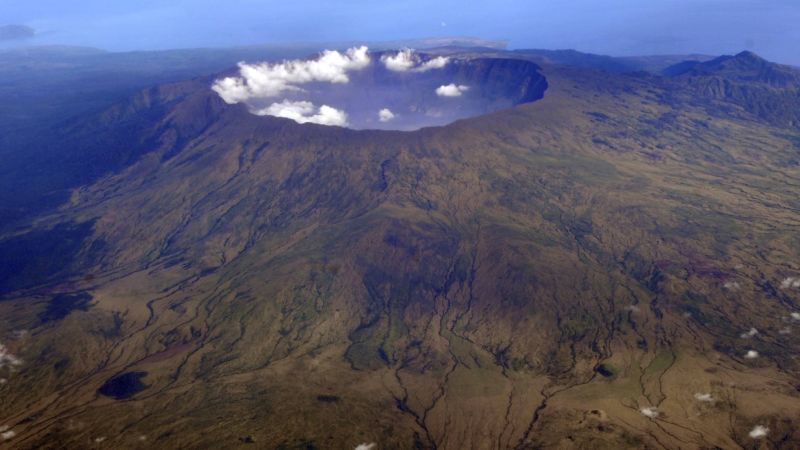
It all started on the island of Sumbawa in Indonesia, when in April 1815, Mount Tambora erupted with such a tremendous force that it remains one of the most powerful volcanic eruptions ever recorded in human history. The explosion released a huge amount of ash, dust and sulphur gases in the atmosphere. These particles spread across the globe, forming thick gaseous clouds that blocked the sunlight from reaching the Earth. As a result, humanity faced a volcanic winter, when summers were full of snowfalls.
Temperatures dropped all over the world; in some parts of North America there was snowfall in the month of June. Snow devastated the crops in their growing season. Crops failed to be harvested; as a result, food prices soared, and from Europe to Asia, communities were afflicted with widespread famines. The year 1816 was marked with hunger, fear, uncertainty and despair.
Yet creativity finds its way amid this catastrophe.
In 1816, due to changed weather patterns and severe cold, the activities had been restricted to the indoors. People used to gather in houses and used to tell stories to entertain themselves. Likewise, a group of young writers gathered at Villa Diodati near Lake Geneva in Switzerland, and among them was a teenage girl, Mary Shelley. Lord Byron challenged those young writers to write a horror story. And from that gloomy atmosphere emerged a whole new idea, which introduced a new genre to literature. In the pursuit of that challenge, Mary Shelley wrote her most influential novel, Frankenstein, and unknowingly she introduced the world to modern science fiction.
On the other side in Europe, horses were the main source of transport, but the failed harvest and scarcity of food made it difficult to feed the horses. As a result, many horses died and many were slaughtered. This crisis inspired Karl Drais, the German inventor, to introduce the “Draisine,” which was a two-wheeled, human-powered machine which later on led to the invention of the modern bicycle.
“Year Without a Summer” reveals the interconnectedness of our world. It’s so astonishing how a volcanic eruption in Indonesia inspired a literary masterpiece in Switzerland and technological innovation in Germany.
It is a reminder for us all that sometimes nature becomes the most powerful author. And when it does so, then history is not shaped by deliberate human choices anymore; one distant eruption is enough to change lives, ideas and inventions in ways that no one can predict.