





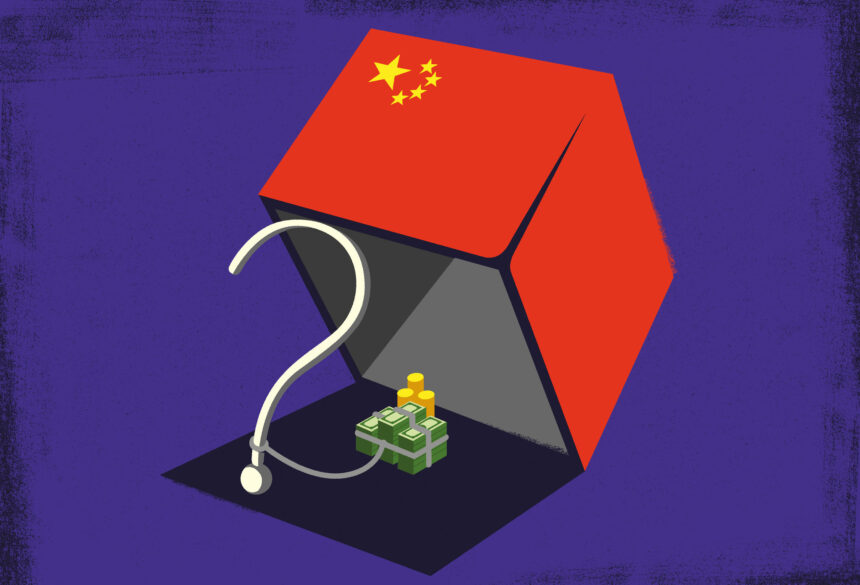
In the early 2000s, China began infrastructure lending to other countries for roads, ports, and power plants across the Global South. It ran the loans through policy banks like China Export-Import Bank and China Development Bank. In 2013, China packaged this push as the Belt and Road Initiative (Hurley et al., 2018).
The BRI made China Africa’s biggest bilateral lender (Boston University Global Development Policy Center, 2024). China offered subsidised loans, long grace periods, restructuring and fast approvals (Hurley et al., 2018). Which gave China an edge over Western donors, and as Western aid shrank, more countries turned to Beijing.
In 2017, Indian geostrategist Brahma Chellaney accused China of “debt-trap diplomacy” in Project Syndicate (Chellaney, 2017). The term ‘debt trap diplomacy’ refers to a situation in which China lends to developing countries, typically for large-scale infrastructure projects, in order to seize strategic assets. This was Chellaney’s argument.
The case used was Sri Lanka’s Hambantota Port. It has been debunked that China seized it. Sri Lanka leased 70% of the port to China for 99 years in 2017 (Hurley et al., 2018). When it faced a dollar crisis and needed cash to pay other creditors (Hurley et al., 2018). The port wasn’t collateral for Chinese loans. Sri Lanka kept the land. It sold equity to raise money.
Other criticisms were the following:
- “Chinese firms take all the contracts.” Chinese companies win 60% of BRI construction deals (Malik et al., 2021). But they hire thousands of local workers and buy local cement, steel, and fuel.
- “China demands oil fields and mines as collateral.” Most loans use escrow accounts instead (Mihalyi et al., 2022). Borrowers send oil or mining revenue to a bank account. The bank takes its payment first, then sends the rest back. China gets the cash flow, not the asset.
This is a debt cycle, not a trap.
The debt cycle: the recurring pattern of borrowing, spending, repayment stress and restructuring that economies go through.
Countries borrow. Wars happen, oil rates drop and they struggle to pay. They choose to restructure rather than default. This cycle has driven debt crises from Latin America in the 1980s to Greece in 2010. We are in that phase now: 2020 to 2026. Covid, inflation, and rate hikes triggered it (World Bank, 2022).
Three Case Studies: Three Countries, One Pattern
- Angola (Africa): Oil Paid for War Reconstruction
Angola borrowed $43B from China between 2000 and 2020 (Corkin, 2013). It used the cash to rebuild after a 27-year civil war. It repaid loans with oil through escrow accounts. Then oil crashed from $110 to $30, 2014 to 2016. Angola had to ship twice as much oil to cover the same debt. Covid pushed total debt to 136% of GDP in 2020.
China didn’t take oilfields. It rescheduled an $11B debt from 2020 to 2023. Angola still owns its oil and sells to India, the US, and Spain. But debt service ate 60% of the 2023 budget (IMF, 2021). That squeezed health and education spending.
- Laos (South East Asia): A Railway Drove Debt to 125% of GDP
Laos built a $5.9B railway to China. The line opened in 2021. China owns 70%; Laos owns 30%. The project cost one-third of Laos’ GDP. Traffic and revenue came in low. By 2022, Laos owed 65% of its foreign debt to China. Its currency crashed, and reserves fell below two months of imports (World Bank, 2022).
China didn’t seize the railway. It deferred principal payments in 2023. Laos did sell 90% of its power grid to a Chinese firm in 2021 (Reuters, 2021). It sold equity to dodge default; it didn’t lose collateral. Today, Laos depends on Chinese loans and has little room to borrow elsewhere (World Bank, 2022).
- Pakistan (South Asia): CPEC Ended Blackouts but Raised Costs
Pakistan launched the $62B China-Pakistan Economic Corridor in 2013. Chinese firms built power plants and took equity stakes. Government loans made up only 20% of CPEC (Small, 2020). The plants endured 6-8 hour daily blackouts.
Pakistan collects little tax and runs chronic deficits (IMF, 2023). Opaque contracts made electricity expensive (Sattar, 2022). Pakistan now owes China ∼$23B, 30% of its foreign debt (IMF, 2023).
China didn’t seize Gwadar Port. Pakistan leased it for 40 years in 2013, before debt stress hit (Small, 2020). When Pakistan nearly defaulted in 2018 and 2022, China rolled over $4B+ in deposits and lent more (IMF, 2023). It acted as a lender of last resort. The real cost is being absorbed by the people with high power bills and less policy space.
The Belt and Road Initiative (BRI) Shift
Since 2020, China has retooled the BRI. Sovereign lending from policy banks like China Eximbank fell sharply: Chinese loans to Africa nearly halved to $2.1B in 2024, down from a $28.8B peak in 2016. Beijing now favours smaller, commercially viable projects over mega-railways and ports. Chinese firms, not the state, led this push.
Now, they take equity, use public-private partnerships, and seek green manufacturing firm-led deals to escape cut-throat domestic competition. From 2020 to 2024, 44% of Chinese overseas development finance flowed to local financial sectors instead of direct projects, letting local banks manage risk. The result: BRI 2.0 runs on firm balance sheets, not government loans. Risk shifted from Beijing to Chinese companies and recipient banks. The debt remains, but the lender has changed.
All three countries borrowed heavily from China. But none lost assets to seizure. All three got hit by oil crises, external wars, Covid, and bad domestic policies. All three restructured with China instead of losing sovereignty.
While the “debt trap” is a myth, the debt is real. China now collects more than it lends as new BRI deals slow down (Boston University Global Development Policy Center, 2024). The problem isn’t asset grabs. It is strategic dependence and the hard math of debt cycles. Traps need intent. Cycles just happen either due to external factors or poor planning and management.