





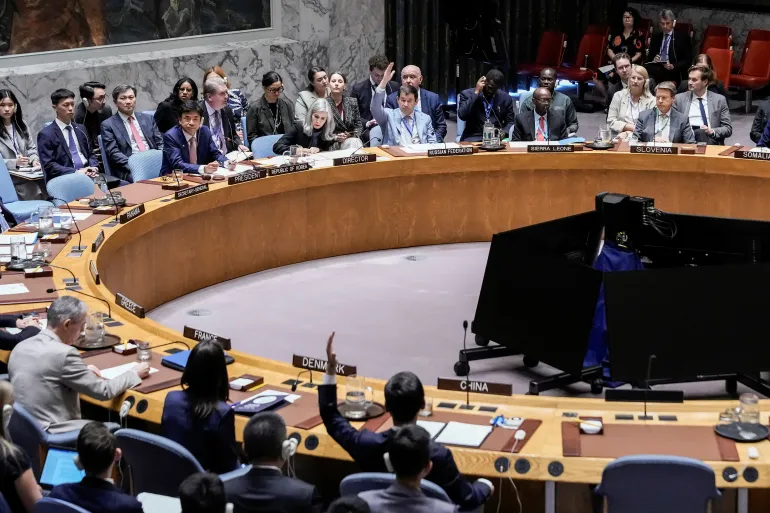
It was the year 432 B.C. when the first sanction in the history of mankind was recorded: imposed by the Athenian Empire on traders belonging to Megara, says Noura Abughris in her insightful article titled ‘A Brief History of Economic Sanctions.’
This was a telling detail for me, considering that sanctions are not new, but their widespread use has grown recently, especially when the world has become increasingly connected. If one were to read between these lines, it is broadly evident that the harms from these sanctions pinch at the innocent civilians more now than ever. A seemingly routine ban affects the millions residing in that country where the sanction is imposed. Often with no involvement of the civilian class in the decision-making of the country, they indirectly receive the brunt of mistakes carried out by their regimes.
Let us read through a few countries which are currently under sanctions according to US, UK, and EU regulations:
- Iran: due to its supporting terrorist activities in the Middle East and, more essentially, its development of nuclear facilities, they are restricted in carrying out banking, oil trading, and acquisition of military equipment.
- North Korea: similar to Iran, its proliferation of nuclear facilities and ballistic missile programmes have led them to face restrictions on trade, financial services, and travel.
- Syria: the country has been in a civil war for a long time now, and on account of continued human rights violations, they face trade sanctions.
There is a need to pose some questions here, but I will reserve these towards the end, since we haven’t explored the case of Russia yet.
The international financial messaging institute, SWIFT, a member-owned organisation headquartered in Belgium, put strategic sanctions on countries which violate the laws put down by EU countries, following the EU regulations. Being an international organisation, reliably managing millions of financial messages globally is essential in connecting banks and financial institutes from carrying out standardised transactions, especially imports and exports. When banks are prohibited from using SWIFT, it strangles the deep interlink between countries globally.
Russian banks were disconnected from its services following the war with Ukraine. This disconnection eventually led to costly and inefficient alternate measures that Russian banks sought to carry out overseas transfers. When payments receivable for energy and raw materials got unreliable and complex, the global impact translated into increased energy and food prices.
Additionally, Russia sought domestic alternatives, particularly its System for Transfer of Financial Messages (SPFS), to continue its financial transfers both with domestic and foreign partners. It also brought them closer to an alliance with non-Western institutions like China’s Cross-Border Interbank (CIPS), going ghost mode to any Western institutional monitoring.
These sanctions are deepening the West-East divide, polarising institutions and services to both ends, indirectly tearing apart the globalised community below.
The rising food and fuel costs on the already burgeoning population will affect the food crisis, and the ban on the Internet is another phenomenon increasingly being loved by nations. They impose bans on the use of Facebook, YouTube, WhatsApp, or disrupt other Internet services to limit connectivity and flow of information. It is dangerous at its foundation. In a world consumed by improbable wars, media control, and various other crises, widening digital and media illiteracy will only worsen the conditions of the common person.
All this is almost analogous to a naval blockade in today’s age, where essential items are limited within the reach of the general public. Questions must be posed in this situation. If other nations fund terrorist activities and get sanctioned, what of the activities of the US during the Afghan mujahideen terrorist groups’ formation? If Russia moves financially without being on Western financial books, wouldn’t that lead to the formation of even stronger regional blocks, disparaging the unified global system? How much more before we realise that the common person is eventually affected the most in these political games?