





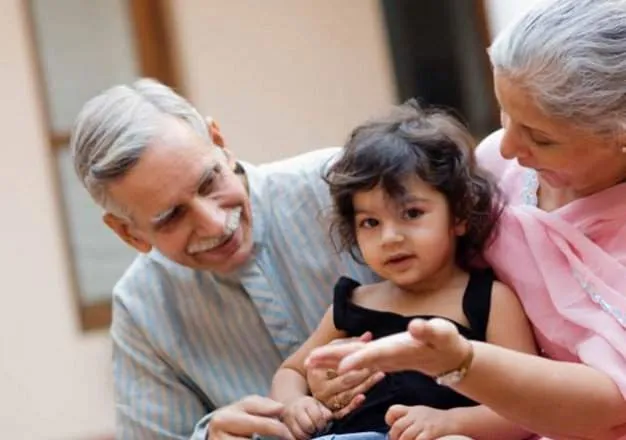
Elders are the foundation of our families; with them, family bonds are strong like steel, and without them, they are fragile like glass. In this fast life, we often forget to slow down and take out time for our elders. I have a close bond with my Nani (maternal grandmother). My day doesn’t pass without talking to her. When she is at my home, I talk to her and annoy her all the time, and when she isn’t at my house, I talk to her on the phone. It’s a must for me, but in my life, I do come across some people who find it boring to sit with their elders or whose elders/grandparents live far in a different city or country.
I think the younger generation must talk to elders, as they teach us so many life lessons and life-saving tips that are really necessary for everyone. Older people carry wisdom with them, which they have earned by experiencing on their own; their wisdom can’t be found on Google, chatbots or social media.
Why is it necessary to talk to them? They have life experience; if we are young adults at the moment, they have lived this phase of life before us. They have survived hardships and witnessed social changes that we read about on Google or in our course books. The facilities we have today weren’t in older times. This makes our lives a little easier today, thanks to technology, but our grandparents are the generation that saw things changing. The advice they give us is shaped by experience, not by theory.
Older generations are the cultural memory for experiences, family stories, migration histories, traditions, rituals and moral values. I remember when I was in grade 8, in history class, we were studying about the 1947 migration, and my teacher gave us a task to ask our grandparents about the migration story if they were present at that time. I asked my Nani about it. She was born after five years of partition, but her parents migrated to Pakistan, so she knew their story and shared it with me. Thanks to my Nani, I got to know the migration story of my great-grandparents, the problems they faced and where they lived after coming to Pakistan and how their life changed.
When elders pass away, along with them, the entire chapter of family history passes away too. I am forever grateful to have a bond with my Nani, who tells me about my ancestors. The story contains things that I can’t find on Google, but now I know, and I’ll pass on this story to my kids one day when they study the 1947 migration.
In this fast digital world, when everyone and everything is a click away, elders in our families represent depth and reflection. They provide us with long-term thinking, patience and calm responses. Patience and calm response are two things I feel are vanishing from our generation. We want everything to happen instantly. We don’t like to wait, we get bored easily, and our attention span is low. This is something due to our fast digital life. We don’t stop to reflect on
ourselves, which is really important for our wellbeing. Talking to elders is really important because sometimes they have all the solutions to our problems, and while talking to them, we often realise the problem wasn’t as big as we thought it was.
Talking to elders is really necessary for us; we shouldn’t take them for granted. They are the reason why we exist today; if they weren’t present, we wouldn’t be here where we are today. This is like a chain: everything we learned or know today is thanks to them. We should appreciate them, respect them and love them. Life is unpredictable, so spend time with them when you can; you never know how much time you or they have.