





“How much damage will have been done before we act?”
(John McCain, former US Senator and Naval Officer)
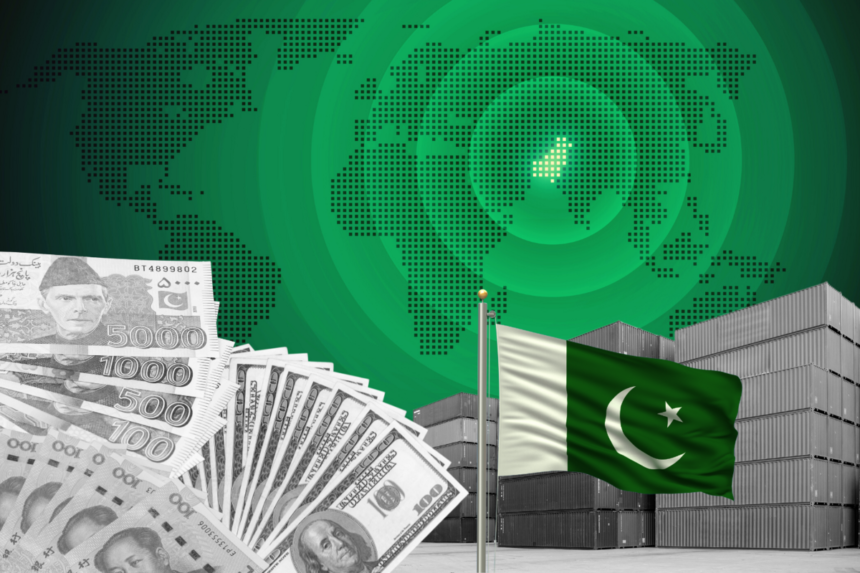
President Asif Ali Zardari’s five-day visit to China reached a conclusive end with the signing of various MOUs based on agriculture, tea, seawater desalination, animal vaccines, medical technology and so on and so forth. Discussions between the two countries were mainly based on improving and building trade and economic cooperation. Further stress was added upon the development of key projects under the flagship of CPEC 2.0. Moving across the oceans from east to west, a similar pattern of discussions would be observed between the European Union and Pakistan. The commencement of the EU-Pakistan Business Forum in Islamabad in April 2026 brought forward a plethora of new opportunities in terms of green logistics, digital innovations, sustainable textiles, responsible mining and fintech. Moreover, the two-day forum introduced the EU-Pakistan Business Network. The network would act as the face of EU business in Pakistan, bringing with it 300 active EU companies. This initiative is one of the key initiatives launched in the forum.
Pakistan’s Vulnerability
Amidst the flames of Middle East conflict (Iran-USA), Pakistan has admirably changed its posturing by effectively shifting its strategies from geopolitics to geoeconomics. The above-mentioned bilateral economic engagements with both China and the EU are steps towards the right direction. It yet again showcases Pakistan’s command over its diplomatic endeavours; however, it is important to understand that Pakistan ranks among the top 10 vulnerable countries affected by climate change. The gravity of the situation is often overlooked by domestic governance bodies. Pakistan does not lack policies to mitigate effects of climate change or to develop plans to curb the catastrophe caused by floods and cloudbursts. The fundamental obstacle that ricochets beyond borders writes a tale about lack of implementation. Projects like Recharge Pakistan and Ghar Project — on paper these projects promise solutions in regard to disaster management and creation of resilient infrastructure for the affected communities, but their implementation has proved to be massively counterproductive to the ideals presented.
The Reversibility of Damage or Folly of Clean and Green?
Pakistan aims to transition towards clean energy and sustainable practices, and so the bilateral economic engagements showcase a blueprint of the country’s intentions. Still, the intentions could turn into a new set of problems if the weakest link is not addressed properly and transformed into a solid foundation. The international agreements would remain vital and concrete only if Pakistan builds proper infrastructure so that the said policies could take a physical shape. Building climate-resilient infrastructure across sectors is no easy feat for a country like Pakistan, grappling with poverty and insecurity. However, the willingness of the international community to invest in Pakistan for trade is a rare opportunity, which can completely evolve the country’s economic outlook for the better in the coming years. If the government links provincial governments with the local innovators, suppliers, engineers, etc., within the country. Over time, this collaboration would enable construction of low-cost and durable infrastructure projects. The inclusion of local communities would create more employment opportunities for young people, which would potentially reduce the recruitment of young people into the terrorist organisations. As the places struck with climate disasters duly become breeding grounds for terrorist activities. Mainly, due to the fact that the communities face an economic chokehold.
Conclusion
Moving from building domestic infrastructure towards the construction of potential economic zones. The pattern remains the same: projects like CPEC 2.0, on one hand, navigate through regional and international hurdles, but the projects’ implementation also faces resistance from local communities as they see an attempt at alienating people from their own land. So, if the government, instead of offering compensation to local communities, includes them in discussions in regard to projects and offers relevant jobs to them as per their relevant skills and education, the projects would run more smoothly and even at a faster rate. Consequently, exclusion and marginalisation would only hamper the economic progress of the country, and the shift towards geoeconomics would fail massively. Similarly, inclusion and filling gaps in governance would result in a smoother geoeconomic shift. After all, the damage can be reversed if we are willing to act upon it.