





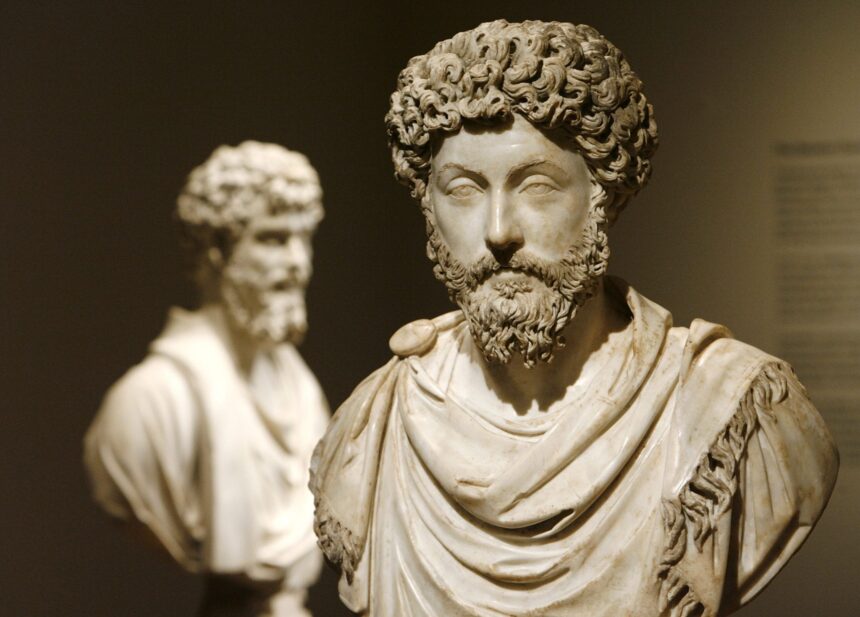
In a world where thought processes are controlled by propaganda and capitalism, philosophy not only creates a diversion but also helps us understand what to think, how to think, and fills a vacuum of perception in the modern world.
Stoicism is an ancient Greek philosophical approach that was most prominent during the Hellenistic period and continued to gain popularity in the Roman period and beyond. It was founded by Zeno of Citium in Athens in the early 3rd century BC, and this approach was famously practised by prominent philosophers and emperors, including Epictetus, Cato, Seneca, and Marcus Aurelius.
What is Stoicism?
At its core, stoicism focuses on two things:
- Ethical values that help us reach a virtuous life and create the best character possible. According to this theory, these principles of virtue in our character help us get peace of mind and happiness by doing good. These principles also help us avoid guilt, anger, jealousy, and other negative emotions associated with evil.
- A set of practices focused on reducing stress and negative emotions through self-awareness, discipline, wisdom, and rationality. The major focus of these practices is to align ourselves with nature and understand what is in our control and what isn’t.
These principles can be further divided into four cardinal virtues of Stoicism:
- Wisdom:
Wisdom in this case refers to our ability as human beings to rationalise right from wrong, create our own judgement, and focus on the unchanged truth. This virtue focuses on the elimination of bias and prejudice.
- Courage:
This is our ability to take action upon what we think is right or wrong, despite external pressures.
- Justice:
This virtue focuses on the greater good and urges us to act in a way that aligns with the common interest and well-being of the community and people around us.
- Temperance:
This is our ability to exercise self-control, moderation, and be disciplined in our daily actions.
Similar to the Socratic branch of philosophy, Stoics also believe in virtue and the approach of good vs. evil. By extension, Stoics believe that our character and ethics are the most important aspects of living a meaningful and actionable life.
Seems like a certain simple and well-balanced way of living life, correct? Well, that is what many modern philosophers also think, making it a highly popular philosophical approach practised in modern times.
The Practices of Stoic Philosophy:
Three major practices of stoicism can easily be implemented in daily life to ensure peace of mind, virtuous character, and good actions.
- The Dichotomy of Control;
The concept of control is the core of practical stoicism. This concept focuses simply on the acceptance that there are some things that are in our control, but there are some external things that we can’t control
These are external factors, including nature, fate, power, and the actions of other individuals, which we cannot influence or control; however, on the other hand, what we can control is how we live our lives and our actions. This concept is not just part of stoicism but has also been prominent across many cultures and religions, such as feudal Japan and Buddhist beliefs, etc.
The Stoics believed that this is the key to reducing suffering and living a good life by understanding what is in our control and focusing solely on that.
- Momento Mori:
This one may sound morbid, but memento mori is the practice of realising that you are mortal and will die someday.
The idea of contemplating death can feel negative; however, according to stoics, when we contemplate death, we learn to live in the moment and balance our lives accordingly.
When we remind ourselves of death, we become more mindful in our actions and in balancing our lives.
- Amor Fati:
Similar to the first practice, Amor Fati can be literally translated to “love of fate,” which means that we must accept that life unfolds according to fate, which is outside of our control. So all we can do is accept and love how life unfolds and go with the flow of it.
How to Incorporate Stoicism Into Our Daily Life
Before we focus on any other practices, we should focus first on becoming a virtuous person above all else. Aside from that, to live a life of practical stoicism, there only needs to be a focus on four practices.
Firstly, by using the dichotomy of control to your benefit by recognising that there are some things within your control, while others are not. Focus your energy and planning on things you can control and accept the things you cannot control as fate.
Secondly, practise mindfulness by developing an awareness of your thoughts and feelings in the present moment. Be in tune with your emotions and thoughts to live a virtuous and actionable life.
Third, practise being thankful using negative visualisation and thoughts of death. Again, morbid, I know, but when you think about worst-case scenarios in the world and imminent death, then you are hit with the realisation that you are in a much better situation. This helps you be thankful, prepare for challenges, and live a well-balanced life.
Lastly, accepting the theory of Amor fati and letting life unfold and accepting fate, including the good as well as the hardships and challenges that you are bound to face.
Practical stoicism is an approach that teaches us to be a good and mindful person who is well aware of their actions and the impact they have on their own life and that of others.