





They say, “Never meet your heroes.” We build an entire idol of them in our minds. The illusion shatters when they turn out to be a human who is capable of error. Human nature cannot be perfect and is bound to disappoint someone. We craft masks in different places in our lives so we can maintain the facade. Under watchful eyes, we feign to be steady and rarely acknowledge our shortcomings. However, we know that every person is prone to error. No one is perfect.
But not Atticus Finch. He is a widowed father in a racially fractured town, defending a Black man he knows is innocent in a courtroom he knows is not. The character existed in two places: the courtroom and the house. Yet his demeanour never changed. He is the same in his house as he is on the public streets. Through Scout’s simplified perspective, Harper Lee preserves Atticus as a figure untouched by doubt. She crafts the myth of the perfect character through composure, making his goodness seem immune to corrosion. She spins the illusion that moral strength is effortless.
Atticus knows they are watching: his children and the town. Even the reader is watching. Between these gazes, he has to be composed. Without a performance, his tremors are swallowed. He cannot misstep, and his internal struggles are never brought onto the stage.
The reader should not mistake Atticus Finch’s composure for mere righteousness. It is driven by conviction, by the deliberate choice to do what is right. With the knowledge that the verdict was never in his hands, he gives the case every effort, only to give an innocent Black man a fair trial. He does so because he believes not trying would cost him more. “Before I live with other folks, I’ve got to live with myself.” He acknowledges that a person’s conscience isn’t ruled by anyone or anything. Therefore, one can hold oneself to higher standards, and that makes all the difference. He is the perfect example that trying is all that matters, even when you know you are going to lose.
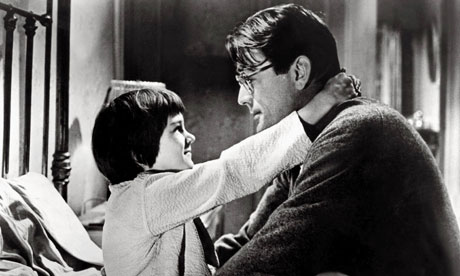
In a morally foggy world, Atticus Finch offers clarity to his children. While tucking them into bed, he teaches gentle philosophy, urging them to consider the world from someone else’s skin — an attempt to shield his children from the corruption of society. For them, he becomes the performance of steadiness. Not a false performance, but a disciplined one. There is a difference. Discipline often requires suppression. That recurs in his advice to Scout to try fighting with your head. You can’t always be perfect, but perfection comes from discipline and conviction. The conviction comes when you believe in the truth and make an effort to support what is right. Especially when you know that you are playing the losing game.
He embodies the persona of a perfect father. His unique parenting style impresses every young reader as he consistently treats his children as adults and answers their questions seriously. That is what many children wish for in those turbulent years. Yet Atticus doesn’t fail to recognise that Scout and Jem are children and will make childish mistakes. The burden of being “perfect” is not that one must be good. It is that one must be good without visible effort. He insists that integrity is chosen daily. He knows he will lose the case. He knows the town will whisper. He knows his children will have to endure insults because of him. And still he stands. There is no celebration of victory. Only the ordinary, stubborn act of doing what is right in a place that does not reward it.
Literature freezes the character at the height of their virtue. Atticus does not grow angry. He does not turn bitter. He does not despair. But real people do. If we begin to hold people to his standards, we ignore the element of being human. We forget the human under the myth. Maybe the point is not to idolise Atticus Finch but to recognise that perfection often requires persistence. The gift lies in allowing his example to refine us without burdening us. We do not need role models who never tremble. We need ones who tremble and remain. Atticus Finch is a role model not because he is perfect, but because he makes goodness look deliberate. And perhaps that is the most honest kind of heroism: not the absence of struggle, but the quiet decision to carry it without spectacle.