





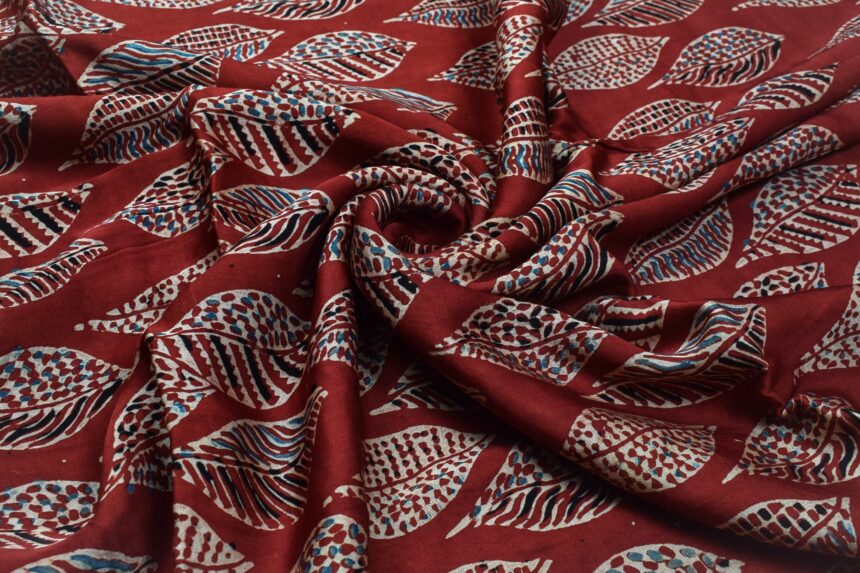
I’ve seen people travelling to the interior sides of Sindh and buying out ajrakh, but the issue is that it’s a mass-produced ajrakh. On smelling it, you don’t smell the earthiness of the dyes, but a weird chemical smell comes from it. The block print looks too perfect, and I am confused. Would it be called “mindful consumption” if the money isn’t even benefitting the artist?
There’s been a rapid rise in “mindful consumption” recently. Where consumers and travellers have realised the power they hold — and that it’s for them to decide where they want their money to flow and who they want their money to benefit.
And while it’s a great mindset to have, I want to ask if our consumptions are really “mindful” or not.
Block printing is an ancient textile art form originating from China, usually done by carving a woodblock, dipping it in paint and pressing it onto the medium, which transfers the design onto the fabric. It got widespread in Pakistan around 3500 to 1300 BC.
A very well-known print of block printing that we see now is Ajrakh, which has its roots all the way to the Indus Valley Civilisation, with evidence of Ajrakh prints being found in archaeological excavations at Mohenjo-daro.
It is a manual art form that is beloved to many. But an art form nonetheless, and like all art forms that go through periods of fame and fear of going extinct, the practice of manually dipping each block in paint and printing it onto the fabric is now facing its decline due to many factors.
Out of the many reasons that make block printing a dying craft in Pakistan, the most important one would be
“Because it’s low income and high effort.”
Families that have been block printing for generations are simply clocking out now because the art of block printing requires effort and a keen attention to detail, and because of the rapid industrialisation in the textile and fashion industries, the income the artists get paid is minimum wage, with many middlemen in between.
So what they get now for one piece of ajrakh isn’t enough to sustain their livelihoods. And when a family, which is a gatekeeper of a craft, stops practising an art form, it dies, and with i,t we see our history slipping away.
Industries have now evolved to the point where there are cheaper alternatives to block printing available, which are less costly and less time-consuming, and because of this, we see brands focus more on inflated profit margins rather than investing in an art form to keep it alive.
So the ajrakh print you buy from a brand which feels expensive to you — the original artist behind that piece is many times only getting paid 5-10% on it — in some cases even lower. Which is way less considering that these families or artists don’t have any other source of income aside from a historical craft that is now losing its value.
We’ve always seen artists being romanticised as “the starving artist,” which sounds glamorous until you are the gatekeeper of an art form that is dying, and the curse is that you care about it.
Art, ajrakh and block printing, in this particular case, are not just fun little textiles that you wear but fabrics rooted and soaked in tradition that tell a story. The motifs, the colours, and the small imperfections make it whole — and us simply buying it through a brand is us contributing to the death (or the fall) of the craft. Because our money is going through a chain of the industry, instead of helping the artists sustain their livelihoods.
Many consumers prefer buying from a brand. Maybe because it gives prestige and a name — but an ethical consumer prefers buying from a local area because they’re aware that their money matters and that buying local keeps their money going to the artisans, and it’s a way to pay them their due respect and for them to stay motivated to keep their art form alive. They know that mindful consumption doesn’t just mean a location but also transparency. It does.
It does not mean you start going village to village in search of families that practise the craft (which is very inconvenient in modern life) but buy from a brand that is artisan-led. Or at least transparent. Because it is simple — that artists, like any other profession, are also deserving of respect and fair compensation. Where other professions contribute to society in one way, artists contribute to a society by archiving its cultural crafts and gatekeeping its history, which helps in cultural continuity.
And it is for us, the consumers, to contribute to keeping the ecosystem of healthy consumption alive by choosing where our money goes to the artisans.
Because an ethical souvenir isn’t just a memory of where you went but a testament to who you supported. It shifts the consumers from the mindset of mindless consumption and into the realm of healthy consumption and makes us powerful enough to decide where we want our money to flow and who we want to benefit.