





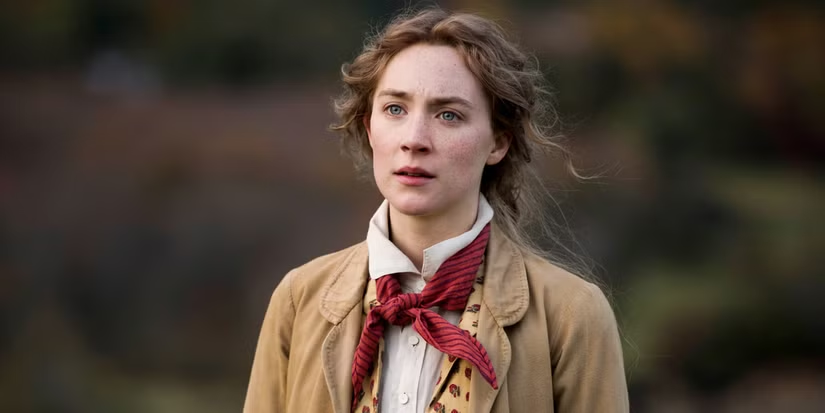
Jo March, bursting through the pages of Little Women with ink-stained fingers, a sharp tongue, and an obstinate refusal to behave, was long before the creation of strong female characters became a publishing trend.
Jo was a character to generations of readers. She was an awakening.
Released in the year 1868, Little Women by Louisa May Alcott entered a world in which there was a clear view of what girls are supposed to be: passive, docile, and marriageable. Jo March was not any of those things. She wanted to write. She wanted freedom. She did not want to live the life of who she was married to, but rather what she was becoming.
There was something radical about her restlessness that was noticed by the readers, particularly girls. Jo spoke out about what many could well have felt but could not possibly label: the frustration of being bound, the wanting to express, and the wanting to be important outside the household confines.
Jo’s revolution came not from denying love, but from preventing love’s overshadowing of her personality. She made hair, sold her stories, screamed and raved, did not pass, and continued. She was dishevelled, rash and very human.
And, last but not least, she was permitted ambition.
In Jo, the readers were allowed to dream, to rebel, and to make choices. To young women who had to find their way, she was a model of how to rebel without being mean or callous. Jo was warm, loyal, and loving. She simply demanded space.
The ongoing controversy over whether Jo should have been married or not at all indicates her influence on culture. To most readers, she was betraying herself by settling into the domestic world, and the move was a sign of a compromise with society. There are also claims that Jo reinvented marriage in her style and constructed a life filled with love and meaning.
In any case, the pain is evident: Jo’s significance warranted a fight.
Jo is found again in each age. She reemerges when there is feminist retaliation, creativity and personal uncertainty. Authors refer to her as an inspiration. Her contradictions leave the readers in them. She grows old with us; the questions that she asks are changing just like our questions.
To desire to be Jo March is to desire to be brave, brave to desire more, to be defeated frankly, to break the silence and speak. It is thought that the inner nature of women should be given equal room as their outer demands.
We may not all become writers. We might all embrace custom. Yet somewhere, at some time, we all experienced Jo in the fire, and we said to ourselves, ‘I can live better.’
This phenomenon is the reason why Little Women does not disappear. Not that it instructs us on how to act, but that Jo March dared to think of how we should feel about living.