





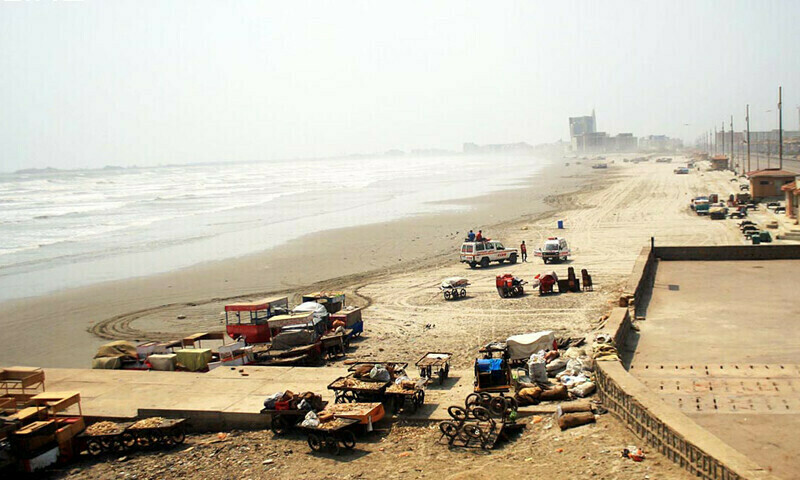
Marine literacy, or ocean literacy, is the ocean’s influence on humanity and humanity’s influence on the ocean as defined by the UNESCO Ocean Literacy Programme. It is necessary to understand how the environment has an impact on the people and how people contribute to the environment’s degradation or wellness, and in this case, the environment in question is the ocean. The Pakistan coastline consists of 1001 km bordering Iran in the west and India in the east, according to the maritime doctrine of Pakistan.
Almost 10% of Pakistan’s population lives along coastlines and benefits from fisheries, trade and tourism. The sea environment has a negative impact on them due to climate change via saltwater intrusion, rising sea level, and destruction of mangroves and fertile land. The United Nations Environmental Programme has grouped Pakistan among the countries that are most vulnerable to rising sea levels. Mangroves act as a buffer against cyclones, floods, sea level rise and soil erosion. They also capture significant carbon dioxide from the environment and help fight global warming. The buffer is now facing dire consequences due to the deteriorating wellness of the oceans. The line that joins two entirely different environments has buffers to help people benefit from what is within and what is outside the lines. But if the buffer is lost, then the disruption and destruction join hands to wreak havoc wherever they find the opportunity.
Mangroves in Pakistan are found along the coastlines of Sindh and Balochistan. 60,000 hectares of mangroves that surround the Indus Delta are thought to be the world’s biggest dry climate mangroves. Climate change, which is disrupting the earth’s ecosystem, is a contributor to the deteriorating situation on both sides of the coastline. It will amplify any phenomenon that has been caused by a disruption in the environment due to human activities.
Coastal communities in Pakistan are at a geographical location that can help them tap resources from the sea. Though careful consideration and deliberation are required. If that is ignored, then it will have consequences, some of which are visible even today. Coastal communities are themselves the direct witnesses of the storms or destruction of mangroves. They are aware of the coastal problems better than any marine environmental expert can ever be. This can result in their displacement, migration and livelihood loss. Still, they engage in the cutting of mangroves and overfishing.
This is the reason marine literacy is important for the coastal communities of Pakistan, or else they might end up becoming contributors to the destruction of their own environment that serves as their bread and butter. Till now, there have been no concrete steps towards marine literacy for coastal communities in Pakistan. There have been several centres that are targeted at maritime research, named as the National Institute of Maritime Affairs, the Centre of Research and Innovation in Maritime Affairs and the Maritime Centre of Excellence. MCE has been educating individuals, especially university students, regarding maritime importance.
If the purpose is to educate the coastal communities, then think tanks do not solely bear the responsibility for that; there are efforts and endeavours required on the part of the government as well. First, there must be a policy regarding the education of coastal communities, and the reason is that there is no point in any lesson if there is no application involved. If the government banned plastic bags, people would be compelled to follow and use paper bags. There are numerous students who are currently pursuing a degree in environmental sciences in Sindh and Balochistan. Now it is the government’s responsibility to choose the right people for the right job. Funds have been allocated to provide the young population of coastal communities with scholarships through the Maritime Educational Endowment Fund and the Coastal Higher Education Scholarship Program. These programmes are a better step towards educating young people, enabling them to contribute to the education of coastal communities in the future. Still, that does not answer the need of educating the contemporary coastal communities whose bread and butter depends on the coastline, and they are actively or passively also contributing towards the disruption of the sea environment.
Integrated coastal zone management is a holistic and collaborative process to sustainably manage diverse coastal areas by balancing economic, social and environmental goals, recognising land and sea are connected systems and involving all stakeholders across different governmental levels. The Ministry of Planning, Development and Special Initiatives released an executive summary of Pakistan’s Coastal Zone management, though it did not address the problem of educating the coastal communities.
Maritime Policy 2025 has broad goals regarding blue economy growth, port and shipping modernisation, environmental sustainability, technology and innovation, human capital and regulatory reforms. However, it appears that defining marine literacy for coastal communities is not currently the primary goal. This might seem a micro-level issue, though they are the most important stakeholders if viewed from the macro-level. It will need policies that are inclusive of the needs of marine literacy for coastal communities and the execution of regulations for protecting the sea environment to have a real impact on the ground. Coastal communities understanding the changing dynamics of the sea environment and its impact on them and vice versa can help avoid catastrophes as big as climate change. The role of government will be significant, as it will have to provide coastal communities with alternatives to overfishing and mangrove cutting, which they are currently engaging in due to poverty and a lack of awareness of the impact on their own future. The government will have to formulate policies to educate and simultaneously create opportunities for coastal communities to diversify their sources of livelihood. Such action is essential for better and safer use of marine resources and for managing disaster-inducing climate change.