





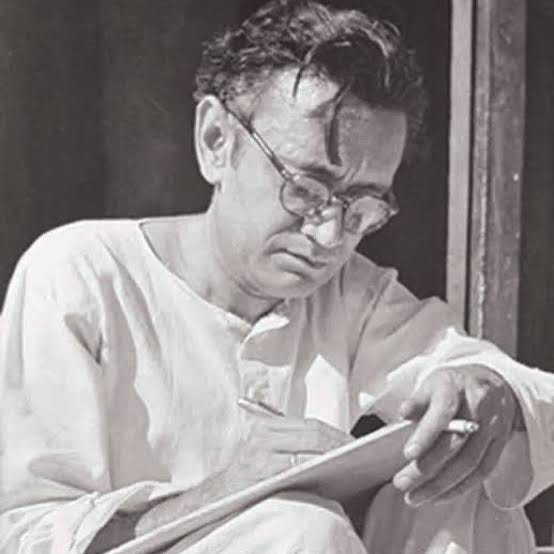
Forbidden is not a boundary but an invitation. It teaches us denial, not absence. Humans have a tendency to suppress desire until it ferments into something pungent, darker & louder. By our logic, we refer to this restraint as morality. However, the forbidden has a habit of returning, and that is never without consequence.
This tendency is not a new phenomenon; it is simply the one that we refuse to name honestly. Our society tells us that what is forbidden can be essentially controlled by silence, as if, by refusing to speak about it, we can neutralise its power. In Manto’s ‘Bu’, he writes of a man who mistakes desire for love and builds an illusion strong enough to run away with it. Then, a tiny, abrupt twist is revealed when intimacy finally strips the illusion bare, unmasking a mouth filled with decay and a stench that he cannot ignore. The outcome is the forbidden inaction, desire ignored and suppressed, but finally confronted in its most unvarnished kind of truth.
As a writer, Manto rarely focuses on disgust for shock value; the story is intolerable because it uncovers the illusions and lies that we live by, not because of physical decay. So by what logic is the writing lewd if it is simply based on our society? It is crucial to understand that Manto wrote in a world obsessed with control, with desire, with bodies, with language and with morality. In ‘Khol Do’, when the main character whispers ‘khol do’, it does not come forth as a product of control anymore. It is no longer a conditioned response because she has been battered to an extent that goes beyond human understanding. In a striking parallel, it can be seen as Manto’s own response to the hypocritical society. He expressed decades of exhaustion on paper in its rawest form, confronting us all without compromise or conclusion. He refused to depict a softer reality because societal rules often collapse when confronted with reality. We see this phenomenon actively happening in Toba Tek Singh when Bishan Singh outrightly refuses to choose between India and Pakistan. His final position of lying between barbed wires dividing the two nations poses a critique on the world itself, as we find ourselves asking Bishan Singh’s most asked question: ‘Where is Toba Tek Singh?’ And the society’s reply to it, taken from the same character’s nonsensical mutterings: ‘Go to bloody hell.’
This is precisely why Manto remains unsettling, and we continue to flinch out of convenience only until the systemic hypocrisies are not on paper or diligently swept under the carpet. The recurring theme in Sadat Hassan Manto’s works is the inevitable collision between societal control and human truth. To flinch is natural, but if we pause for a moment and think, the flinch is not at Manto, but at the world we live in. For instance, the reader’s initial reaction to the protagonist’s confession in Thanda Gosht is the chilling sound of ‘the body was thanda gosht’, implying that the girl was already dead when the man contemplated violating her. Conversely, the chilling metaphor rises because it shows how violence has not only killed a person, but it has also obliterated empathy, desire and moral agency itself. The horror here is not a lurid shock but the normalisation of atrocity in a way that feels closer than life itself.
Even today, Manto’s work remains obscene to some and uncomfortable to others because he blurs the crevices of extremity. Decades have passed, societies have been modernised to the core, and censorship laws have also loosened, but the discomfort upon reading Manto remains intact.
People have acted as though Manto invented obscenity, not realising that he simply documented it, sans protective filters. An essential critique arises here regarding the fact that what unsettles the readership is not sexual explicitness or graphic violence in isolation, but the idea that these elements stand alone. These elements stand alone, stripped of romance, justification, or even moral consolation. This is why his stories serve as a mirror, providing neither sanitisation nor comfort.
While Manto dismantles these euphemisms, he also very realistically refuses to elevate trauma into heroism or sin into spectacle. As an example, his short story ‘Badtameezi’ has zero obscenity, but it is still unsettling. In the story, almost nothing happens – no violence, no dramatic revelations, just a husband and wife bickering and circling each other with petty accusations, low blows and exhausting intimacy. At the end, the wife explains her reason for starting the banter, making an absurdly mundane point to her husband:
“Don’t button your trousers on the balcony; the neighbours consider it improper (yeh bari badtameezi ki baat hai).”
Whether the readers are ready or not, the anticlimax is deliberate. Manto casually exposes how society defines impropriety. The manipulation, contempt, or control in a marriage and the emotional suffocation of one partner are proper; however, a man adjusting his trousers openly is the real impropriety. There is no message, speech, or moral verdict in this work; it merely demonstrates how pettiness becomes a survival language in emotionally dead relationships and highlights how society prioritises visibility over harm.
Writers like Manto, Mumtaz Mufti, or Ismat Chughtai have long since intensified our unease because they offer no emotional closure. Why should they? Does life offer us one? The idea of an undissolved or undiluted reality on paper always strikes hard, because we closely see the ones on the margins: sex workers, refugees, mentally broken and socially discarded. Thus, Manto dismembers the hierarchies by offering interiority to characters no one would otherwise listen to. Thus, the forbidden returns with consequence.
Very well composed.