





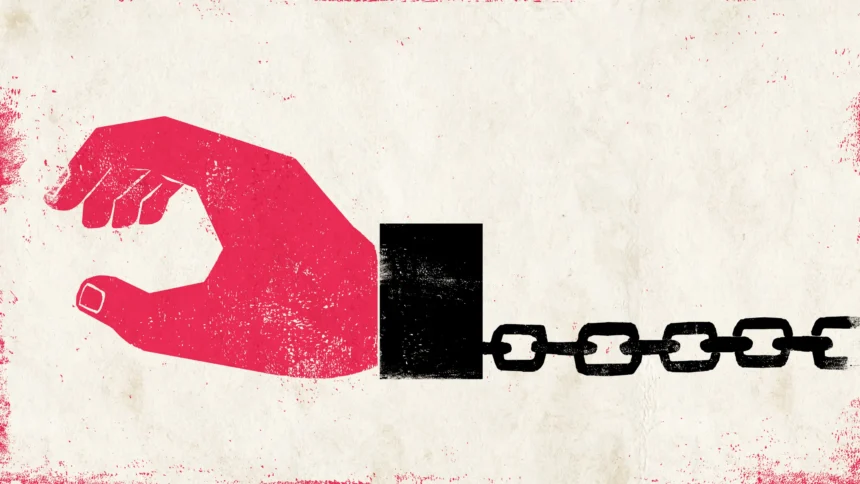
In the past, employees would have had someone to call a boss, who would be either a manager on the factory floor or a boss in the office. Nowadays, there are millions of Uber drivers and millions of people who can get their meals delivered via DoorDash or have their packages delivered via Amazon Flex. Their boss is an app available on a smartphone that determines when they will work, the amount they will earn, and their ability to retain employment. The gig economy was supposed to bring freedom, but what most workers have found is a new order of algorithmic administration: opaque, isolating, and mercilessly effective.
Life Under the Algorithm
Ayesha, for instance, is a part-time Uber driver in Chicago. She enters the app at 7:00 a.m. with hopes of the morning rush. Her screen display reads: Earn more money today! Three consecutive visits and gain an additional 12 dollars. She believes it’s a temptation, but once she looks at the fine print, she realises that the bonus will require her to stay online in a particular area, which makes it harder for her to be flexible. At noon, she reached the streak, but the summary of her earnings didn’t look as satisfactory as she had hoped. The pay structure of Uber, comprising a combination of base fare, distance, time, and variable surge multipliers, is also unfathomable to her.
“It is like gambling,” Aisha says. “I make more occasionally than I projected, sometimes less. I can never predict. Such confusion makes me addicted to the app.”
Gig workers share a similar experience on these platforms. Calculations of pay itself are deliberately obfuscated. Drivers have no idea whether the next ride or delivery will be a profitable affair, and many of them are stuck in a loop of pursuing bonuses and streaks. Rather than autonomy being promoted by the platforms, they are manipulated by the mental cues inherent in the app’s design.
Gamification as Management
One of the most detestable instruments of algorithmic control is gamification. Applications inspired by video games incorporate streaks, badges, progress bars, and bonus badges, such as quests, to motivate workers to take on additional tasks, extend their working hours, and stay engaged with the app.
Moreover, DoorDash drivers receive promotions for Peak Pay, which is described as extra dollars per delivery, provided they meet specific acceptance rates. Amazon Flex incorporates the concept of blocks, which is one of the competitive systems in which workers must take on only fast shifts posted at irregular times. The clickers who are too slow get wasted.
A labour historian may make an analogy with the assembly line of the first decades of the 20th century, where workers were in continuous motion due to conveyor belts. The difference is that now, the seat is no longer visible; it is coded into the software. And in contrast to a factory boss, the algorithm does not negotiate, explain, or justify. It simply demands.
The Black Box Boss
The central part of this system is the presence of opacity. Uber, DoorDash, and Amazon Flex consider their algorithms as trade secrets. Employees are not aware of the exact rationale behind the compensation, assignment, and deactivation of trips.
Similarly, researchers of platform labour refer to these practices as black-box management. Gig apps never perfectly pair supply and demand; they are constantly adjusting behavioural levers. For example, Uber has been caught temporarily holding ride requests to inflate demand at locations that appear scarce. DoorDash has altered its pay presentation, sometimes not disclosing tips to customers until after delivery.
To the employees, the compensation is not very transparent, and this mistrust breeds. “One day, I’m making $20 an hour. Next, it’s $12. There was nothing different about my work,” Carlos, a DoorDash driver in Los Angeles, says. It’s as if they are fooling around with us.
According to labour economists, this obscurity is not accidental but necessary. Boosting pay uncertainty, platforms capitalise on the fact that an increase in engagement with a variable reward is a well-established psychological principle. Like gamblers who locate the lever of the slot machine and pull it, hoping to win, gig workers continue to take on jobs, hoping to get a good payout now and then.
Loneliness and the Crisis of Solidarity.
The atomisation of the workforce is another effect of algorithmic management. Traditional workplaces allow employees to share physical space, complain among themselves, and even organise. Gigs, on the contrary, are secluded in cars, bikes, or doorsteps. Their relationship with the app is the only one that is constant.
Rating systems enhance this seclusion. Uber and DoorDash must devise strategies to retain their employees with high customer ratings, failing which they risk deactivation. The threat of being unfriended due to unfriendly reviews is the bane of constant, rather than friendly, reviews, which generate compliance rather than unity. Drivers can compete in terms of orders, not cooperate.
Historians of labour figures are echoing the earlier techniques of repression in organising. Professor Samuel Gomers, an industrial relations scholar, writes that the gig economy recreates 19th-century strategies in which workers pit themselves against each other. It is now data-powered and data-algorithm-powered, not foremen.
The Digital Assembly Line
In most aspects, the gig economy represents the digitisation of the traditional factory model. Instead of clocking in, punching cards, and performing their monotonous jobs under the watch of their superiors, they now log into applications that track their GPS positions, acceptance rates, and delivery times. Efficiency measures can be implemented online, yet the reasoning behind them is the same: to maximise the potential of every employee at the lowest possible cost.
The variation is in magnitude and fineness. Real-time adjustments of incentives for millions of workers can be carried out by algorithms and would never be done by a human manager. They can recognise underperformers immediately and either help them improve or remove them from the situation without finger-pointing. The outcome is that of a so-called independent workforce that is highly controlled.
Psychological Costs
In addition to salaries, algorithmic management places a psychological burden. Regular notifications, missions, and measures create anxiety and excessive checking. Employees report feeling anxious about the fear of missing a profitable boom or losing their positions in the ratings hierarchy.
Occupational psychologists have associated such feelings with stress caused by precarity. In the absence of regular schedules, employees often struggle to balance childcare, school, and other responsibilities, including food. ‘I am tired,’ says Lena, who is a driver with Uber and Amazon Flex. You are never there; you never arrive.
The constant danger of shutdown is a further cause of such instability. One complaint, one of the algorithmic flags, or even suspicions of fraud can result in a worker’s access being terminated overnight, with no explanation or appeal, usually. That translates to the loss of their primary source of income for most of them.
Historical Parallels
To understand this system, labour historians are urging us to look back and trace its roots to previous periods of dominance. In the 19th century, textile mills used bells, overseers, and fines to enforce discipline. The 20th century introduced assembly lines, which created a machine-paced work environment. The algorithm is the machine of today, fine-tuned not only to control labour but also to influence psychology.
Yet there is also novelty. In contrast to factories, gig sites treat workers as so-called independent contractors, depriving them of fundamental rights, including minimum wage, overtime, unemployment insurance, and the freedom to engage in collective bargaining. This form of legal fiction enables platforms to offload costs without relinquishing control. Workers, in effect, assume the responsibilities of employees without any of the associated rights.
Voices of Resistance
Although these are the challenges, workers are not quiet. Gig workers are organising across the U.S. and the rest of the world. Campaigns such as Gig Workers Rising in California and the App Drivers and Couriers Union in the United Kingdom have organised protests, strikes, and legal actions to ensure transparency and protect workers’ rights.
Some victories have emerged. In 2021, the State of Massachusetts decided that Uber drivers are not independent contractors. New York City has enacted minimal payment requirements for app-based delivery workers. However, websites tend to react with hostile lobbying and devote millions of dollars to keeping the contractor system. In California, Uber and DoorDash secured an exception to the state labour law, which increased the precariousness of the gig workers, despite public resistance.
What’s at Stake
The introduction of algorithmic management to the gig economy is not a one-off occurrence. As machine learning and AI are entering warehouses, retail, and even white-collar jobs, the Uber and DoorDash experience is poised for a bigger future. Not only are offices, hospitals, and schools that are not controlled by the algorithm leaders reachable, but they can also own the rides and deliveries.
However, the question is whether society can tolerate such a system of labour, where accountability has become distorted under proprietary code. The rights of workers were the outcome of a long struggle that spanned many centuries, marked by strikes, legislation, and collective action. They are silently killed by algorithmic management with another update of the app.
Conclusion: The Boss in Pocket.
In a nutshell, the words “gambling”, “chasing”, and “uncertainty” are used by employees to describe their relationships with gig platforms. These are not the circumstances of free entrepreneurship but of precarious dependency. The speed, salary, and opportunities are controlled by the computerised manager, who is not visible but is omnipresent.
Moreover, the gig economy can present itself as the future of work. Still, in most respects, it is a re-creation of the past: precarious remuneration, 24/7 supervision, and a loss of worker agency. The key difference is that exploitation tools, such as psychological nudges, gamification, and black-box algorithms, are more advanced and portray exploitation as a valid possibility.
Additionally, having a smartphone in the pocket of a driver is not a reliable means of securing employment. That is the assembly line, the supervisor, and the disciplinary whip, all of which are condensed into an app. And if employees and overseers send them out on the road, algorithmic bosses will continue to produce a future of precarity, one ride and one delivery at a time.