





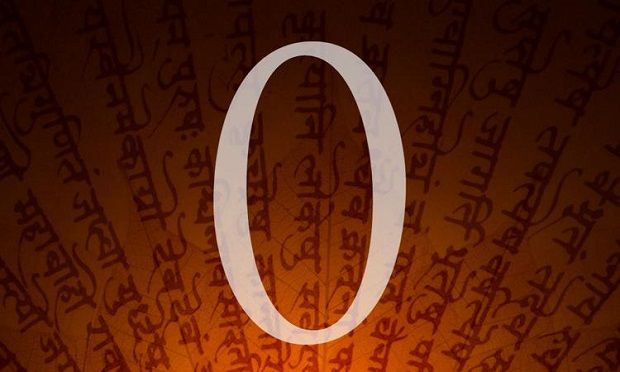
A zero does not look like an empire-building idea. How could it, when it sits in a manner so restrained, painfully holding its ground amongst other intimidating digits? And yet, without this shy zero, empires could not balance their precious ledgers nor could astronomers refine their revolutionary models of the receding cosmos. Your phone would struggle miserably to perform even the silliest operation. It is truly a delicious irony that the most disruptive invention in mathematical history announced itself with such austerity, that is, as nothing at all.
One would immediately assume that such a significant breakthrough must have arrived with either Renaissance fanfare or Silicon Valley branding, and yet, it actually emerged through the painstakingly patient calculations of South Asian scholars who believed absence to mean more than mere emptiness. Earlier civilisations did possess impressive mathematical systems. The Romans engineered aqueducts and empires using numerals that lacked a symbol for zero, and the Babylonians experimented a lot with placeholders, but neither of these systems ever allowed “zero” to behave like an actual number as we understand it today. The marginalised zero could not enter equations or sit confidently within arithmetic. After such a long history of zero assuming numerous side roles, South Asian mathematicians finally formalised it as a functioning number.
By the fifth century, Aryabhata was working within a place-value system that depended heavily on positional logic. Later, in the seventh century, Brahmagupta took a step further and defined the way zero would behave in addition and subtraction. This led him to incorporate zero into algebraic reasoning as well, and for the first time in history, zero became active. George Gheverghese Joseph describes this as a structural transformation rather than a symbolic addition. This was not a simple invention of a new mark, and that is precisely the reason it became revolutionary. It altered the very architecture of calculation itself. Zero now held a place from where it could obey rules which led to arithmetic becoming scalable. It allowed for deeper abstraction to exist, and mathematics could finally move on from simply counting objects to manipulating complex ideas. The consequences were profound, e.g., writing 10 or 100 without zero became awkward. Now, large-scale accounting would become inefficient, and algebra would lose its elegance without zero because the entire place-value system as the foundation of modern arithmetic depends on zero holding its unique position.
This concept travelled westward from South Asia through much trade and translation. In the Islamic Golden Age, scholars expanded mathematical theory using this framework, and the Sanskrit ‘śūnya’ became the Arabic ‘ṣifr.’ It eventually entered European languages as “cipher” and “zero,” and merchants adopted it swiftly. However, universities remained hesitant to embrace a number that, amusingly, represented nothing so quickly. Once it was accepted, its influence grew exponentially. Calculus relied on quantities approaching zero, and nearly all physics models depended on it. Modern computing would have no place in the world without zero, for it reduces the world into sequences of zeros and ones. R. K. Logan describes zero as one of the most significant cognitive breakthroughs in scientific history because, without it, the mathematical infrastructure of modernity collapses.
Something philosophically daring confronts us when we account for this strange history. It is jarring to think that something as abstract as nothingness could be disciplined, and yet zero transformed this absence and gave it structure. It demonstrated that what appears to be superficially empty can carry infinite meaning. Thus, this tale of zero complicates overly simplified narratives that intellectual history may present. The numerical system that supports global finance and scientific modelling in our world rests on the foundations refined in South Asian scholarship centuries before Europe’s mathematical revolution. That raises significant questions for us to ponder. It is truly beautiful to think that before the world could measure everything, it had to learn how to measure nothing.