





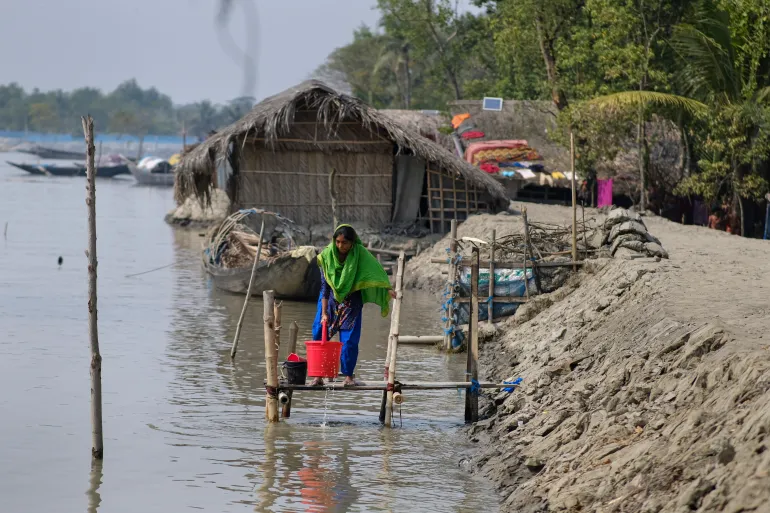
Climate Collapse: In Pakistan, when the environment suffers, women suffer even more. From drying rivers to extreme heat and floods, the impact of climate change is not equal for everyone. While men and women both live on this planet, the burdens of environmental collapse fall more heavily on women, especially in countries like Pakistan, where many women live in poverty, face social restrictions, and carry the weight of household responsibilities.
In most rural and even many urban areas of Pakistan, women are the ones who cook, clean, and take care of the children and elderly as well. When there’s no clean water nearby due to drought or pollution, they are the ones walking for miles in heat to discover it. When gas is not available or wood is wet from rains, they struggle to cook. If there is a flood, they must carry their children, run for shelter, and somehow still feed the family. These extra struggles rarely affect the men in the same way.
Climate change is a crisis of inequality. When floods come, they sweep away poor homes first. When temperatures rise, it’s the slums and mud homes that become unbearable ovens. Wealthier people can buy generators, install air conditioning, or move elsewhere. Poor families, often headed by women or relying on them, find themselves in a precarious situation. Often, women don’t own property or land, so when disaster strikes, they lose everything but have no right to claim anything.
In many parts of Pakistan, women aren’t allowed to move freely without permission, especially in villages. If a woman is in danger from a heatwave or flood, she might not even be allowed to leave her home without a male relative. Even if help is nearby, she may not reach it in time.
Honestly, how many emergency plans in Pakistan even take into account the safety and hygiene of women? Imagine being in a flood camp without access to pads or clean toilets. These issues are genuine, yet they seldom receive discussion.
Source: Pinterest. According to UNHCR, over 8 million people were displaced due to Pakistan’s 2022 floods, including women.
Hotter temperatures and unclean environments increase health risks for women. Pregnant women are more likely to suffer during heatwaves, and dirty water can cause infections. Malnutrition is another issue — when food is short, women usually eat last or less, often sacrificing their health for their children.
When the environment collapses, women’s unpaid work becomes even harder. A farmer’s wife has to work longer to grow food in dry soil. A mother has to care for sick children more often due to pollution or waterborne diseases. Yet, this hard work is unpaid, unrecognized, and somehow never supported.
This is one of the saddest truths: women face the worst but have the least say in solving the problem. Women rarely receive attention in local government, committees, and environmental campaigns. And yet, they often know the problems better than anyone.
Women must be included in planning for disasters and climate action. Their voices matter. Women’s land rights and economic independence must be protected so they can rebuild their lives. We safeguard the future by safeguarding women.