





“I wish I had 2 or 3 more daughters.” That’s what my mother said to me last week after I had made her some chai. “Girls are so caring and helpful around the house; it would’ve really made my life easier.” I was perplexed by her statement because I had 2 brothers, and if they helped with chores as much as I did, my mom wouldn’t be here wishing for more daughters. So I told her, “You have 2 sons; why not make them mop the floor for once?” I should have expected the answer, given how common the assumption is, but I was still shocked when she said, “They aren’t going to do it; they are boys, and even if they did, you just do it better.”
How infuriating and hopelessly maddening it is to realise that women are on their own and that they can never expect a brother, a husband, or a father to come help peel the potatoes or fold the laundry, no matter how overwhelmed with work they are, simply because “women just do it better.”
Weaponised incompetence, also called strategic incompetence, is when someone, knowingly or unknowingly, demonstrates an inability to perform or master certain tasks, thereby leading others to take on more work. 1. The first time I heard this term, I couldn’t help but see the parallels it had with our Pakistani society. It is constantly used to make women work harder and without any compensation.
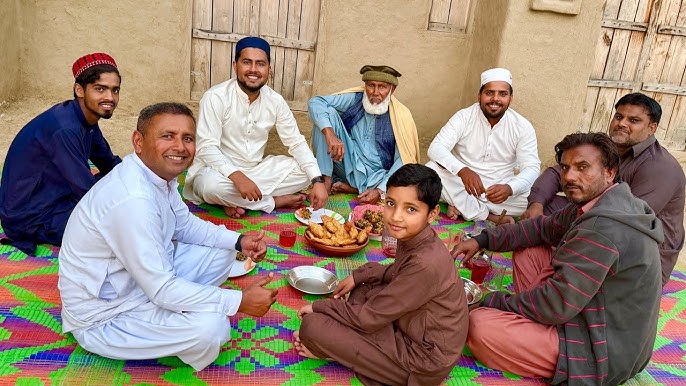
We have been seeing it our whole lives; whenever we go visit our relatives, the chachis and the khalas are always in the kitchen preparing refreshments or a meal. They bring in drinks and then take away the glasses once they are emptied. They then set the table for a meal — usually only helped by their daughter — and called everyone to eat before the food got cold. Once the bellies are full and the plates licked clean, they stow themselves in the kitchen once again to do the dishes and make chai, because, of course, no Pakistani visit is complete without chai. Meanwhile, the man of the house relaxes in his chair, engaging in conversation about cricket and cars. The regular Pakistani man has never once inclined to offer a hand, to bring out the chai instead, so that his wife can also catch up with the relatives. And we never questioned it because this was the only reality we had ever lived in. Instead of wondering why our Khala wasn’t with us at the table, we hover in the kitchen door or hang out around the stove just to be able to talk to her. This was the way things had always been.
Weaponised incompetence is so deeply etched in our society that we don’t even realise how imbalanced our lives are, from the expectations put on us down to the workload we eventually pick up. The life of a Pakistani woman cannot be more different from that of a Pakistani man. Boys never pick up brooms because they never see any other man in their lives do so, and because no mother or grandmother ever required them to do such tasks. They grow up with negligible cleaning and cooking skills, but whatever shall they do? They still need to eat, and there are no clean clothes. Of course, marriage is the answer! These men then get married and have babies, and they feel entitled to such labour from their wives and daughters. An incompetent Pakistani uncle comes to mind immediately!
It’s no surprise that the women have stopped asking men for help; doing everything themselves appears to be much more efficient. It’s not the wife’s fault that she’d rather do all the work herself rather than have to demonstrate a simple task to her grown husband. Especially when even after answering 101 FAQs, the work still isn’t done properly. The dishes aren’t scrubbed properly, and the roti is burnt. Thus, she sighs, ties her apron, and does it all herself.
Yesterday, my brother asked me to make chai, and I told him to make it himself because I was busy with studying. He then came to me 3 more times with questions, ‘How much water should I use?’ ‘How would I know when the tea is done cooking?’ and ‘Where did you put the sieve? I can’t find it anywhere.’
‘It’s in the second drawer.’
‘I already checked, and it’s not there; come see for yourself.’
I reluctantly went over to the kitchen and said, ‘If I had known you would bother me so much, I would’ve just made the tea for you to begin with; I’m in the kitchen anyway.’ I immediately paused, taken aback by the words I had just spoken. No way was I reinforcing this phenomenon. But this made me realise that we are all products of our environment; no matter how much we try to think critically or progressively, we can’t help but be influenced by our surroundings. To some extent, at least. And our surroundings just happen to be the Pakistani society of ever-perpetuating incompetence.
Not to say that your regular Pakistani uncle is an evil, manipulative mastermind who is strategically convincing every woman around him to do his work for him. My brother is definitely not a calculating genius. But yet again, we are shaped by what we see and experience around us. Weaponised incompetence is oftentimes done subconsciously. It is not the little boy’s fault that his mother doesn’t let him enter the kitchen or that she only teaches his sister how to make chai. But he ends up internalising this, and when he gets married and sees his wife struggling to juggle all the work, instead of helping out, he thinks instead, ‘She’s got this; I’ll only get in the way if I try to help. She’s going to do a better job than me anyway.’ And Viola! So continues the cycle.
Most people, both men and women, don’t even realise that they are contributing to this phenomenon that perpetuates such behaviour. It has become such an integral part of our society that people don’t see how wrong and unfair it is. But that doesn’t stop it from being wrong and unfair. Women are still burdened under a tantamount pressure of housework, and men are still never taught basic life skills. However, we have seen some improvement in recent years.
Through the age of the internet, globalisation and progressiveness, the Pakistani women have been comparing and contrasting our culture with the others. We are realising that we can ask our men to help, that we can hold them to higher standards. And since the women’s literacy rate and job market in Pakistan are also improving; the Pakistani man has noticed too that they can’t just dump all the housework on women. Not that there is a significant change, but the cogs have started turning. We are seeing our societal expectations shift in real time, at least to some extent. I would be dishonest if I claimed that we are transforming society and ushering in a new era. That is not so easy a task to fix. Perhaps it will never be fixed; there will always be men who intentionally or subconsciously practise weaponised incompetence, and there will always be women who adhere to it, but one can hope for better times. Maybe one day we can hear the uncles say, ‘I’ll make the roti; you go talk to the guests,’ and no one will consider it out of the ordinary.