





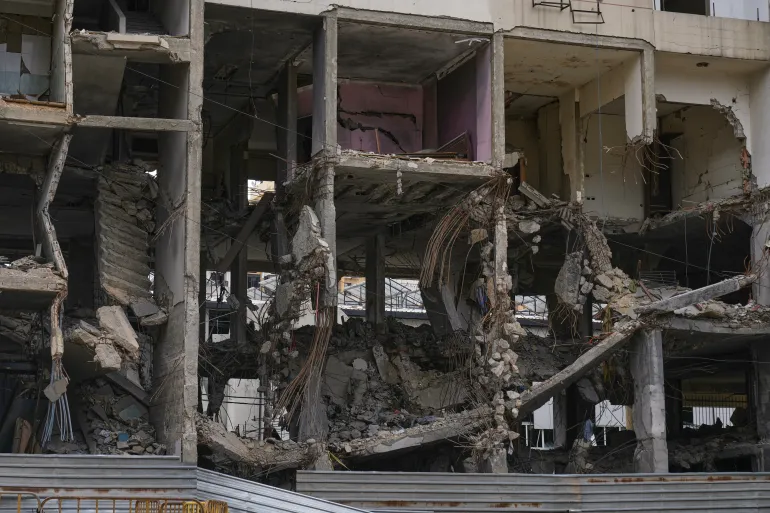
The Middle East war is causing serious security and economic problems in the entire region. The war started on 28 February 2026 with joint US-Israeli attacks on Iran aimed at preventing it from obtaining nuclear capability. The first wave of strikes killed Iran’s supreme leader, Ayatollah Ali Khamenei. It caused fury and rage among the Iranians. Iran retaliated with drone and missile attacks on Israel. The whole region is now in a state of war, as Iran is now targeting US air bases in the Gulf states, which has escalated tensions in the Middle East.
The regional allies of Iran have also become involved in the conflict. Hezbollah, a paramilitary group based in Lebanon and widely regarded as a powerful ally of Iran, launched missiles towards Israel. It gave Israel the reason to attack Lebanon. On 4 March, Israel launched air strikes on Baalbek and Dahiyeh, the southern suburb of Beirut. Dahiyeh is known for Hezbollah’s political and military infrastructure.
According to Al Jazeera news, at least 217 people were killed in Israeli attacks, 798 people were wounded, and an estimated 95,000 were displaced. The Israeli army said it had conducted 26 rounds of attacks in Dahiyeh, which had hit various infrastructure used by Hezbollah. The Lebanese government has banned Hezbollah military actions, but fighters are still carrying out attacks on Israel. The military operations by Hezbollah appear to be a question mark on the sovereignty of Lebanon. It hints at weak state institutions. To uphold its sovereignty, Lebanon must have control over these non-state actors. The Lebanese justice minister has ordered security forces to immediately arrest those responsible for firing rockets, calling the actions a “grave mistake” that places Hezbollah outside the law.
UN Secretary General Antonio Guterres welcomed the decision by the government of Lebanon “to accelerate efforts toward asserting the state’s monopoly of arms across Lebanon.” Lebanese Prime Minister Nawaf Salam said, “Our country has been drawn into a devastating war that we did not seek and did not choose.” He declared Hezbollah attacks “irresponsible” and “illegal”. On Saturday, Salam wrote on X that his government “won’t let anyone drag the country to adventures that threaten its security and unity.” (The Times of Israel)
Lebanon is now a second front in the Israel-Iran war. The people of Lebanon are now paying for the activities of Hezbollah with their lives. Hezbollah, in its solidarity with Iran, has created difficulties for Lebanon. You cannot support someone unless you are safe; your own defence comes first. You have to be strong, and then you can help someone else. Israeli attacks on Iran cannot be justified, but resistance must be carefully planned. It was not a good strategy for Hezbollah to launch missiles at Israel without any preparedness to counter the retaliatory attacks of Israel. Were they thinking that Israel would not attack Lebanon in response? If they wanted to help Iran, they should first consider the consequences.
Hezbollah’s attacks did not benefit Iran; instead, they put Lebanon in danger. Actions driven by political and ideological solidarity instead of strategic evaluation mostly prove to be destructive and harmful. Now Lebanon is in a state of war, a war it has nothing to do with. If this situation continues, Lebanon may witness a repeat of the 2006 war, which caused huge devastation in Lebanon. Lebanon has been facing a financial crisis since 2019; involvement in the war can further destabilise its economy.
The violence between Israel and Hezbollah has left Lebanon on IRC’s 2026 Emergency Watchlist, an analysis of the countries most likely to experience a deteriorating humanitarian crisis. The UN Security Council fears that any further deterioration of the security environment could draw Lebanon into a dual crisis, facing both internal strife and a wider regional confrontation.
Jeanine Hennis-Plasschaert, the UN Special Coordinator for Lebanon, said that just a week ago, Lebanon had been “in relatively good shape.” The armed forces were extending state authority, long-promised reforms were finally advancing, and preparations for legislative elections were underway. A major World Bank loan was set to jumpstart reconstruction, and a warming diplomatic track with Syria was creating “new areas for bilateral cooperation”. She said, “Of course, things were not perfect, but there was progress. Progress, which has now come to a screeching halt.” She urged all parties to return to the framework of UN Security Council Resolution 1701, calling it the only internationally recognised basis for ending the cycles of violence affecting both Lebanese and Israeli civilians since 2006. “As terrible as things are today, they are set to get even worse,” the special coordinator warned. “The choice is clear: stay on a path of death and destruction, or commit to restraint, engagement and dialogue.” (United Nations)
Israel wants to maintain its hegemony over the region, so it is now involved in ground operations and air strikes in Lebanon. There must be an immediate ceasefire; otherwise, a severe humanitarian crisis is waiting.