





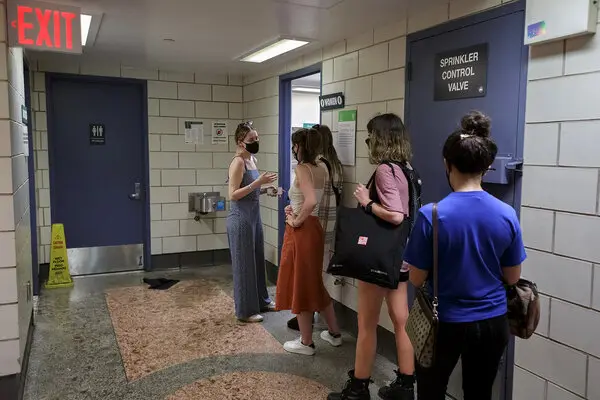
I cannot forget that afternoon. The market was crowded. Shopkeepers were calling out prices, so I moved through small stalls. The environment was filled with the noise of conversations and traffic. In the middle of that, I checked Google Maps again, hoping to find a nearby restroom. I had already asked two shopkeepers. One pointed towards a restaurant that only allows customers to use the facilities, and the other suggested walking several blocks away to a public building that might have the arrangements.
By that time, my discomfort had changed to anxiety. What should have been a simple need had become a stressful and, unfortunately, a shameful search. As a result, I had to leave the market earlier than I planned, cutting short my errands, leaving them incomplete, just to find a place where I could breathe.
My experience is not personal. Moments like this have become quite common nowadays. Many people go through the awkwardness of searching for a public restroom in crowded cities and realise how few options exist. It is something we don’t talk about openly, yet it shapes how comfortable we feel in public places.
Access to clean and safe restrooms in public places is not only about hygiene. It is also tied to dignity. When people cannot meet basic physical needs in public, their confidence begins to shrink. And this search makes something as ordinary as spending long hours outside, travelling across cities, and attending an event more difficult than it should be.
Talking about special groups, this challenge becomes even greater. Women often face long queues and poorly maintained facilities that cause medical issues. Moreover, it is also not easier for children and elderly individuals to wait and travel long distances to find public restrooms. Additionally, people with medical disabilities who are dependent on accessible facilities go through the worst experiences due to the non-availability of such facilities in public restrooms.
These experiences reflect that sanitation comes before technology. It is one of the major parts of how societies are designed for people to live and move freely. When cities invest in building parks, bus stations and public places without proper restrooms, they unintentionally send a message about which needs are considered important and which are overlooked.
The infrastructure of a society reflects priorities. The cities that invest in well-maintained public restrooms are recognising that health, comfort and dignity matter in everyday life. On the other hand, places with poor sanitation facilities are less welcoming.
Another problem that we face today is not just the availability of public restrooms but also their maintenance. Many places have restrooms, but despite that, they cannot be utilised because of poor maintenance and unhygienic conditions. We often come across public restrooms that are locked, broken, or poorly cleaned. In these cases, the problem becomes one of responsibility. Governments may build infrastructure, but communities also play an important role in preserving and respecting shared spaces.
Public restrooms rarely appear in conversations about urban development. Yet it influences how people experience their city life. A well-maintained public restroom may seem like a small detail. But for me, searching for one in that moment of urgency made all the difference.
Perhaps the question is simple: what does a society consider worth caring for? The answer can be found in places people rely on every day, even the ones we do not talk about. Hence, behind the doors of a clean restroom lies something bigger than convenience. It is a certainty that dignity has been considered in the design of public life.