





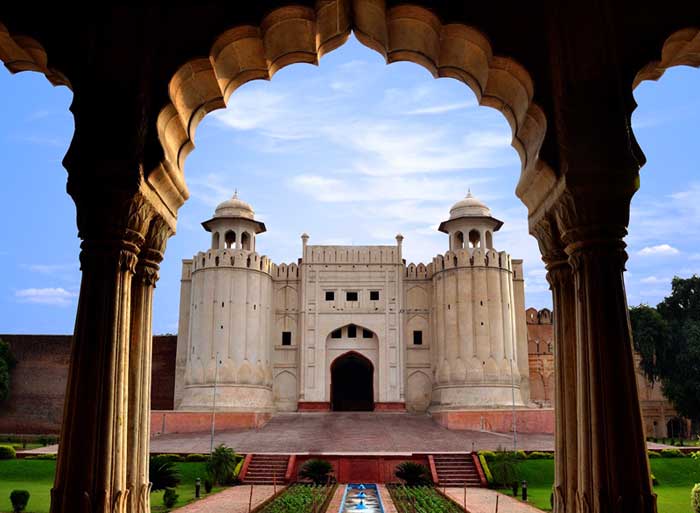
“If you want to understand the current state of a society, look at how they remember their history.”
Art, architecture, and literature all map out the past of a society. The past reveals who these individuals once were. What their values were. What were the priorities set for these individuals before they left this world?
But in the present day of Pakistan, where architecture has evolved from “each their own” into “mass-produced areas of rest”, where do we pause to map our past and history?
We are a country of immense heritage. Our immense heritage lies beneath our feet, yet it should be in front of our eyes. We have to stop and ask: what changed, that our buildings stopped telling stories and started looking like presets, repeating the same faces everywhere?
What really changed was that our walls lost their saturation. Is it convenience that made us abandon our roots, or something far deeper? According to my observation, perhaps what changed is how people once viewed architecture versus how we view it now.
People of the past lived simpler lives, and their connections existed mostly in the present — in the now. For them, courtyards, jharokhas and jaalis weren’t only buildings or adornments. Houses for them were living extensions of themselves, reflecting their taste and the shape of their relationships.
We, however, live condensed, saturated lives far removed from those of our ancestors. Courtyards that connected the man-made to God lost their function. In the last two or three generations, our architecture changed because we stopped seeing houses as extensions of ourselves and started seeing them as mere places of rest — spaces we return to only to sleep before embarking again into our social lives.
It is important to understand that what we lost was not only jharokhas and jaalis. We lost the habit of pausing and reflecting.
Courtyards were replaced by cars, communal gatherings by cafés, and somewhere along the way, we stopped asking who we were before others told us who we should be.
Now, the buildings of our past stand among us, reflecting stories of decay and abandonment — speaking to a generation lost in routine, one that kept moving forward and never learned how to look back.
History still stands before us; we just stopped listening.