





Materials play an indispensable role in aerospace engineering, steering the performance, operability, and risk mitigation of aircraft, spacecraft, and satellites. Due to the increasing demand for aerodynamically efficient structures that possess exceptional tensile strength and the ability to endure harsh conditions, aerospace materials have significantly diversified over time.
Aerospace engineering encompasses the blueprint and innovation in aircraft and spacecraft, entailing materials that can sustain extreme forces, temperatures, and geophysical conditions. The strategic allocation of materials exerts a significant influence on fuel utilisation, structural robustness, and the overall performance of aerospace vehicles. Across the last century, innovation and development in material science have revolutionised aerospace engineering, leading towards lighter and more robust structures.
Both the designs of spacecraft and aircraft aim to mitigate the weight of components without undermining the material integrity and robustness, which are critical to maintaining safety and functionality. The aerospace sector opts for a diverse range of materials due to their defining properties relevant to the application context. These materials include metals, composites, ceramics and specialised alloys.
- Aluminium Alloys
Aluminium alloys are widely employed in aerospace engineering, specifically for aircraft manufacturing. Its low density, high corrosion resistance and optimal strength traits make it suitable for aerospace applications. Aluminium alloys such as 2024 and 7075 play a significant role in the construction of lightweight airframes. They are capable of withstanding high stress during flights.
- Titanium Alloys
Titanium can withstand temperatures higher than aluminium. The melting point of aluminium is 660.3°C, and on the other hand, the melting point of titanium is 1668°C; this makes titanium more resistant. The United States Air Force historically relied on titanium for its military aircraft, and it is now widely optimised in both military and commercial applications. Titanium’s premium price is justified by its exceptional strength, corrosion resistance, and heat tolerance when operating under extreme conditions.
- Carbon Composites
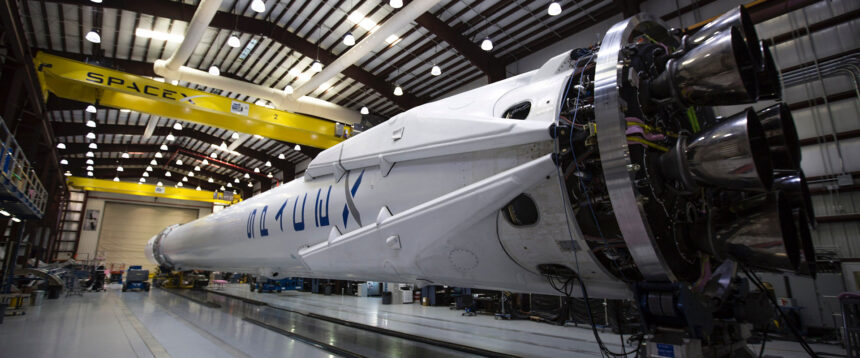
Carbon fibre composites have become a pivotal material in modern aerospace engineering because of their fusion of high strength, low weight, and resistance against corrosion. These materials are mostly used in the optimal performance of aircraft and spacecraft, including commercial airlines like the Boeing 787 Dreamliner and the SpaceX Falcon 9 rocket.
- Super alloys
Super alloys are contingent upon nickel or cobalt. Super alloys are engineered to endure harsh temperatures. They are used in jet engines and rocket propulsion systems. These alloys can withstand temperatures of 1000°C without losing their strength and structure. The advancement and refinement of super alloys have made significant changes in the efficiency and thrust potential of jet engines. For example, the GE90 engine used in the Boeing 777 employs superalloy components that can withstand the intense heat generated during flight, contributing to the engine’s powerful performance and durability.
- Ceramics and ceramic matrix composites
Ceramics and ceramic matrix composites (CMCs) are mainly utilised in spacecraft and high-speed aircraft due to their extraordinary heat resistance. These materials are often employed in thermal shielding systems, such as the heat shields on spacecraft re-entering the earth’s atmosphere. The space shuttle’s thermal protection system (TPS) used reinforced carbon-carbon and silica tiles, while modern spacecraft such as NASA’s Stardust probe and SpaceX’s Dragon capsules employ ablative ceramics like PICA (Phenolic Impregnated Carbon Ablator) to endure re-entry temperatures exceeding 1,500°C. With advancements in CMCs, such as SiC (silicon carbide), the aerospace industry is refining the longevity and productivity of heat shields for future deep space missions, including potential ones to Mars.
Materials are very important to aerospace engineering because they affect fuel efficiency, safety, performance, and cost. Development in material science sustains innovation and leads to robust, lightweight, and self-sustaining materials. These substantial improvements in modern aerospace engineering pave the way for deeper exploration of the universe.