





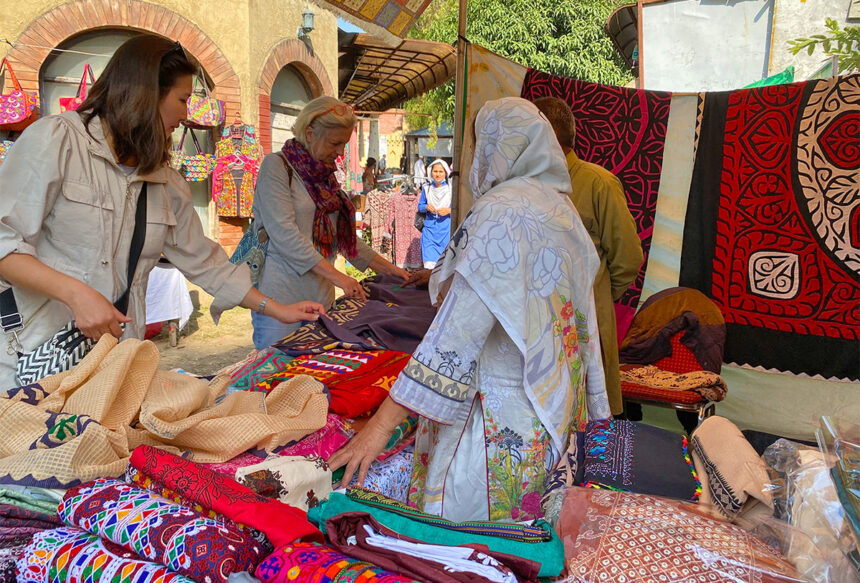
Pakistani Handicrafts: In Bahawalpur’s quiet lanes, under sun-drenched courtyards and mud-brick houses, women sit cross-legged on jute mats, their hands creating delicate patterns on fabric traditions handed down through generations. These are not mere crafts — they are legacies, livelihoods, and lifelines. The revival of indigenous Pakistani handicrafts is no longer a nostalgic yearning for cultural preservation alone. It has emerged as a tool for sustainable development, economic empowerment, and gender empowerment, especially for women in Pakistan’s rural interior.
The Revival of Indigenous Pakistani Handicrafts
This revival has started transforming lives — stitch by stitch.
A Heritage in Threads
Pakistan is home to a wealth of regional handicrafts, each echoing centuries of tradition, local materials, and cultural symbolism. Mirrorwork from Sindh, delicate Balochistan needlework, Swat’s woollen embroidery, and the handwoven khaddar of Punjab — these handicrafts are as varied as the regions they belong to. Women have been the keepers of these traditions for generations, learning from mothers and grandmothers in areas far away from the formal economy.
However, for decades, these crafts experienced gradual decline. Access to markets was poor, middlemen cheated artisans, and modernisation decreased demand for handmade products. Global fashion accelerated more quickly than village looms. By the early 2000s, people were worried that crafts such as ralli quilts and sussi fabric would disappear completely.

Then, quietly, a change began.
Economic Revival through Craft
Based on a 2023 report by the Pakistan Bureau of Statistics, the informal sector employs almost 72% of the nation’s labour force, and rural women contribute substantially, particularly in handicrafts and textiles. Yet, most of these contributions go unnoticed and unpaid.
Initiatives by both local grassroots organisations and international NGOs have begun to alter this. Organisations such as the Kaarvan Crafts Foundation, Behbud, and the Indus Heritage Trust began to work directly with women in the countryside, enabling them to form cooperatives, access fair markets, and gain training in product development. These interventions did not only increase income; they transformed women’s roles in their homes and communities.
“Previously, I just worked within the home,” stated Naz Bibi, a 39-year-old craftsman from South Punjab. “Now, I’m selling my embroidery to Lahore. Because of this job, my daughter is attending school.”
Her income might appear small — about 18,000 rupees a month — but in a village where there are no formal jobs available, it gives both independence and self-respect.
From Village to Vogue
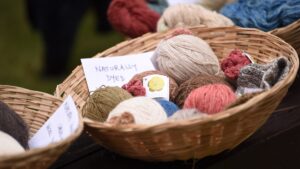
Recently, Pakistani designers have started incorporating indigenous craft methods into high-street fashion. Brands like Generation, Khaadi, and Sania Maskatiya have worked with local artisans, not only for commercial gain but also to resuscitate the dyeing method.
This change has helped rebrand handmade items as “chic” rather than “rustic.” On the catwalks of Karachi and Dubai fashion shows, handwoven ajraks and Balochi embroidery have made their way down ramps — often with minimal credit, sometimes as part of ethically sourced collaborations.
“True revival isn’t just about using the craft. It’s about crediting, compensating, and collaborating,” explained fashion activist and author Noor Javed. “If rural women do the embroidery, their name needs to be in the label, not just the designer’s.”
Digital Tools, Traditional Hands
Technology has also come to play a role in a surprising way. Mobile banking apps such as Easypaisa and JazzCash enable artisans to receive payments directly, cutting out exploitative middlemen. WhatsApp groups connect village-based women with buyers in urban centres.
In the COVID-19 pandemic, these tools became essential. Due to the closure of bazaars and limited transport, artisans used their mobiles to send pictures of their work. A few even got bulk orders from international clients who found them on social media.
Sara Gul, 28, from Lower Dir, established an Instagram handle featuring her region’s embroidery. She now exports hand-stitched cushions to customers in Canada and Qatar.
“We don’t have to go out of the village to work,” she said. “Now the world comes to us.”
Beyond Income: Social Transformation
Where the economic effect is quantifiable, the social change is more subtle — and possibly more potent. As women become economically empowered, their roles within families start to change. Research by the Sustainable Development Policy Institute discovered that women who participated in craft-based cooperatives were more inclined to be involved in family decision-making and to send their daughters to school.
There are also collective benefits. Numerous women reinvest income in sanitation, healthcare, or solar lights. Women artisans in Tharparkar collectively contributed funds to build a water filtration plant close to their village, which decreased child illnesses and saved time used in fetching water.
“Empowerment is not a term we use,” community leader Nasreen Bano said. “But when a woman can earn, speak, and decide — that is power.”
Cultural Identity in Every Stitch
For most craftsmen, their craft is not merely a livelihood — it’s an identity. Arts and crafts are tied to ritual, language, and memory. The phulkari shawl is not merely a piece of clothing; it contains prayers that are embroidered during winter nights. A Chundri print is a wedding blessing. These objects embody oral histories and local aesthetics.
However, this cultural richness is under threat. Imported fabrics and cheaply produced imitations flood local markets, which often offer lower prices. In the absence of policy support, traditional artisans cannot compete.
Provinces, such as KP and Sindh, have initiated limited craft protection programmes in response. The Sindh Indigenous Crafts Bill, which is currently under review, aims to provide geographical indication (GI) tags for certain crafts — similar to how Champagne in France and Darjeeling tea in India are protected. If enacted, it would give legal protection to products such as Sindhi ajrak and Hala pottery from being cheaply replicated.
Roadblocks to Progress programmes
Despite the optimism, challenges still remain. Societal norms in conservative areas often restrict women’s mobility and their access to markets. Digital tools narrow this divide, but many still face limited literacy and smartphone access.
Furthermore, a lack of long-term government policy and investment in the crafts sector impedes development. Budgetary allocations favour large industries, and traditional artisans get minimal support for training, raw materials, or exhibitions.
“Craft revival cannot rely on NGOs and Instagram alone,” said Dr Huma Haider, a development economist based in Islamabad. “We need long-term policy, public funding, and education reforms that treat crafts not as hobby work, but as economic engines.”
Another problem is in generation gaps. Young girls are increasingly attracted by urban employment or digital professions, and the transmission of crafts’ knowledge is in danger.
“My daughter doesn’t want to learn embroidery,” said Shazia, a 50-year-old craftsman from Skardu. “She says it’s too slow. But this is our story. If she doesn’t learn it, who will?”
Stitching a Sustainable Future
In spite of the challenges, the future looks hopeful — particularly when revival initiatives focus on women not only as labourers but also as leaders.
Specialists argue for introducing craft education to rural schools so that youngsters realise that cultural skills are not backward-looking but bankable. Collaboration between universities and artisan communities could bring innovation in terms of new techniques and sustainable materials.
Tourism can be another contribution. Craft villages in Morocco and Vietnam attract thousands of tourists every year. Pakistan, with its cultural richness and variety of art, has the same potential if infrastructure and security permit.
Above all, women’s voices must remain central.
“If we’re only producing for someone else, it’s not empowerment – it’s work,” said entrepreneur-turned-artisan Shamim Akhtar. “Empowerment is when we design, sell, and choose what our craft will be.”
Conclusion: More Than Just Fabric
The revival of indigenous Pakistani handicrafts is not merely about clothes and colours. It is a narrative of resilience, resistance, and reinvention. In the deft movements of a needle and in the rhythmic beat of a loom lies a sustainable path to empowering the women who have long been the silent backbone of rural economies. As they reclaim their crafts, these women also reclaim their position in society — not as beneficiaries, but as decision-makers. And in the In this process, they are sowing a new future not only for themselves but also for generations to come.