



The politics of the Middle East are shaped by anarchy and insecurity, the core principles of the realist school of thought. The core geopolitical challenge facing the region lies in the inability of states to construct a durable regional order. The consistent instability folds with a broader structural issue: The unipolarity of the world order, with the United States as the pre-eminent actor. Yet unipolarity does not guarantee effective control over regional dynamics. In this environment, regional powers have engaged in sustained competition while testing the limits of external intervention. None, however, has shown the ability to establish decisive dominance without the help of the larger international system. The informal constraints that once helped contain conflict are progressively eroding, even as the underlying distribution of power remains unchanged.
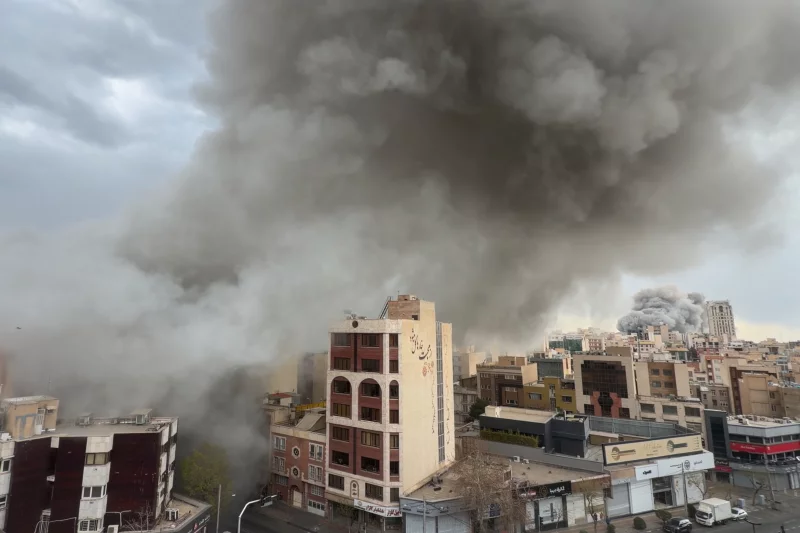
In the early hours of March 1, 2026, this structural tension manifested with devastating clarity. Joint US-Israeli strikes on Tehran confirmed the assassination of Supreme Leader Ayatollah Ali Khamenei, according to Iranian state television. Within hours, the Islamic Revolutionary Guard Corps launched “Operation Truthful Promise 4” — a coordinated, multi-front retaliation targeting both Israeli territory and American military installations across the Gulf.
The IRGC struck the US Navy’s Fifth Fleet headquarters in Bahrain, the Al-Udeid air base in Qatar, and facilities in Kuwait and the UAE. Explosions were reported across multiple Gulf cities. As emergency alerts sounded from Tel Aviv to Dubai, a fundamental question emerged: Has the region’s long-feared transformation from
Beyond the immediate military exchanges, a more consequential development unfolded in the Persian Gulf. The IRGC announced the closure of the Strait of Hormuz, the chokepoint through which approximately 20% of global oil production passes, declaring it “no longer safe” for maritime traffic. Shipping giant Maersk subsequently suspended all vessel transit through the strait, with traffic volumes declining by an estimated 70%. Energy analysts project that oil prices could exceed $100 per barrel if the closure persists, with implications for the global economy that directly engage American and Chinese interests.
The conflict’s trajectory now depends on how the unipolar power responds. The Collective Security Treaty Organisation, led by Russia, has warned of “considerable risks associated with the further escalation of this conflict” and called for diplomatic engagement. Yet these statements reflect opportunism in the margins of American unipolarity rather than a fundamental shift in the distribution of global power.
What renders this moment particularly significant is the absence of any regional framework for order that might supplement or constrain the exercise of American power. Unlike the post-Napoleonic settlement achieved at the Congress of Vienna
In 1815, major powers negotiated mutual constraints; no such understanding exists in the contemporary Middle East. Regional states remain dependent on the unipolar power for security, even as they question its reliability.
Whether this escalation remains contained or expands into a broader confrontation will depend on calculations made in Washington and among regional capitals assessing American resolve. What is evident is that the “Great Regional War” is no longer a theoretical construct discussed in policy papers. It has arrived. The question now is whether the unipolar power can manage it or whether this marks the beginning of a prolonged conflict that will redefine the region while the underlying structure of global power remains unchanged.
In the real world, there are no permanent friends, only permanent interests. Right now, those interests are written in missile trails and oil fires. The question is: who will live to write the next chapter?