





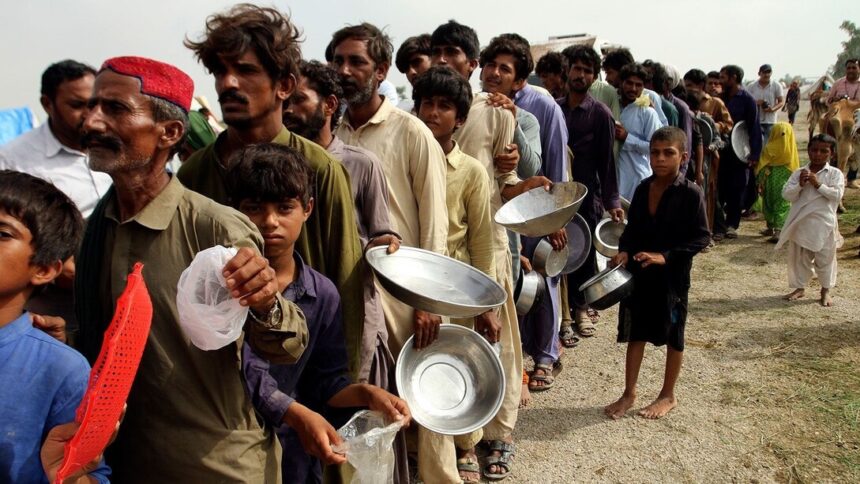
In globalisation and technological advancement, the increasing riches create a favourable atmosphere for inculcating all as affluent. Arm oneself with a magnifier, and surely many hidden realities would come into view: entire communities have been swept away, forgotten, and disabled. Layers of poverty, neglect, and structural inequity conceal these communities from the flashy modern cities. And the loss does not stop here: this loss has led to the emergence of a largely silent crisis. It demands attention – mainly action.
Economic Hardship and Organised Inequity
This much is sure: it is not just poverty that lies at the root of this crisis. For many of these communities, poverty is tied up in a confluence with scarcity of opportunities. They do not just suffer because they do not get any earnings; they do not even think of earning as meaning that the desired life is not within reach. This kind of economic deprivation is often compounded by systemic failures: insufficient investments in infrastructure, nonexistent transportation networks, limited access to education, and nonexistent avenues for employment.
Alarming is the ever-widening gap between the rich and the poor. Cities continue to grow, and the skies rise with luxury becoming more accessible to the elite. And here were lands and people: huge amounts of them — without drinking water, reliable electricity, or basic health services. It is as if they have been forgotten, left behind in a race that they were never allowed to join.
Health and Nutrition Problems
Health issues that are devastating and nonetheless preventable in such abandoned communities. Poor sanitation, polluted water, and undernutrition provide the perfect opportunity for diseases to prosper there. Lives continue to be snuffed away by malaria, tuberculosis, and diseases from water sources, not because they are untreatable or indeed incapable of being prevented, but rather because the methodology for treatment and prevention hangs tantalisingly out of reach.
For many families, survival translates daily into sad decisions concerning what little they might have to eat: sustenance, medicine, or shelter. Malnutrition gives an impediment to a body already without medical support, while preventable diseases are happily thriving. The impact gets worse for children: stunted growths are a dreadfully familiar term here.
The physical ailments are only part of the story. The psychological weight of poverty — chronic stress, anxiety, and hopelessness — adds a silent but heavy burden. In environments where despair becomes the norm, mental health deteriorates rapidly. The lack of mental health services only worsens this crisis, creating a vicious cycle of suffering.
Barriers to Education
A proper education is frequently called the breakthrough in the struggle with the cycle of poverty. But to many millions of disadvantaged children, it is a door that will not open. Most schools are under-resourced to an extreme level; classrooms are overcrowded, teacher salaries are low, teachers are not well-trained, study materials are outdated, and there is no access to technology. In others, the youngsters are compelled to walk miles simply in a bid to get to the nearest school.
In the other ones, the families are unable to feed their children to school. Education is meant to be sacrificed when survival comes first. Even more, these girls, especially, experience barriers such as cultural standards or early marriage, which drag them out of school. Without good education, the future generation is left without the tools that it needs in order to create a better future.
Social Exclusion and Stigma
Poverty is not all about physical poverty. Social exclusion and stigma are hurtful as well as deep. A lot of the poverty-stricken individuals are unjustly stigmatised — they are viewed as lazy, lackadaisical or incapable of assistance. Such stereotypes are highly detrimental, building psychological trauma scars and strengthening inequality.
As is the case, these are the same individuals who are usually the most resilient and hard-working people you will come across. They are just victims of a system that is always against them. The discourse about how poor people are poor because they deserve it should be substituted by another one that focuses on notions of understanding, respect, and dignity.
Crucial services may also be restricted due to social stigma. When aid programmes or government policies are skewed by bias, it is usually the less fortunate who are left behind first. They are doing this through changing hearts and minds as much as changing policy.
Climate Vulnerability
Living in poverty is difficult enough already, but climate change provides an additional inhuman dimension to this crisis. Floods, droughts, extreme weather conditions, and rising temperatures become a special problem for poor communities.
A large number of these communities depend on farming to get through in life, and in case of a bad harvest, it can be disastrous. The resources that these communities possess to prepare or recover are very minimal, and their communities tend to be totally devastated in the wake of environmental shocks. Floods wipe out entire houses. Under extreme heat, crops dry up. When droughts come along, the remaining water gets dry. Wealthy communities are able to adjust to disaster and rebuild their communities, whereas the poorer communities are made to suffer.
Pathways to Change
The problems are mammoth, yet they are not impossible to tackle. These desperate pockets of people can be written a new future with careful coordination, compassion and intelligent investment. Here’s how:
- Enhance Economic Inclusion: Ensure the creation of job training programmes and the development of small businesses, as well as investment in the establishment of infrastructure projects in marginalised communities that present sustainable jobs to these regions.
- Having Access to Basic Needs: Accessibility to clean water, health and healthy foods should not be luxuries. They are fundamental human rights.
- Promote Education Opportunities: Construct and adequately fund schools, prepare classrooms with the resources they require to excel and make education available to every child, irrespective of their background.
- Address Social Stigma: introduce public educational campaigns against negative stereotypes and have a society of understanding and tolerance.
- Enhance Climate Resilience: Help adaptation climate plans like sustainable agriculture, disaster response training and renewable energy initiatives.
Conclusion: Listen and Act Call
It is no longer a hidden crisis; it is now an open sore on our national conscience. When we really listen to the voices of people who suffer, we will be surprised at what strength, persistence and potential they have left.
We have the power to save people from struggle and make their despair from dignity. Tackling these issues will not only be the right thing to do but also a required measure in the construction of the future that comprises everybody. And a society which cannot leave its most vulnerable ones behind will never be complete.