





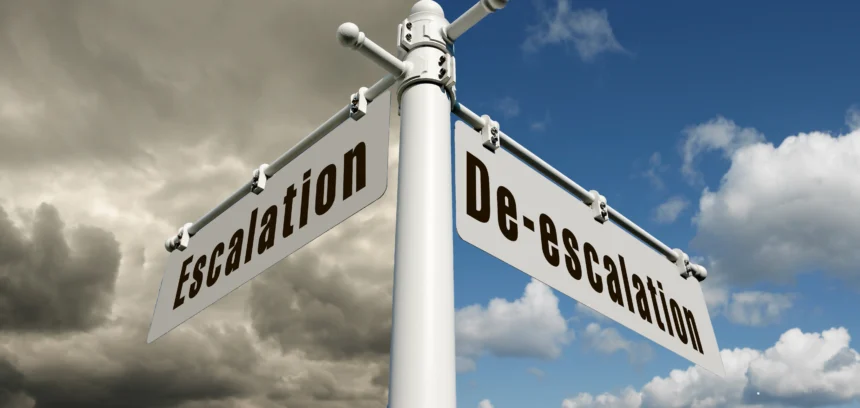
For many years, international politics operated within clear limits. The great powers competed without fighting one another. International law, diplomacy, and world institutions were effectively managing the tensions.
Different international organisations, like the United Nations, also took a mediating role by pressuring states to solve conflicts by engaging in dialogue instead of using force.
Those limits appear to be weaker today. The situation in early 2026 signals that the world might be moving to a new, more dangerous phase.
A Rise in Direct Military Actions
Recent events show an increased readiness to employ force. At the beginning of 2026, the US conducted a theatrical raid on Venezuela that was intended to seize President Nicolás Maduro.
These were not the kinds of moves made before. Major powers usually resorted to sanctions, negotiated or pressured by international pressure. The fact that the situation has changed is reflected in targeting a sitting leader.
The Middle East has become a highly strained area. The United States and Israel combined efforts to attack Iranian military bases, and this created apprehension of an extended war in the region.
Iran responded swiftly. It sent missiles and drones on regional targets, increasing the tension in the Gulf.
Strategic Regions Under Pressure
One of the major developments is the situation in the Strait of Hormuz. This is a small canal connecting the Persian Gulf with the open water, through which approximately 20% of the global oil is transferred.
Iran declared the closure of the Strait at the beginning of March 2026 and threatened to attack ships. This led to a decrease in commercial traffic, and most of the oil tankers were forced to wait outside the Gulf.
The closure has immediately affected global energy markets. Oil prices have risen sharply as supplies from the Gulf became uncertain. Energy analysts warn that a long disruption could push prices even higher and increase global inflation. The effect is already being experienced in most countries, including Pakistan. Higher world oil prices are directly reflected in the home prices of fuel, since most of the oil used in Pakistan is imported. This puts a strain on the transport, electricity production, and the economy.
Meanwhile, Russia has heightened its nuclear rhetoric at the international level, including in the Organisation for Security and Co-operation in Europe. Such warnings have brought in a new dimension of tension to an already unstable world environment.
Weakening Global Institutions
The other trend that is worrying is the decreasing role of international institutions. The United Nations still urges peace and moderation. Nevertheless, it does not seem to be able to govern the great powers.
Powerful nations are becoming increasingly independent. They are making their decisions on the grounds of national interests, rather than international consensus.
This change undermines the machine that used to assist in deterring an escalation.
The Disappearance of Red Lines
Some of the actions were deemed too risky in the past. A direct assault on a sovereign state would provoke a world response. These limits were referred to as red lines.
Nowadays, these lines are becoming unclear. Governments now legitimise strikes as proactive or self-defence. They state that something should be done early before it is too late to eliminate the threats in the future.
But this reasoning can be easily turned into a kind of escalation. One blow will cause retaliation. Revenge is then the cause of another attack.
A Possible Turning Point
March 2026 may become an important moment in modern geopolitics. The world is not at a global war. But the old regime of regulated competition is growing increasingly stressed.
The possibility of miscalculation will increase in case the guardrails on diplomacy are weakened further. And in world politics, such a miscalculation can be very big.
The number of red lines disappearing does not mean that there is no conflict. Still, it makes the international system much more unpredictable.