





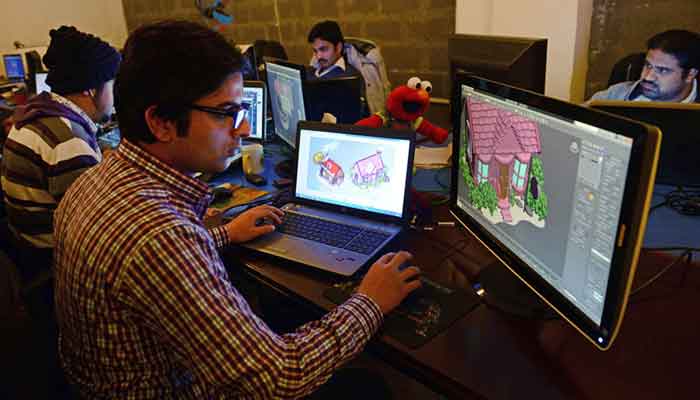
The freelance economy in Pakistan, where young people earn in foreign currencies, avoid conventional job markets, and join a global digital workforce, is often touted as a success story. Below this rosy story, however, is another reality: a psychological and financial pressure on what can be more rightly referred to as the digital mazdoor.
These employees create site designs in the morning, edit videos in the middle of the night, and answer customers in different time zones. They are glorified on the basis of their flexibility, which is a convenient term that disregards a lack of job security, health coverage, and labour protection. As opposed to the ordinary workforce, their burnout has no physical evidence, and their plight is simple to ignore.
The stress is multilayered. The level of income varies inconsistently, platforms update their algorithms without prior notice, and even one negative comment can ruin months spent on work. Freelancers act as single-entity companies, where they not only produce but also market and deal with the crisis. Sarcastically, they are told they are their own bosses, even though they simultaneously report to clients, platforms, and exchange rates.
The contribution to society is lower than the economic contribution. Freelancing has been mistaken for being a temporary or casual job. The family meetings include well-intended questions, such as what constitutes a real job, but they do not consider that this sector contributes a considerable amount to national revenues. The digital mazdoor is a necessity, and its presence goes unseen.
Little is said about mental health consequences. Seclusion, burnout, and continued vigilance are naturalised costs of independence. Unions do not exist; there is no collective bargaining area, just internet forums where the feeling of exhaustion is exchanged as a coping mechanism.
As Pakistan becomes increasingly dependent on freelance labour, the lack of structures is also becoming evident. It has to be more than praise for a policy that includes equitable taxation, legal barriers, and mental health consciousness. The digital mazdoor remains silent, not seeking sympathy, but simply observing.
Once again, quiet misery masquerading as freedom should not form the future of work.