





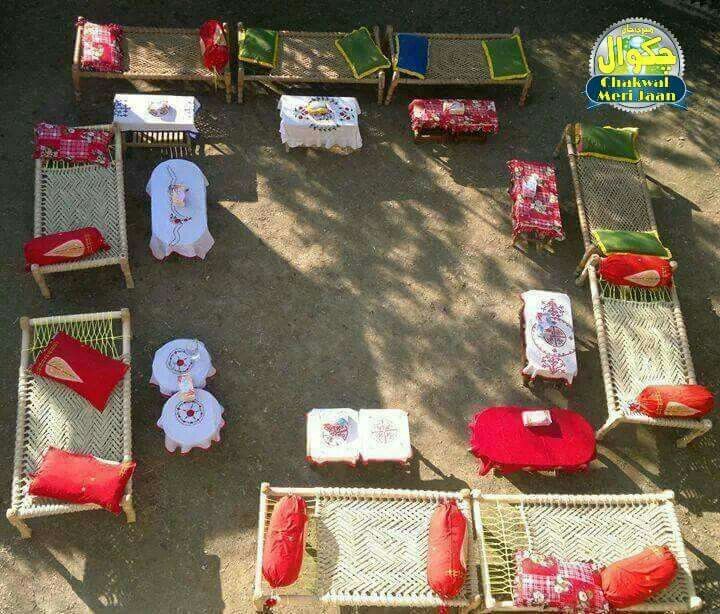
What happened to the Neighbourhood Discussion?
At one point, ideas did not need Wi-Fi to travel. They were passing over woven charpais, chipped teacups and the evening light moving slowly along. Arguments were spawned, politics was fiddled with, the elderly were challenged, and silence was interrupted in the bethak, the unofficial meeting spot in homes or neighbourhoods. It was noisy and unrefined and very human. The bethak is becoming a thing of the past today, and so is the culture of neighbourhood discourse that once bonded communities together.
The bethak was not simply a physical location; it was a social ceremony. It demanded presence. At Maghrib, you appeared and greeted everybody, listened first and spoke afterwards and did not block anyone. Narratives moved in real-time — street news, issues with price increases, philosophising about religion, cricket commentary, and unwarranted life advice. The regulations were very simple: speak up, but turn your back to the room. Responsibility existed in direct eye contact.
So where did it go? The first answer is screens. Communication that used to be in common areas has been transferred into personal feeds and discussions. There is broadcasting of opinions, but not the exchange. Algorithms give credit to the outraged rather than the discerning. Should there arise a heated debate in a bethak, tea would eventually cool it down. It spreads, disseminates and languishes online. Listening, which was the art of neighbourhood life, was substituted with the desire to act first.
It was also contributed to by urban life. Social circles have been reduced by gated communities, downsized houses, increasing working hours, and increasing security concerns. Neighbours are strangers with a familiar face. The casual familiarity with which the people could walk in without an invitation is now an intrusion. Where the bethak made the most out of random meetings, contemporary existence requires time management, authorisation and seclusion.
It also has a generational change. The youths receive information and pass it on faster and with wisdom gradually. They also get to know how to argue in the comment sections and not in the conversations. Without the elders to correct the tone or the peers’ face-to-face to prove their logic wrong, discussions are shallow. The bethak was a wall-less classroom, in which discord perfected the intellect instead of hurting feelings. The lack of it has created a vacuum that cannot be filled by the podcast or livestream.
The loss is important, as the bethak was a source of social glue. It enabled the community to work as a unit in handling crises in common — power outages, political instability, and local disputes. It humanised difference. You know the father of a person, that he has struggles, that he prefers tea, and then it makes it more difficult to make him an enemy. On the contrary, online spaces level identity and value extremes.
But still, the loss of the bethak is not final. It does not need nostalgia, just will. It starts with sitting down — again on the roofs, in the courtyards, on the sidewalks — and reviving a conversation as a communal activity. It is all too noisy in this world, and the bethak reminds us that no one discusses a trend, only one that changes.