





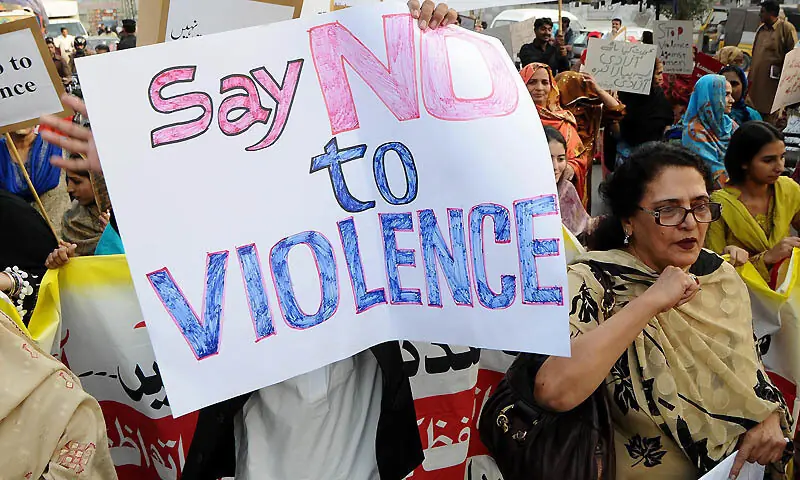
How many cultures define women with words like ‘strong’, ‘powerful’, and ‘a natural leader’ instead of ‘graceful’, ‘decent’, and ‘fragile’? Perhaps there are a few, but they are certainly not found in mainstream cultures. For a long time, this linguistic gender discrimination has set standards ingrained in the minds of people that women need certain characteristics to display in order to fit the perfect image. Almost always, showing rudeness is the biggest sign of wrong upbringing, and as much as it brings shame to the girl’s family, issues like marriage (the biggest fear of a desi household) become inevitable.
This prejudice prevails in the workplace as well. When women appear to be strong contenders in leadership roles, they are quickly labelled as “bossy” or “overly aggressive.” While celebrated as a sign of competence and quality in men, this same characteristic pulls down women, and the inequality lingers around.
The Bowen Theory, which asserts that patterns passed down through generations influence human behaviour, is a pertinent topic of discussion. A child raised in an anxious home would absorb the energy around them and take on the role of ‘peacemaker,’ compromising their own emotional well-being. This pattern persists through adulthood to cater to others’ needs, and women always take the brunt of the responsibility more than men. What does it subtly say? Women likely believe they have less power to say ‘NO’, especially when compromise is required, because of their upbringing.
Especially in the workplace, saying ‘NO’ could make them look incompetent, when they already face far greater standards of performance and are judged negatively on the slightest of human errors. Why is it so difficult to say no? The answer is simple. They are conditioned to be likeable and agreeable, and most importantly, they have often lacked financial stability in the past to have the liberty (though there is a gradual shift in this balance).
Interestingly, even in this day and age, I often hear phrases like “wife material” from boys while idealising an independent woman. What does it say about the underlying essence of this phrase? They have different preferences regarding what they consider dating and marriage, believing that a woman who complies with their requests is wife material.
This concept brings another layer to this conversation. Is saying ‘no’ related to how much power one has? Surely, it is intimidating and risky to reject a task assigned by one’s boss even if it is uncomfortable. Not listening to one’s parents is also difficult because the power dynamics don’t allow that. The disparity between men’s superiority over women reinforces this power, and the woman figures out her position as one of helplessness and being compliant. When we are not conscious of the power of ‘yes’ and ‘no’, we feel disconnected and non-reactive to events around us.
This lack of consciousness between saying yes to a situation where NO should have been the appropriate answer puts women into situations not desired. A report by the Harvard Business Review says that women are 1.5 times more likely to stay in toxic environments than men, only because of their feelings of loyalty and fear of being seen as weak. Ultimately, it negatively affects their mental health and takes a costly toll on their emotional labour. Stress, depressive symptoms, and burnout are likely consequences.
But… where do women start to realise the power of saying ‘NO’? The biggest indicator of realising this power is awareness of it in the first place. Women know when a situation makes them uncomfortable; they are very sure of it. But that must be the inflexion point after becoming aware. Accountability is a huge aid in this process as well, keeping track of the number of times one should say “no.” However, I must admit that giving advice is far easier than actually being in a situation where everything is at stake. Yet, one must start somewhere. Self-respect, whether achieved through self-reflection or gradual awareness, is the ultimate manifestation of human dignity. In order to prevent the decline of feminism, it is crucial for more women to recognise their inherent power as individuals. Is the cost greater than self-preservation? Perhaps reflection on this part is still needed.