





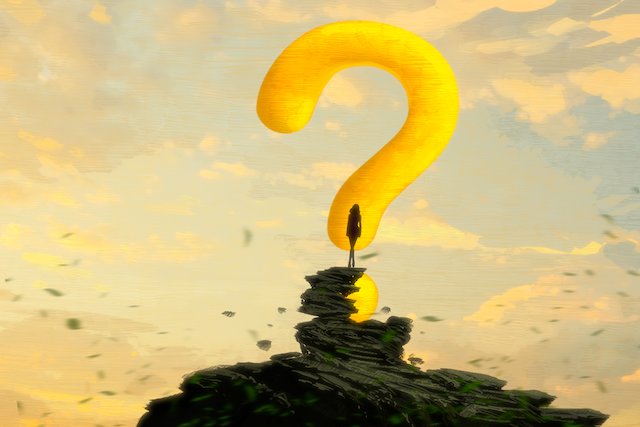
We rarely notice certainty until it is gone. Perhaps it was never there to begin with. In conversation, uncertainty feels almost distant, like an abstract concept, and still it always arrives with a startling concreteness in the form of either a medical report that says “further tests required” or in a version of ourselves that no longer holds. We tend to naively name the feeling ‘uncertainty’ as though it were a defect in the structure of things. It may be that, in truth, uncertainty stems from something more fundamental. A visible sign that maybe change has already begun.
Heraclitus, the pre-Socratic philosopher of flux and fire from the city of Ephesus, described conflict as the hidden order of the world.3 Tension is what shapes, and it is only opposition that holds the potential to generate movement. A string must be stretched before it can produce a lyrical note. Stability would not arise without some form of friction, and in a scenario where it could, it would flatten everything into stillness. In this light, uncertainty assumes the role of a signifier of continuity through motion and a space where, the moment a form dissolves, another begins to take form.
Centuries later, the German philosopher G. W. F. Hegel changed this tension into a fascinating theory of development.4 In this theory, an idea encounters its limit and, as a result, exposes its contradictions, and this exposure is what unsettles thought. A wider understanding then slowly takes form as a consequence of this initial disturbance. The mode that advances knowledge is, in fact, disruption. With a lack of internal tension, consciousness would stagnate because growth requires some baseline instability. Beauty follows the same pattern. Janet Wolff, a cultural theorist of aesthetics, argues that uncertainty itself can carry aesthetic value.1 We assume that ambiguity can weaken meaning, but instead, it is exactly this ambiguity that extends it. Whatever remains even partially open continues to resonate. One must understand the way certainty forces premature conclusions because it is uncertainty that actually redirects our attention towards subtler truths.
Even contemporary researchers such as Pietro Sarasso and his colleagues in neuroaesthetics suggest that structured unpredictability heightens engagement rather than diminishing it.3 The unsettlement of pre-existing reified expectations sharpens the mind because what resists immediate resolution creates the inviting space for deeper participation. This revelation of limitation through conflict allows for more revision, and thus what appears to be fragile often serves as the threshold of greater development. Human certainties tend to fracture completely under pressure in the same manner that a winter rosebud quivers before it can bloom. The shifting of assumptions makes identity reorganise itself around newer insights, and stunningly, the discomfort of not knowing becomes the very condition for becoming anything at all. Every settled truth once began as a jarring disturbance, and every mature conviction at some point passed through doubt.
The reason uncertainty feels so delicate to us is because it discloses an uncomfortable incompleteness, and yet incompleteness holds potential. A life without any contradictions would be orderly, perhaps, but entirely devoid of any life-sustaining transmutation. Uncertainty is clarity in the process of formation. Within its tremor lies revision and transformation because whatever we understand has emerged from disturbance. We do not grow in spite of uncertainty; we grow because of it. Whoever we have become and whatever way we know ourselves would have been impossible without uncertainty, and that is precisely what makes it beautiful. Certainty may preserve what we already know, but it is uncertainty that creates what we do not yet understand.