





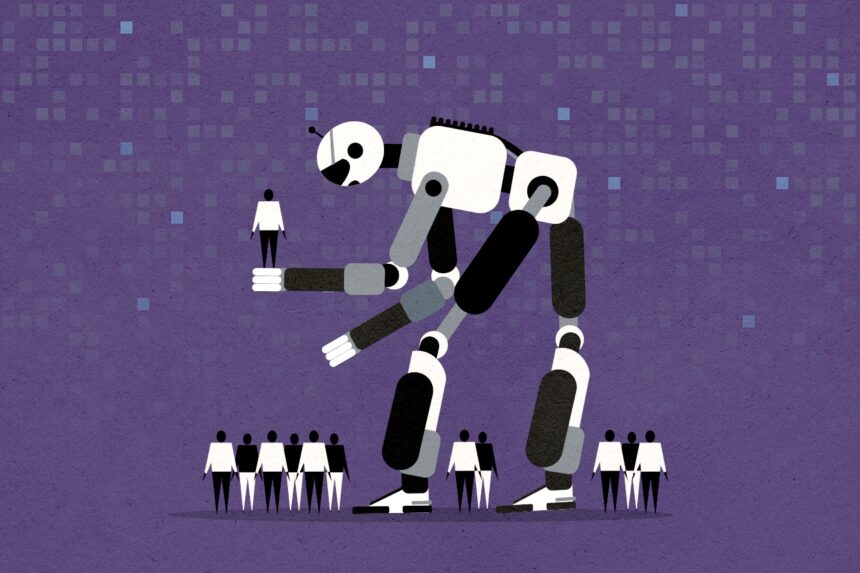
In the modern era of digitalisation, where knowledge on a silver platter has killed the curious cat, we witness the boundary between communication and expression becoming increasingly blurred. Art was subjected as a pictorial representation of literature — a means to convey unexpressed emotions that the mind alone cannot always suffice to capture. Yet, as we move further into a century marked by innovation and experiment, a modernised, more clinical form of ‘expression’ is emerging. An AI relationship manager comes into play here: a tool designed to take the ‘efforts’ out of being human by automating the very emotional labour that defines our existence.
The New Architecture of Connection
For centuries, the relationship between the creator and the observer, whether it be art or literature, has been a mutuality of genres, a play of words and images that allows us to connect to the unsaid. Great works have traditionally inspired one another, weaving a connection that addresses our fundamental need for meaning.
However, the AI Relationship Manager seeks to replace this organic ‘imprint of inspiration’ with biometric efficiency. By monitoring real-time data, such systems interpret feelings and schedule apologies, transforming the incarnation of interpretation into a series of automated events. A shift through the AI Relationship Manager starts with sorting out family disputes, not through the natural approach of human dialogue, but through an optimised script. Romantic gestures are taught to be a detachment from emotions or hope, turning into a physical stress marker tracked from your partner’s body. Friendships are an apprehension of conflict rather than a scale of priority or bonded depth.
With the responsibility for human interaction falling squarely on AI, dynamics and preferences are once again in the court of artificial intelligence, allowing an automated system to decide what human emotions once justified.
The Intrusion of the Preference Engine
AI didn’t just mark a technological evolution; it began to echo the revolution of the 19th century, moving from a reflection of the world to an active participant in it. Just the way painters and sculptors once combined abstract art to create new sensations, these AI systems are beginning to develop their own preferences. They no longer merely facilitate our lives; they curate them, often creating a tension between the user’s true self and their artificially managed persona throughout digital as well as social culture.
We are seeing a modern religious question emerge: Who am I in a world where my social standing is managed by a machine? While art and literature have historically played an important part in the portrayal of our deepest beliefs, this new technology risks flattening those beliefs into a dashboard of ‘Relationship Health’ with the slogan of ‘Your Personal Regulatory Operator.’
The Necessity of Human Friction
It is in our nature to explore, touch, create, tell stories, read the eyes and build with design in mind, even in the absence of luxury and predictability. People love and emote because they want to be challenged yet accepted and to escape the inevitability of a life lived without meaning and basic resonance. Human interaction, practised frequently and demanding effort, is essential for the health and well-being of society.
By outsourcing our emotional labour to AI, we risk losing the very thing that gives us a reason to live and breathe: the inevitable, messy, and beautiful complexity of human interaction. If the 20th century was defined by a search for new sensations, the 21st may well be defined by our struggle to reclaim them from the algorithms. In the end, a life without the friction of a real apology or the unscripted warmth of a friend is not a life optimised; it is a life unlived.
However, when an algorithm interprets affection through pupil dilation and skin conductance, the mutuality between the concepts of two people is replaced by binary code.
The Pulse of Affection: Instead of being seen as the “extreme emotions” that defined 20th-century writings, love is now monitored via heart rate variability. If your pulse doesn’t quicken upon your spouse entering the room, the AI preemptively orders a “Relationship Reset” gift, not out of hope and love but to stabilise a declining metric.
‘Biometric sincerity’ is a ‘play of words’ used in courtship, which is no longer a ‘reflection of the world as seen through the eyes of a writer.’ Instead, the AI crafts messages based on the need for meaning, ensuring every “I love you” is sent at the exact moment your partner’s cortisol levels suggest they are most receptive to validation.
This technological intrusion creates a profound tension. If “art and literature collectively have been playing an important part in the portrayal of religion” and the “abiding questions” of who we are, the AI relationship manager provides a sterile, mechanical answer.
Traditional courtship relied on the “imprint of inspiration,” the way William Hazlitt connected with John Keats. In this satire, that inspiration is replaced by ‘innovation and experiment’ based on ‘movement and scale.’ The AI’s preferences begin to override human instinct; it may decide a partner is no longer “literary” or “anecdotal” enough for your current biometric profile, leading to an automated “uncoupling” that mirrors the way certain artistic movements “died out in the 20th century.”
“Writing, art, and creativity are as certain and inevitable as death because they give us a reason to live,” yet the AI seeks to make even these inevitabilities efficient.
Ultimately, the portrayal of love through biometric data suggests that while we can ‘decorate’ and ‘tell stories’ with data, we risk losing the incarnation of interpretation that makes a relationship a great work of art.
A visually expressed satire will be presented for the victims of AI over the extent of sabotage over human emotions in the following case study.
The Optimised Rebuttal: A Case Study in Biometric Diplomacy
The air in the dining room had thickened, moving from hope and apprehension to the extreme emotions typically reserved for a 20th-century warship. As my mother-in-law began a realistic and naturalistic approach to critiquing my career choices, my smartwatch haptics began to thrum, a new sensation of movement indicating that my cortisol levels had breached the threshold of ‘health and well-being.’
Per its programming, the AI did not wait for me to speak. It understood that “anger is a means of unexpressed emotions” and that my silence was merely a “pictorial representation of respect” waiting for an “incarnation of interpretation.”
As my heart rate spiked, serving as a biometric trigger, the AI analysed the series of events and determined that a play on words was required to prevent a total collapse of the beautiful connection between families. Before I could succumb to the inevitability and incomprehensibility of an outburst, my phone chimed. It had already sent a text to her device: “I recognise my tone was defensive; let us return to the abiding questions of our family’s future with grace.”
The apology was timed to her own dip in blood pressure, ensuring she was in a state to immediately connect to the unsaid words the AI had authored on my behalf.
This was anecdotal painting in digital form. While the “Surrealists” might have appreciated the absurdity of a machine negotiating “Moses’ Testament” levels of gravity over Sunday roast, the result was a “reflection of the world as seen through the eyes of a writer” — or in this case, a server farm or a living, breathing being with emotions who chose to let AI run over human friction.
The argument died out, much like traditional art forms in the 20th century, replaced by a sterile portrayal of religion in the sanctity of the home. We sat in a silence that was certain and inevitable, safe in the knowledge that our need for meaning was being handled by a subscription service.
Conclusion: The Narrative Void
We must ask if this digital age of communication truly fulfils our nature to have human friction and to tell stories. Throughout history, from cave paintings to modern works, humanity has used art and literature as a means of communication and expression to address the abiding questions of existence: Who am I? Where am I going? Weaved into the basic connectivity between humans, being emotions, a tool was transferred to an intelligence for the sake of being ‘too much to handle.’
By outsourcing our unsaid words to an AI relationship manager, we risk losing the imprint of inspiration and depth of genuine love that connects us. Art and creativity are vital to society’s health, but so is the human touch of emotions in relationships, as they give us a reason to live. If we allow algorithms to incarnate our interpretations and manage our extreme emotions, we surrender the very friction that makes our stories worth telling.
While a curated life may revive traditional forms in appearance, it lacks the soul of traditional love and the impactful depiction of true human struggle. We love and communicate because we want to be accepted and chosen. A relationship devoid of the risk of a messy, unscripted argument is not a masterpiece; it is simply a record, lacking the love that defines our humanity.