





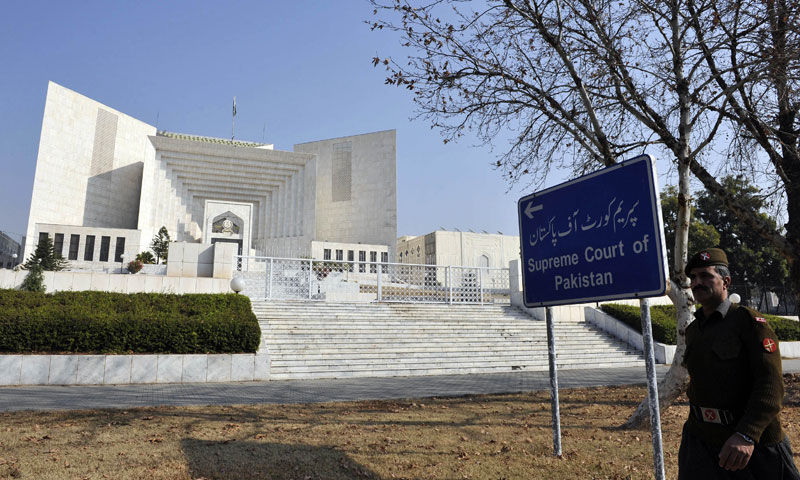
I am an emerging youth of Pakistan. What I aspire to see is an egalitarian society. A common citizen elucidates it as “A society where law and order are strictly followed, where sect- and caste-based nepotism should be eliminated, and where the judgements should be delivered under rational reasoning, not through mere envelopes.” Yet, those envelopes often carry more potential than the constitution of Pakistan itself. It’s so disheartening that even an ordinary court worker might assume that if the case is against someone influential, the courts definitely favour that person, or maybe they do not even bother him to face basic accountability, like appearing in front of the court.
Let’s delve into the roots of this statement: “Influential escaping accountability for their atrocities without any remorse.” It was December 25, 2012; the social media was flooded with the slogan, “Justice for Shahzeb Khan.” Shahzeb, a young man, was tragically killed because he confronted the son of a feudal and influential family, Shahrukh Jatoi, who allegedly harassed his sister. This incident sparked nationwide outrage. A prolonged protest emerged by the youth of Pakistan; after the ordeal, the suspects were finally behind bars and were sentenced to death. However, as years passed, the case took an unexpected turn. In 2022, the supreme court acquitted Shahrukh Jatoi, and he was no longer convicted of any criminal charges. This incident ignites the debate over how wealth influenced the decision-makers.
One might argue that these are merely one or two isolated cases where the involvement of wealth restates the laws; the Pakistan legal system highlights their troubling pattern of such cases. We shed light on the cases that are registered and proceed to trials; many others never even reached the FIR stage and were buried alongside the victim.
The Abu Zar case: a 16-year-old son of an Islamabad high court judge killed two women, Samreen and Tabinda; he was involved in reckless driving. Later, he was brought before a court, but the families of two forgave him under ‘Qisas and Diyat.’ Similarly, in the case of Natasha Danish, she was drunk driving and collided with multiple vehicles, in which she killed a father, 60 years old, and a daughter, 22, who were on the motorcycle. Despite the CCTV footage and medical reports showing intake of drugs still under ‘Qisas and Diyat’, she was acquitted and free to live her life.
The Noor Mukadam case, which shook the nation in the year 2021. A 27-year-old woman was found dead at the residence of Zahir Jaffer, a Pakistani-American man belonging to the influential business family. Yet, another public outcry, another slogan echoed on social media: “Justice for Noor Mukadam.” He was convicted and sentenced to death by the Islamabad session court. However, the lingering question is, will he serve his sentence, or once society pressure subsides, on a random day, will one biased outcome acquit him as well?
Who, then, should be blamed: the Pakistani constitution or the authorities acting as the keepers of the law? The controversial flaw in the Pakistani constitution is the amendment of “formal pardon”, often described as “Qisas and Diyat”. In simple terms, ‘Qisas’ means ‘retaliation’; it allows the victim’s legal heir to demand the exact punishment for the accused (including the death penalty). ‘Diyat’ means ‘blood money’ given to the victim’s family to forgive the offender. In numerous high-profile cases, the opulent always benefit from this provision. However, the law also provides a crucial safeguard: ‘Fasad-fil-Arz’ (mischief on earth), where the courts can still make the accused accountable if the offender creates disorder in society. The bitter reality is that the accused offers diyat to the victim’s family to resolve the issue, but pays a hefty amount to the officials as well; therefore, they partially follow the laws and consider the peace offender as innocent.
Can we call Pakistan’s criminal justice system an injustice system? At times, it’s difficult to identify cases where the rule of law prevails over power and wealth. When a case is fresh and public outrage is at its peak, with candles still burning and protests ongoing, the courts remain attentive and firm. Yet, as time passes, the protestors subside, the media shift their attention, and outcomes change, allowing criminals to roam around without fear. This case shows that justice does not depend on laws only, but on pressure.
Laws are enacted so that peace and harmony can prosper in societies. However, if the laws only protect the upper class, it will erode faith in the system. An ordinary citizen must pay taxes, obey laws, follow traffic rules, and maintain public order. If you breach it, you have to face accountability. If an influential person breaches the law, it calls into question the principle of equality before the law. The issue is not the existence of laws, but the equitable application of these laws, irrespective of power, status, and connections.