





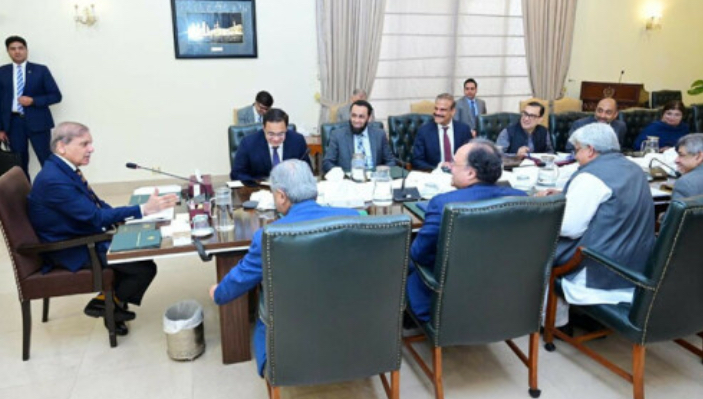
Prime Minister Shehbaz Sharif has directed authorities to broaden Pakistan’s tax base and intensify efforts against tax evasion, emphasizing the use of technology to enhance transparency and efficiency in tax collection.
Key Directives and Measures:
•Expansion of the Tax Net: The Prime Minister emphasized the need to bring individuals and sectors capable of paying taxes into the tax net to reduce the burden on the common man.
•Technological Integration: He instructed the completion of digital monitoring in sectors like cement and tobacco by next month, aiming to curb tax evasion through enhanced oversight.
•Accountability Measures: Strict action was ordered against tax evaders and officials facilitating them, with a focus on recovering pending tax-related dues.
Fiscal Performance Overview:
•Revenue Collection Shortfall: The Federal Board of Revenue (FBR) missed its collection target by nearly Rs831 billion in the first ten months of the fiscal year, primarily due to decreased import volumes and lower-than-expected inflation affecting sales tax collections.
•Income Tax Collection: Despite the overall shortfall, income tax collection exceeded targets, totaling Rs4.479 trillion, surpassing the target of Rs4.152 trillion by Rs327 billion.
•Sales Tax Collection: Sales tax collection fell short by Rs774 billion, amounting to Rs3.174 trillion against the target of Rs3.948 trillion.
Impact of Technological Measures:
•Track and Trace System: The implementation of this system in cement plants and the sugar industry led to significant increases in tax revenue, with the sugar industry witnessing a 35% rise from November 2024 to April 2025.
These initiatives reflect the government’s commitment to enhancing fiscal stability through technological advancements and stringent enforcement of tax laws.