





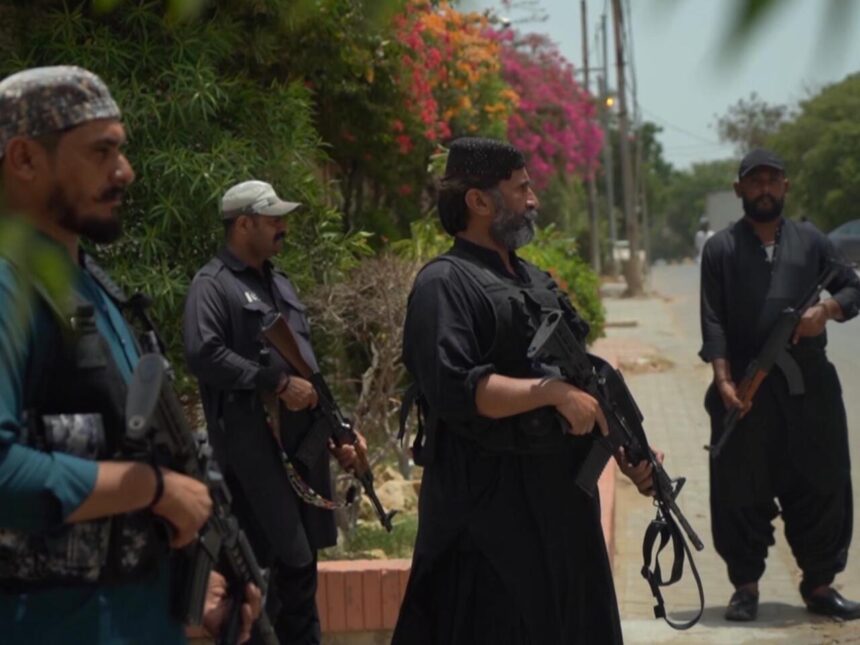
Security should be a right for every citizen, but the modern world is choosing to privatise its benefits and quietly erase the idea of easy access to safety. The rise of gated communities, special surveillance cameras and paid protection services has pushed our society into the belief that security must be purchased, when in reality, it should be a public service provided by the government as a basic necessity and not a luxury. This shift has raised the argument that our society has fallen into segmentation and division, with some communities not being able to afford their safety.
Segregation starts at the huge gap between the wealth of different groups. Wealthy communities easily afford the market of security, hiring private firms, installing surveillance cameras or getting access to guarded and protected walls in order to hide themselves away from crime and threat. On the contrary, the underprivileged communities live out in the open with minimal protection, their only source of safety being the police forces. As a result, they often face a much greater risk of experiencing crime that lives right outside their doorsteps. This has caused an increment in inequality between both communities, as the affluent people live in secure homes while low-income ones live in underserved communities, reinforcing the idea that wealth buys you peace of mind.
Public security in democratic societies used to be a shared responsibility and something people collectively worked towards through voting for leaders who are in charge of policies, paying taxes for services like firefighters, and holding institutions accountable for the crime they commit or how they respond to it. When people opt for private security, the shared norms of public security fade and accountability amongst the members of a community weakens. Seeing security as a market product leads to reduced political pressure to fix public safety issues as fewer people demand it. This procedure additionally produces fragmentation of society.
Social fragmentation is shown physically through gated enclaves with barriers, with private security being cameras and fences. Such barriers reinforce classist ideas of who belongs and who does not, further increasing inequality between the social classes and segmentation along economical lines, also strengthening social hierarchies.
When safety is handled like a product, competition starts to occur between neighbourhoods, profit is prioritised over public needs, and private firms only offer security to the people that are willing to pay. Consequently, the wealthy areas become more secure, while poor ones are neglected and left unprotected. Such privatisation also causes public security systems to lose funding, which makes them increasingly incapable of providing services to the ones who cannot afford private firms.
Paying for safety not only results in the poorer ones being much more vulnerable, but it also segregates our society into patches of wealth and poverty. It neglects the rights of low-income
families and reinforces pre-existing hierarchies, categorising people into who should and who should not have access to a basic necessity.