





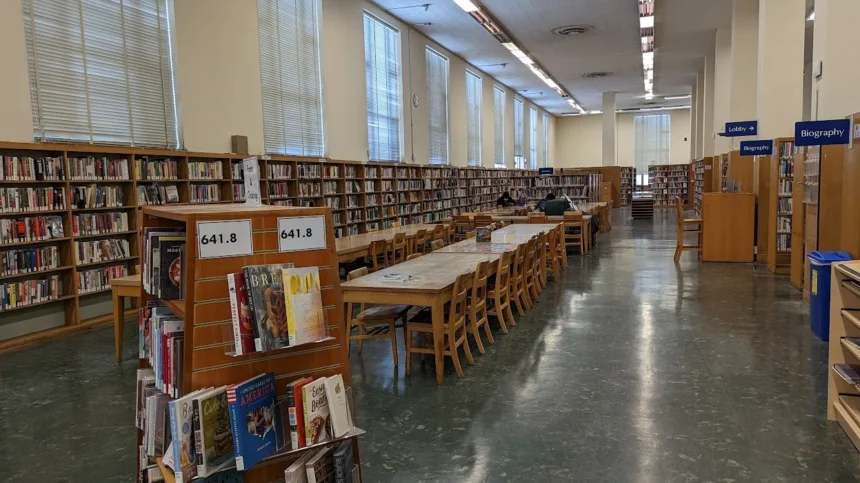
We have all interacted with libraries — most commonly as children — with the libraries of our schools. How many of us remember being tasked to read a book and immediately thinking of a library? I remember the excitement of finding books on shelves in the long aisles of the library. It allows an interactive experience with the books in the modern world of “type and find”.
But present-day libraries have much more to offer than just physical engagement with the book world! With the correct amalgamation of digital and physical presence, libraries from around the world, including those in Pakistan, have become centralised spaces to aid learning, strengthen creativity, and build communities.
The idea is to circulate knowledge through an interactive approach in the world of digital and distracting media and turn learning into a communal experience rather than a solitary one.
Libraries are built to address high community demand for bookable meeting rooms and quiet study space. These innovative corners give room to host public author talks, cultural events and language exchange programmes, as well as private meetings. Many libraries also offer workshops for students and employees for targeted training in on-demand skills such as science, robotics, and creative writing — in a flexible and engaging environment. The “Children Library Complex” (CLC), a prolific accomplishment of the Government of Punjab, provides, likewise, educational and recreational facilities to the children.
The evolving concept of a library provides a multipurpose space to cater to various demands and interests. Library addresses are not only kept by bookworms anymore, but art lovers and curators find them just as useful.
Libraries are the artists’ new favourite place to exhibit artworks and promote libraries as makerspaces. The new “City Library” in Melbourne features artwork from the “City of Melbourne and Heritage Collection.” The new curatorial selection features photographs, drawings and film, including Andrew Chapman’s images of central Melbourne in the 1970s and 1980s. This phenomenon is why libraries get a boost in creativity and communal engagement.
Book clubs and author talks have turned the formerly solo experience into a meaningful gathering offering both intellectual and interactive relief from the fast-paced, focus-reducing social media.
Reinforcing the established notion with a fresh approach, libraries cater to children with healthy entertainment over dull learning. Libraries welcome children and parents to story time hours and creative activities, aiming for family engagement and letting busy parents spend productive time with their children. The British Council Libraries in Karachi and Lahore have initiated themed storytelling and arts and crafts sessions under the title “Tiny Tales.” Similarly, the “Oakland Public Library (OPL),” California, has held numerous storytelling sessions over the past few years.
From now on, a library is no longer just a place to choose books from but a versatile learning hub aiding creative interaction with not just books but beautiful souls around and building a meaningful community that is beneficial to all age groups from toddlers to young adults and senior citizens.