





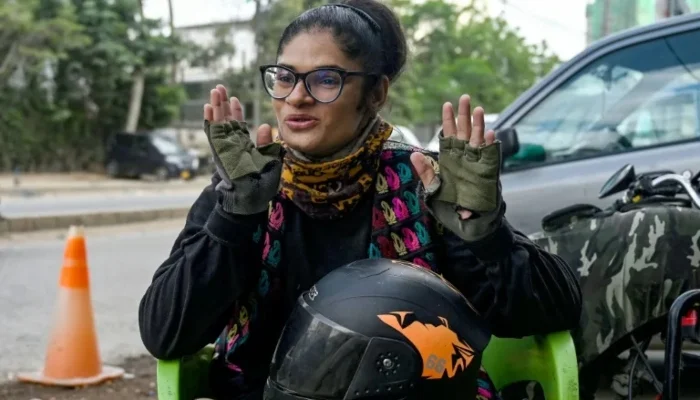
The financial independence of a Pakistani woman typically relies on social norms aligned with contemporary Islamic principles, or so it is said. Although Islam assigns financial responsibility to men, it does not bar women from earning or managing their own finances. To provide further context, notable women serve as excellent examples of economically independent and relatively competitive individuals. In contrast, social attitudes in Pakistan often limit women’s autonomy, confining them to domestic expectations while depending on their fiscal support when circumstances require it. Presently, social norms, workplace environments, and evolving marriage practices create tensions between religious principles and cultural expectations as extrapolated below. It is suggested that the strengthening of women’s financial independence can contribute to household stability and societal progress, and that enabling individual choice, rather than enforcing cultural expectations, may provide a more balanced approach to the roles of men and women in modern Pakistan.
Overture:
Article 2 of the Constitution of the Islamic Republic of Pakistan states that “Islam shall be the State religion of Pakistan.” The inception of Pakistan made it an ideal that all citizens shall live in accordance with their religious principles. This includes the principles of Islam as well, while referring to Article 2 of the Constitution. Islam has a well-established family system that assigns roles to each family member. For instance, Islam has given men the duty to become the family’s providers. This means that he is burdened with a duty to give his wife dower and good maintenance and to provide his children with a good way of living. However, Islam has neither given the same duty to women nor prohibited them from earning a living. In fact, Islam has encouraged women to not only become financially capable but also allow them to use the money however they want within the prescribed limits of Allah Almighty.
Nevertheless, in Pakistani society, the financial position of women is viewed in a nuanced and hypocritical way. On one hand, the family’s daughter receives an education solely to meet the needs of her in-laws. On the other hand, the educated daughter is the sole breadwinner of the family, either because she is the only one providing for the family or because the men of the family refuse to earn.
- Pakistan & Patriarchy:
In Pakistan, the perception is that a family’s honour is largely dependent on its women. To put it simply in layman’s terms, quite obnoxious ones, the family will be sure to do whatever it takes to honour themselves, even if it requires compromising their mother’s, sister’s, or daughter’s dignity. Several approaches are indicative of several results in their own good.
- Societal Expectations for Women and Their Roles:
In Pakistan, there are many societal expectations on women in general due to the lack of meaning in the majority of the population, which induces higher expectations from the weaker sex. Because Pakistan is an Islamic state, it should sustain itself in accordance with Islamic principles, but Pakistani society still has many restricted expectations and moral etiquettes that suppress the lives of women in general and restrict them to housework only. Even in families where the women are educated, society does not let them live freely, as culture has contaminated Islamic principles with its own moral codes. For instance, if an educated, well-financed woman is married into a family where her financial life is not objectionable, society will either manipulate the husband or the mother-in-law of that working woman to forbid her from earning money or having any form of financial stability whatsoever. This form of manipulation stunts the breaking of potential generational taboos and hence stops those who are willing to contribute to changing the conformist society of Pakistan.
- Male-Dominated & Ego-Driven Work Settings:
The workplace environment in Pakistan is quite male-orientated, leaving the females in the abyss. The working women in Pakistani society face a lot of workplace harassment, so much so that the government of Pakistan was left with no choice but to enact a new law, burdened with the sole purpose of preventing workplace harassment and ensuring women’s safety at the workplace. Additionally, it is seen in the workplace environment that women’s progress is judged based on their beauty rather than their actual work. This kind of behaviour not only tips the balance of workplace ethics but also suppresses the work of other employees, as this creates whole new branches of disturbance amongst the employees. For instance, if a woman’s beauty is not showcased or her physical appearance appeals to the male employer or her senior male employee, her progress is subject to a stall. This kind of behaviour not only creates a disparity amongst the male and female employees, leading the male employees to create a hate symbol and a disgusting, misogynistic, and condescending concept against female employees, but also makes the workplace environment a living hell for women. Lastly, this form of toxic workplace behaviour not only instills a form of severe hesitation amongst the women but also discourages men from allowing the women in their families to work in such an environment where their safety is not assured.
- Unemployed Men Marrying Financially Independent Women:
There has been a noticeable shift in society regarding marriages, as men are increasingly choosing financially independent women for marriage. This concept appears to be quite legitimate, given that everyone has the right to marry whoever they choose. However, if a closer look is taken, it is perceived that the reason why men are approaching financially independent women over women who aren’t earning is to escape from their financial duties. This malicious intent is not shown to those women before marriage, and once the marriage is solemnised and these women become stuck with those men, they feel burdened with the financial duties while the men evade their religious obligations.
- Why Financial Independence Matters for Muslim Women in Marriage:
The financial independence of women is an essential aspect in the survival of their entity. It is not specified by the universe that only men can have financial independence, as cooking is a survival skill that is not dependent upon whether the hungry person is a man or a woman. Just as cooking is a survival skill, so is having financial independence. Even though Islam has given men the duty to provide for their wives and kids, as discussed previously, it does not bar women from earning. Rather, there are golden examples in the history of Islam where the financial independence of women is not discouraged but encouraged. Lady Khadija (RA)’s whole life as a businesswoman is a prime example of how much Islam has given freedom to women through their financial independence. Furthermore, even after marrying the Holy Prophet (SAW), she didn’t stop doing business; the Holy Prophet (SAW) helped Lady Khadija (RA) in her business, expanding her trade across Arabia. It is indeed a testament, and even a strong one, to understand how much Islam has given importance to the financial independence of women regardless of whether they’re married or not.
- Final Remarks:
The society we live in is indeed contaminated by man-made principles, which, to be frank, act like a sugar-coated, slow-acting poison for the progress of humanity. One thing needs to be understood: the existence of humanity lies in the progress of both genders, not only one. Think of man and woman as two wings of the same bird. Remove or weaken either, and you will see the bird unable to fly. A family is an institution. Indeed, the man is responsible for financial duties, but having a financially independent woman can easily lessen the strain on his financial burdens. The society encourages a housewife role for women in marriage because it allows them to stay away from the burdens of financial stability, but we have seen how badly that has failed in today’s world. Being a housewife, a working wife, or a financially independent woman should be a choice, regardless of what society says, because no society, no matter how good, helps a helpless woman facing the draconianism and little-to-no mercy of this so-called society.